#166 When Subsidies Fail to Reach the Vulnerable: Why Public Healthcare Vendor Relationships Deserve an Independent Audit 当补贴无法惠及弱势群体:为何公共医疗机构与供应商的关系值得接受独立审计
| | | | | | | | | | | | |

#166 When Subsidies Fail to Reach the Vulnerable: Why Public Healthcare Vendor Relationships Deserve an Independent Audit 当补贴无法惠及弱势群体:为何公共医疗机构与供应商的关系值得接受独立审计

Outsourcing may transfer work, but it must never transfer accountability Outsourcing is frequently promoted as a solution. It is supposed to reduce costs, bring in specialist expertise and allow public institutions to focus on their core responsibilities. But outsourcing can also become a convenient way to move responsibility out of sight. The contractor blames the…

HR Learning Fest 2026 Executive Masterclass at Singapore Polytechnic #165
| | | | | | | | | | |

HR Learning Fest 2026 Executive Masterclass at Singapore Polytechnic #165

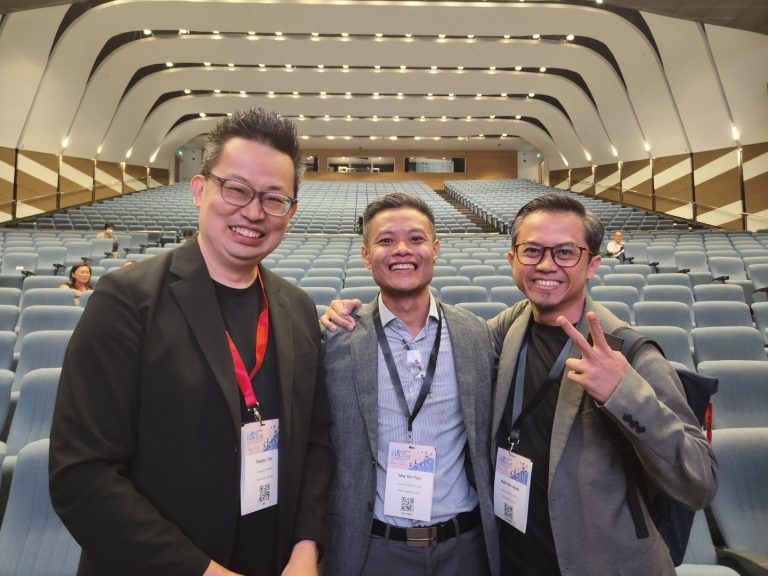
Spent the morning at the HR Learning Fest 2026 Executive Masterclass at Singapore Polytechnic on the theme:“Work, Reimagined. People, Elevated.” A few takeaways stood out: #165 🔹 Only 28.5% of firms in Singapore have adopted AI, while just 3.8% have actively integrated it into business processes. 🔹 Among firms adopting AI, more are redesigning roles,…

#163 Charity Deserves Reliable Technology Too — And So Do Public Services 慈善机构也值得拥有可靠的科技——公共服务亦然
| | | | | | | | | | | | | | |

#163 Charity Deserves Reliable Technology Too — And So Do Public Services 慈善机构也值得拥有可靠的科技——公共服务亦然

What a food bank’s single point of failure and a library’s “haunted seat” reveal about digital resilience, dignity and trust Technology does not have to be sophisticated to be important. Sometimes, it is a barcode scanner recording groceries collected by a family in need. Sometimes, it is a booking portal helping a student find a…

#162 Digital First, But Are We Truly Integrated and First-class? 数码优先,但我们头等体验的系统真的已经整合了吗?
| | | | | | | | |

#162 Digital First, But Are We Truly Integrated and First-class? 数码优先,但我们头等体验的系统真的已经整合了吗?

Singapore prides itself on being a digital nation. We digitise forms. We digitise appointments. We digitise payments. We digitise applications. But digitisation is not the same as integration. Recently, a reader shared an experience that raised an uncomfortable question: Are our systems talking to one another? Or are citizens still acting as couriers between departments…

#159 Lee Hsien Loong’s Twenty Years: Leadership, Information and the Greatest Challenge of Governance
| | | | | | | | | |

#159 Lee Hsien Loong’s Twenty Years: Leadership, Information and the Greatest Challenge of Governance

For two decades, Singapore was led by Prime Minister Lee Hsien Loong through one of the most challenging periods in modern history. He inherited a nation already admired for its stability and transformed it through the Global Financial Crisis, the rise of China, increasing geopolitical competition, digital disruption, an ageing population, COVID-19, and an increasingly…

#158 When Public Service Starts Looking Like Public Relations 当公共服务开始看起来像公共关系
| | | | | | | | | |

#158 When Public Service Starts Looking Like Public Relations 当公共服务开始看起来像公共关系

There is a growing frustration among ordinary Singaporeans and small business owners: public-facing institutions are becoming very good at marketing themselves, but increasingly uneven at delivering the help they claim to provide. The issue is not that every officer is bad. That would be unfair. Many public servants still work hard, and many agencies remain…

#155 Why Pay Transparency Is Still Not Talked About: The Real Organisational Scenarios Behind the Silence 为什么薪酬透明仍然鲜少被谈起:沉默背后的真实组织场景
| | | | | | | | | |

#155 Why Pay Transparency Is Still Not Talked About: The Real Organisational Scenarios Behind the Silence 为什么薪酬透明仍然鲜少被谈起:沉默背后的真实组织场景

Pay transparency sounds simple on the surface. Employees want to know whether they are paid fairly. Employers want to attract talent, retain people and build trust. Regulators increasingly want organisations to show that pay decisions are not discriminatory, arbitrary or opaque. Yet in many workplaces, pay remains one of the least openly discussed topics. The…

#148 Ho Ching, The Enforcers, and Singapore’s Invisible Operating System 何晶、《执法者》与新加坡的隐形操作系统
| | | | | | | | | | | | |

#148 Ho Ching, The Enforcers, and Singapore’s Invisible Operating System 何晶、《执法者》与新加坡的隐形操作系统

My previous article, “Professionalism, Restraint, and the Standards We Choose to Uphold,” spoke about slipping standards, public conduct, and the increasingly fragile balance between authority, restraint, and responsibility in modern Singapore. Today, I wish to continue that discussion through a different lens. A woman. A technocrat. An engineer. A steward of capital. And perhaps one…

#147 Professionalism, Restraint, and the Standards We Choose to Uphold 专业、克制,以及我们选择维护的标准
| | | | | | | | | | | | |

#147 Professionalism, Restraint, and the Standards We Choose to Uphold 专业、克制,以及我们选择维护的标准

In recent years, Singapore has worked hard to strengthen regional business connectivity across ASEAN. Professional institutions, chambers of commerce, engineering bodies, startup ecosystems, and sustainability communities are increasingly interconnected. This is a good thing. However, with growth also comes an important question: Are we preserving the standards that made these institutions respected in the first…

#143 Smaller Nations, Superpower Pressure, and the Grey Zone of Survival 小国、生存压力,与大国夹缝中的灰色地带
| | | | | | | | | | | | | |

#143 Smaller Nations, Superpower Pressure, and the Grey Zone of Survival 小国、生存压力,与大国夹缝中的灰色地带

One of the least discussed realities in geopolitics is that smaller nations rarely operate in a perfectly clean environment. Publicly, international relations are framed around diplomacy, trade agreements, defence partnerships, and mutual prosperity. But beneath official frameworks often exists another layer: Influence operations. Intelligence bargaining. Unofficial intermediaries. Economic pressure. Elite networks. Strategic kompromat. Underground financial…