#159 Lee Hsien Loong’s Twenty Years: Leadership, Information and the Greatest Challenge of Governance
For two decades, Singapore was led by Prime Minister Lee Hsien Loong through one of the most challenging periods in modern history.
He inherited a nation already admired for its stability and transformed it through the Global Financial Crisis, the rise of China, increasing geopolitical competition, digital disruption, an ageing population, COVID-19, and an increasingly fragmented world.
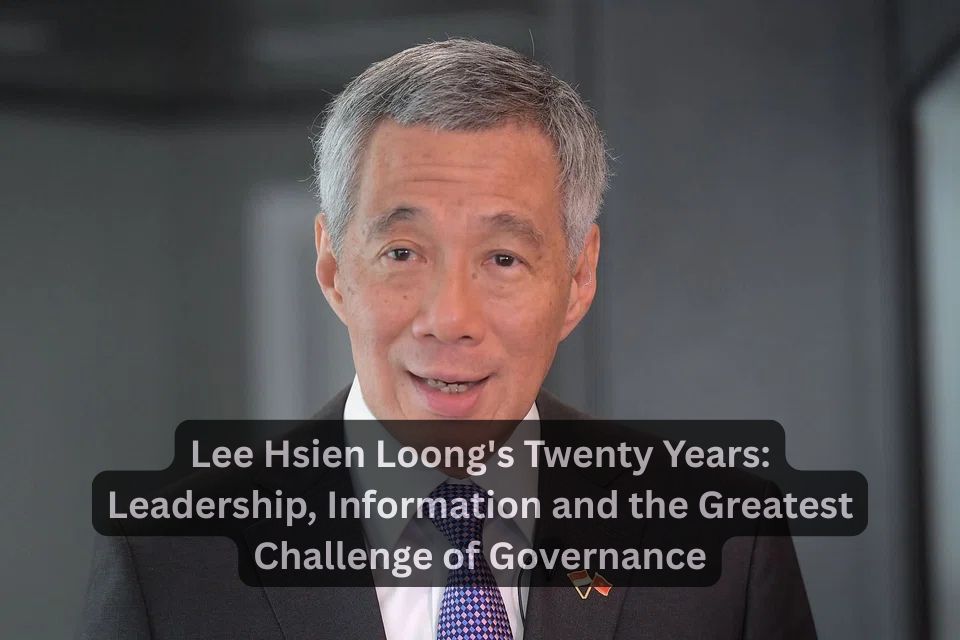
History will undoubtedly debate individual policies, but few can dispute that Singapore remained remarkably stable while many developed economies struggled with political paralysis and institutional decline.
For that, every Singaporean owes him appreciation.
However, leadership at the very top has always faced one challenge that is perhaps harder than economics, defence or diplomacy.
It is information.
Leadership Is Only As Good As The Information It Receives
Every leader makes decisions based upon the information presented to them.
The difficulty is that information rarely travels unchanged.
As reports move upward through organisational layers, they are summarised.
Edited.
Interpreted.
Sometimes unintentionally distorted.
Sometimes selectively framed.
Sometimes important context disappears entirely.
This is not unique to governments.
It happens inside multinational corporations.
Government-linked companies.
The civil service.
Military organisations.
Family businesses.
Everywhere hierarchy exists.
In an earlier article, I wrote about how information naturally becomes filtered as it moves upwards because every individual has their own incentives, fears and ambitions.
Some seek promotions.
Some seek influence.
Some seek to protect themselves.
Others simply tell their superiors what they believe they want to hear.
The person at the very top therefore faces an impossible challenge:
How do you distinguish truth from selective truth?
帝王术 — The Ancient Art of Balancing Power
Ancient Chinese political philosophy recognised this problem centuries ago.
帝王术—the Art of Rulership—understood that no ruler should become overly dependent on a single adviser, faction or reporting channel.
Whenever information flows through only one centre of influence, the risk is no longer incompetence.
The risk becomes capture.
Every faction naturally believes it knows what is best.
Every faction also develops an incentive to preserve its own influence.
That is why effective rulers deliberately balanced competing centres of power.
Different advisers.
Different reporting lines.
Independent verification.
Cross-checking facts.
Not because everyone is dishonest.
But because human beings are imperfect.
Modern organisations may not use the term 帝王术, yet the principle remains highly relevant today.
Checks and balances do not exist because leaders distrust people.
They exist because they understand people.
Organisational Politics Exists Everywhere
As organisations mature, opportunities become fewer.
The pyramid narrows.
Only a handful of senior appointments remain.
Competition naturally intensifies.
When merit alone no longer guarantees advancement, some individuals begin competing through narratives instead of performance.
Rather than challenging ideas, they challenge people.
Rather than debating competence, they question character.
Rather than discussing facts, they shape perceptions.
History demonstrates that reputations are often damaged not because someone lacked capability, but because someone successfully controlled the narrative surrounding them.
That is why mature organisations place increasing emphasis on documented evidence, transparent processes and independent review.
A Personal Reflection
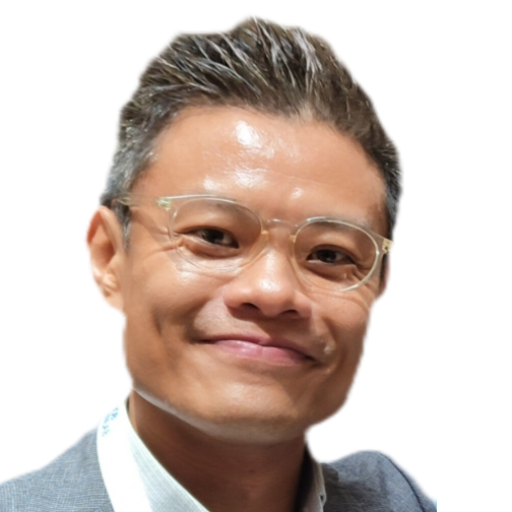
Recently, several people have asked me about my sexual orientation because I chose to wear a single earring on my left ear.
For context, I also wore an earring on the same side during my younger years, long before joining a government-linked company. At that time, I do not recall receiving similar comments or speculation.
Years later, an award-winning businesswoman suggested that wearing an earring again would improve my overall professional image, so I decided to do so.
Interestingly, this time the reaction was very different.
Some people began asking questions about my sexual orientation.
To be absolutely clear, I am a straight man. I am attracted to women, and I have absolutely no issue with people of different sexual orientations. Every individual deserves dignity and respect.
What concerns me is something else.
When assumptions about a person’s appearance begin to replace objective evaluation of their work, the discussion has shifted away from merit.
I cannot know what motivated every individual who raised these questions. However, there have been occasions where it felt less like genuine curiosity and more like an attempt to shape a narrative that would diminish my credibility rather than engage with my ideas.
This is how organisational politics sometimes operates.
When someone is perceived—rightly or wrongly—as a potential competitor for influence, people may begin looking for unrelated issues that can be used to question that person’s standing.
The objective is no longer to win on performance.
The objective becomes controlling perception.
Whether that perception concerns appearance, rumours or personal matters, the outcome is the same if enough doubt is created.
Healthy organisations should reject this entirely.
People should be judged by their integrity, competence, documented contributions and measurable outcomes—not by stereotypes or speculation.
P.S Till date, the fairer sex has been choosing earrings for me that represents masculinity with a different side. I have also won affection from ladies for wearing so.
My Own Corporate Experience
One sentence from my Junior College Physics teacher has stayed with me throughout my career.
讲多,错多;做多,错多。
The more you speak, the more opportunities you have to make mistakes.
The more responsibilities you take on, the more problems you inherit.
Only later did I truly appreciate its meaning.
There were periods in my career where I found myself covering responsibilities across multiple organisational levels because colleagues were unavailable.
While others relied heavily on verbal instructions or left little written record, I documented work, replied to emails and kept projects moving.
Ironically, documentation can sometimes make the person doing the work appear to carry more responsibility, while those who leave little documentary evidence appear less exposed.
That experience reinforced my belief that good governance depends upon proper documentation, clear accountability and transparent decision-making.
People should be accountable for the work they actually perform—not simply for the records that happen to exist.
When Narratives and Lived Experiences Diverge
One lesson I have learnt over the years is that there is often a difference between the narratives a society tells itself and the experiences individuals encounter on the ground.
Singapore rightly prides itself on meritocracy, racial harmony and equal opportunity. These ideals have contributed greatly to our success and social cohesion. They should continue to be defended.
Yet acknowledging these ideals should not prevent us from listening to lived experiences that may not fit neatly within the prevailing narrative.
On several occasions, I shared some of my workplace experiences with authorities and respected elders. Their initial reaction was to dismiss the possibility that factors such as race, appearance or organisational politics could have influenced career progression. The assumption was that meritocracy alone explained outcomes.
However, after I recounted specific experiences from my career, some appeared surprised that the realities I described did not align as neatly with the narrative they had long accepted.
One conversation that left a lasting impression occurred after I left NCS. A former colleague—who had previously worked with MSI Global and had served as a Commando during National Service—shared his own perspective on how organisational ‘coloured’ perceptions can influence leadership appointments.
He referred to a leadership succession within the Land Transport Authority involving Sim Wee Meng and Chua Chong Keng. As the story was related to me, Sim Wee Meng eventually led MSI Global’s international business development efforts, while Chua Chong Keng was appointed Deputy Chief Executive of LTA. My former colleague suggested that organisational perception, including how individuals were viewed and represented, could sometimes influence senior appointments alongside capability.
I cannot independently verify every aspect of his interpretation, and I recognise that many legitimate factors contribute to senior leadership appointments. Nevertheless, the conversation challenged my own assumptions and reinforced an important lesson: people inside organisations sometimes perceive promotion decisions differently from the official narrative.
My own experience at NCS further reinforced this reflection.
There were periods when I covered responsibilities well beyond my formal role, supporting work across multiple organisational levels. I believed that consistently delivering results, documenting decisions and taking ownership would naturally be recognised.
Instead, I often found that visibility, perception and organisational politics could matter just as much as measurable contribution.
This does not mean Singapore has abandoned meritocracy. Nor does it mean every promotion is unfair.
Rather, it suggests that meritocracy, like any institutional ideal, must constantly be protected against the subtle influence of human bias, organisational incentives and incomplete information.
The strength of a society should not be measured by whether uncomfortable experiences exist. Every society has them.
Its true strength lies in whether people feel safe enough to discuss those experiences honestly, examine them objectively, and improve institutions where necessary.
If our lived experiences consistently differ from our national narratives, then we should not immediately dismiss either one.
Instead, we should ask an important question:
What explains the gap?
Only by asking that question honestly can we strengthen the institutions we seek to preserve.
Learning From Intelligence Organisations
History offers another interesting lesson.
Following the terrorist attack on the Israeli team during the 1972 Munich Olympic Games, Israel launched an extensive campaign to identify and pursue those believed responsible.
The operation has been widely documented and dramatised in books and films.
One recurring theme is the immense psychological burden placed upon intelligence officers operating in an environment where genuine threats, misinformation and uncertainty constantly intersect.
When people spend prolonged periods searching for hidden enemies, distinguishing between real and perceived threats can become increasingly difficult.
This is not unique to intelligence work.
Large organisations can also become vulnerable to confirmation bias if people begin interpreting every piece of information through an existing narrative rather than objectively assessing evidence.
That is precisely why robust institutions rely on verification, documentation, multiple independent reporting channels and procedural fairness.
The stronger the institution, the less it depends on assumptions.
How Do We Improve?
Singapore already possesses one of the world’s strongest public institutions.
That does not mean improvement stops.
Institutions such as the Civil Service College can continue strengthening governance by reinforcing several timeless principles:
- Report facts before opinions.
- Preserve context rather than selectively quoting events.
- Document decisions.
- Encourage psychological safety so inconvenient truths can travel upwards.
- Reward accuracy instead of rewarding sensational reporting.
- Verify important allegations independently before drawing conclusions.
Good governance is not merely about making the correct decision.
It is about ensuring that the information reaching decision-makers is complete, balanced and truthful.
Lee Hsien Loong’s Greatest Legacy
Lee Hsien Loong’s legacy will not be measured only by GDP, infrastructure or international diplomacy.
It will also be measured by whether Singapore continues strengthening institutions capable of telling leaders not simply what they wish to hear, but what they need to hear.
Every generation inherits institutions.
Every generation must improve them.
Every one of us also carries that responsibility.
Whether we are junior executives, middle managers, directors, public servants or political leaders, someone relies on the information we provide.
Our reports influence decisions.
Our words affect reputations.
Our omissions can be just as significant as our statements.
At the end of the day, we will all be judged.
Perhaps by others, if we fail to tell the truth, omit important context, or present information in a way that misleads.
Perhaps by our own conscience, which has a remarkable way of reminding us when we chose personal benefit over professional integrity—when we said what was expedient instead of what was right because we believed there was something to gain.
The question each of us should ask is not whether leadership can trust everyone.
The better question is far more personal.
So, what have you been telling your superior?