
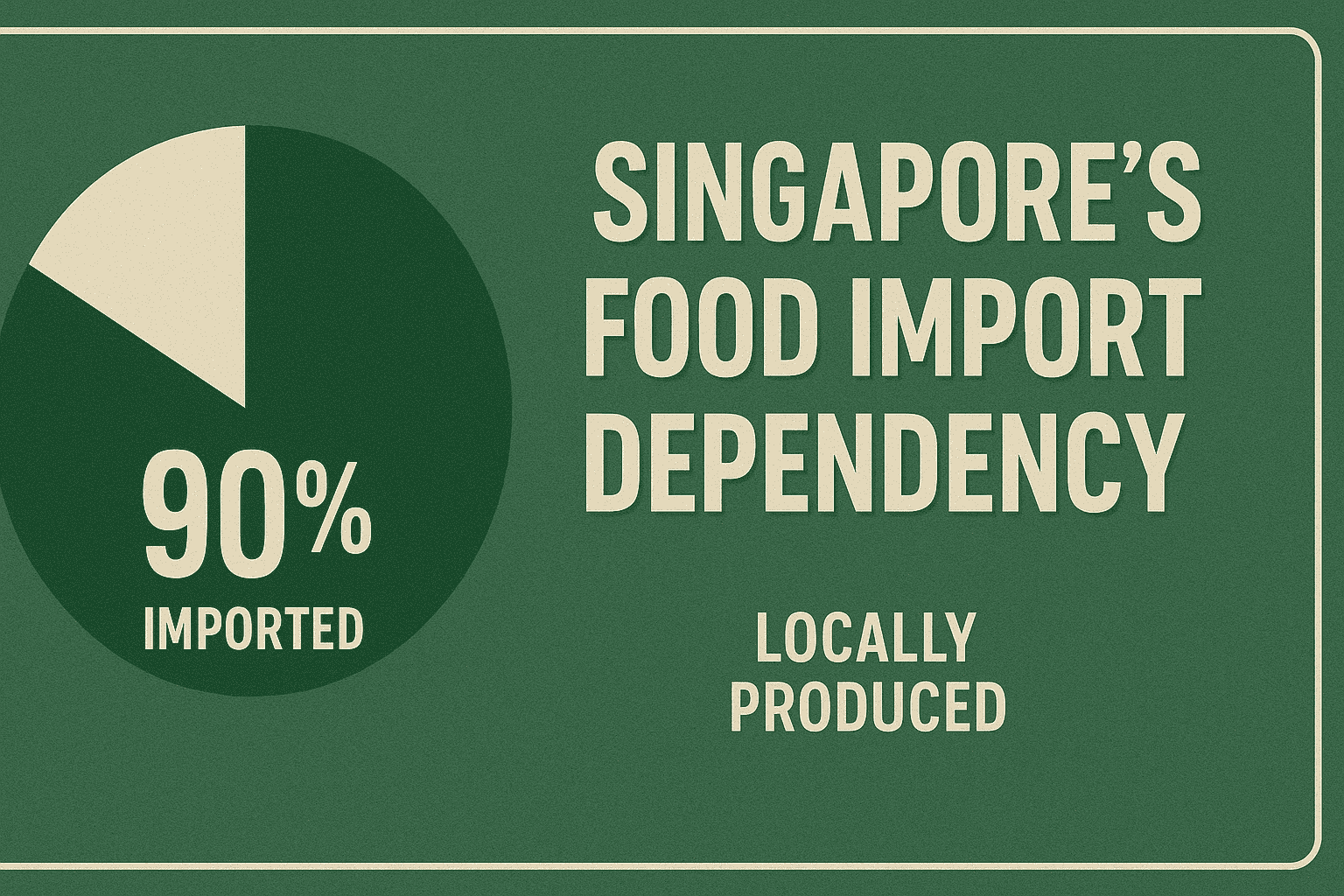
#49 Elevating Singapore’s Agri-Tech: From Space Constraints to Global Leader
Singapore’s Agri-Tech Vision and Post-Pandemic Reality
Author: Mar Vin, Foo
Elevating Singapore’s Agri-Tech: From Space Constraints to Global Leader
Singapore’s ambitious “30 by 30” goal – to produce 30% of its nutritional needs locally by 2030 – was born out of food security concerns but it is proving difficult to achieve. After the COVID-19 disruption, interest in local production spiked, and SFA launched a 30×30 Express grant in 2020 to boost farms.
However, as pandemic fears receded, consumers largely reverted to cheaper imported food, causing local agri-tech startups to struggle with demand and profitability. In fact, the share of locally grown vegetables and seafood in Singapore’s consumption fell after 2019, down to just 3.2% of vegetables and 7.3% of seafood by 2023. Only eggs have crossed the 30% mark of local consumption, and even egg farmers worry if demand will keep up with their supply.
The core challenge is that “grown in Singapore” products often cost more due to high production costs, yet Singaporean shoppers remain very price-sensitive. A CNA-YouGov survey found a majority of consumers “neutral” on local vs imported food, with many choosing imports for lower price or variety, while those who prefer local cite freshness, safety and supporting local farmers. This indicates that without competitive pricing or clear quality differentiation, local produce faces an uphill battle in the domestic market.
At the same time, several high-profile agri-tech ventures in Singapore have faltered, dampening investor confidence. In recent years, an indoor vegetable farm (I.F.F.I) shut down and a planned mega vertical farm was shelved; a major fish farm (Barramundi Asia) ceased local operations after a disease outbreak, and another large aquaculture firm (Apollo Aquaculture) went into judicial management. Even the pioneering vertical farm Sky Greens has scaled down operations.
These setbacks underscore how hightech farming alone doesn’t guarantee success if underlying economics aren’t viable. As one agri-tech consultant put it, without substantial capital and a sound business model, few startups survive in this sector. The industry’s struggles – high costs, limited scale, slow regulatory adaptation – have caused some young entrepreneurs to shy away from farming, perceiving it as “high-tech, low returns”.
Indeed, despite millions in government grants and R&D programs, local production outputs have not met expectations. Singapore’s agriculture is at a time of reckoning: it must find a competitive edge and new strategies if it is to revive momentum toward the 30×30 vision.
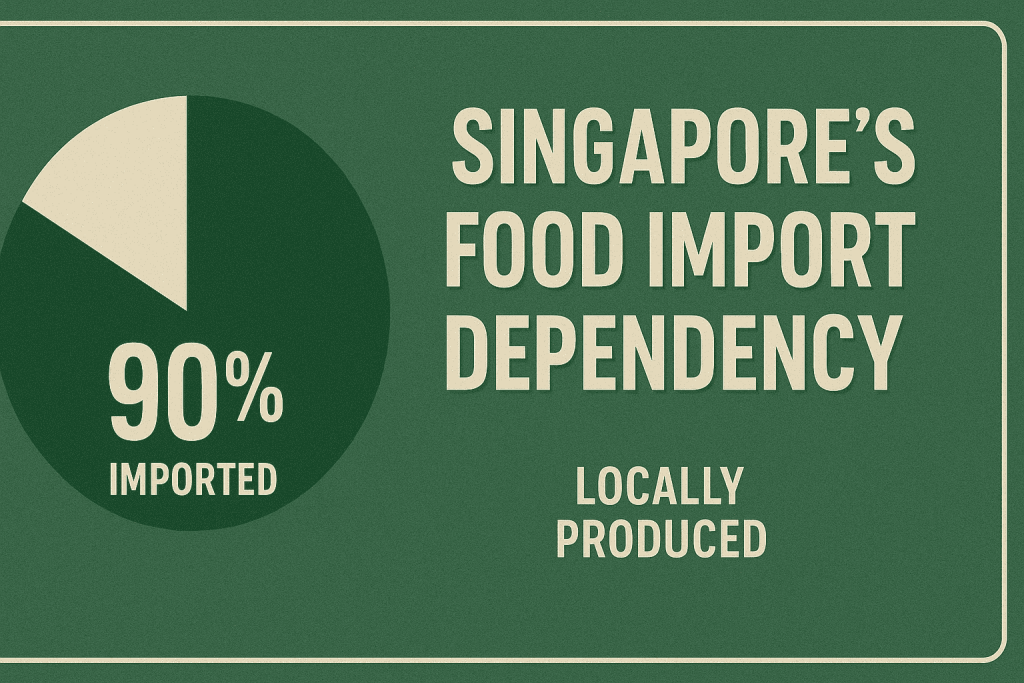
Funding Landscape: Singapore vs. Neighbors in Southeast Asia
The wider Southeast Asian agri-tech scene has been booming with investment – but Singapore hasn’t been the main beneficiary. In 2022, agrifood tech startups across Southeast Asia raised about US$1.7 billion across 192 deals, a record level for the region.
However, much of this capital flowed into countries with abundant agricultural land and larger farming sectors, such as Indonesia, Malaysia and Thailand, rather than land-scarce Singapore. For example, Indonesia’s aquaculture startup eFishery became one of the world’s first aquaculture “unicorns” in 2023, after securing $200 million in Series D funding (valuing it around $1.4 billion). This made eFishery Southeast Asia’s first agritech unicorn, reflecting investor enthusiasm for solutions that can scale across the region’s vast farming communities.
By contrast, Singapore’s agri-tech startups often face skepticism about scalability due to the city-state’s tiny domestic production base.
There are clear reasons why investors see neighboring countries as attractive: cost and scale advantages. Operating costs in Singapore are significantly higher than in the region – from expensive land leases and electricity to manpower – meaning the same farm setup is far costlier in Singapore than just across the border.
One local aquaculture entrepreneur calculated that producing fish like sea bass or tilapia in Singapore would cost about S$26 per kg, when imports from Malaysia sold for only S$5–7 (sea bass) or S$3 (tilapia) per kg. With such disparity, purely local production struggles to compete unless it achieves much greater efficiency or commands premium pricing.
Neighboring countries, with their abundant land and lower input costs, can raise output at a fraction of Singapore’s cost, attracting funding for large-scale farming and agritech deployments.
However, Singapore can carve an edge by leveraging technology, R&D, and its strong business ecosystem. There is an opportunity for Singapore to position itself as the region’s agritech innovation hub, even if much of the actual cultivation occurs in larger ASEAN countries.
For instance, Singapore-based funds and accelerators (like AgFunder’s GROW program) are investing in regional startups and nurturing solutions that can be exported. Singapore’s strengths in high-tech talent, robust IP protection, and access to capital can support the development of cutting-edge farming technologies (AI, sensors, biotech, etc.) that neighbors need. In turn, partnerships can be formed where Singapore provides the technology and financing while partners in Indonesia, Malaysia, Thailand, etc. provide the land and labor to scale up production.
Such collaborations could marry Singapore’s “brain” with the region’s “brawn”: e.g. deploying a Singapore-designed IoT irrigation system across hundreds of Indonesian farms, or using Singapore-bred high-yield fish fingerlings in Malaysian aquaculture ponds. This approach can make Singapore an influential agritech leader without relying solely on domestic farming land.
Crucially, the geopolitical climate favors an integrated ASEAN food production strategy. The region collectively faces rising food demand and climate vulnerabilities, and no single country can secure food resilience alone. By elevating its agritech sector, Singapore can help lead ASEAN in modernizing agriculture – an effort that could rival other blocs (EU, North America) in sustainable food production.
Government support should encourage cross-border agritech ventures and harmonize regulations, so that a Singapore startup can easily pilot a vertical farm in Vietnam or a smart aquaculture project in the Mekong, for example. In essence, Singapore’s agri-tech future may lie in “Team ASEAN” – leveraging regional strengths to mutual benefit.
This strategy can also make Singapore agritech firms more attractive to investors, as their market will be the entire region (600+ million people) rather than just 5.5 million locals.
Innovative Approaches and Supply Chain Solutions
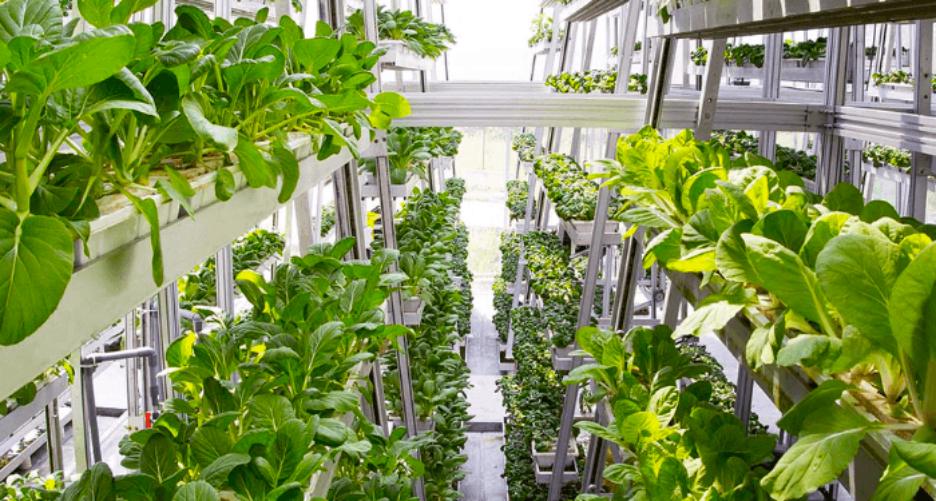
To overcome space and resource constraints, Singapore’s agri-tech must double down on innovation across the value chain – from production to cold chain logistics. One notable success story has been vertical farming. Singapore’s Sky Greens, for instance, pioneered a hydraulic vertical farm that stacks leafy greens in 9m-tall A-frame towers. The result is a farm that yields 1 ton of vegetables every two days on a tiny land footprint, using remarkably minimal resources.
Vertical farms and hydroponics can use up to 90% less water than conventional farming – a critical advantage for resource-scarce Singapore – and can produce 10 times or more crop output per square foot than open fields by growing crops in stacked layers.
Such high-tech farms utilize controlled environments, LED lighting, and automation to grow food year-round regardless of weather. They also eliminate pesticides and can optimize nutrients precisely, resulting in very high quality, clean produce. Singapore’s farms have been adopting IoT sensors, robotics, and AI to fine-tune these systems, raising productivity and resource efficiency.
For example, sensors can monitor plant health and adjust feed or light in real time, and AI algorithms can predict optimal harvest times. These technologies help mitigate the lower economies of scale by squeezing more output out of each square meter.
Yet, high-tech farming alone isn’t a panacea – it must be paired with cost-effective operations and supply chain innovation. One area to gain an edge is cold chain technology and sustainable logistics. Traditionally, exporting perishable seafood (like live crabs or fresh fish) required energy-intensive refrigeration every step of the way. But new solutions such as advanced thermal insulation boxes and phase-change materials (PCM) are changing the game.
For instance, researchers have developed affordable cold boxes (e.g. the “RADiCool” system) that can keep fish chilled at refrigerator temperatures for over 24–48 hours without any grid electricity, using PCM packs frozen by solar power. These robust insulated containers can be transported on motorcycles or planes with minimal ice packs and no active cooling, drastically reducing the carbon footprint of long-distance seafood transport.
In Alaska, shippers use similar methods (insulated “wet-lock” cartons with gel ice packs) to send live or frozen crabs across the world, proving that even highly perishable items can travel far with passive cooling systems. By adopting the latest cold-chain packaging – such as biodegradable insulated boxes (to replace Styrofoam) and PCM coolants – Singapore’s farms could export freshness globally in a more sustainable manner.
For example, an urban farm could pack freshly harvested produce or live seafood in an ultra-insulated box at near-freezing temperature; the produce would remain fresh for 1–2 days in transit without powered refrigeration. This opens the door for “farm-to-fork” exports of Singapore’s niche farm products to distant markets like the US or Europe, arriving with quality intact but a lower carbon cost.
Additionally, efficient supply chain coordination is key. Singapore is a logistics hub, and agri-tech firms can leverage this by using data-driven supply management to reduce waste and cost. Aggregation platforms can consolidate produce from multiple small farms to achieve volume for export orders.
The Singapore Food Agency is already working with the Singapore Agro-Food Enterprises Federation (SAFEF) on an “aggregator” model to better match supply and demand for local produce. This ensures farms can sell what they produce (preventing oversupply gluts) and buyers can source consistent volumes.
Coupling such coordination with modern processing can also add value: for instance, if there is surplus harvest, instead of letting it perish, it can be quickly frozen or processed (purees, dried snacks, etc.) to extend shelflife and create additional products. Embracing food processing and preservation tech – like individual quick freezing (IQF) for vegetables or freeze-drying for herbs – will allow Singapore’s agri-tech output to reach further markets without spoilage.
One suggestion from industry players is for grants to support postharvest processing and packaging innovations, not just farming hardware. This would help farms turn more of their output into shelf-stable products that can be stored or exported, thereby increasing revenue streams.
In short, Singapore’s agri-tech can gain a supply chain edge by producing smarter and delivering smarter. Advanced vertical farming and aquaculture can create premium-quality products efficiently, and cutting-edge cold chain and processing can deliver those products to consumers (domestically and abroad) in peak condition with lower cost and carbon footprint. These innovations also create a powerful narrative of Singapore as a modern, sustainable food producer, which can justify premium pricing.
Case Study: Urban-Farmed Tilapia – Singapore’s “Salmon”?
One specific product that encapsulates Singapore’s challenge and potential is urban-farmed tilapia fish. Tilapia is a hardy, fast-growing fish commonly farmed in the region, but it has traditionally been seen as a low-end fish (often associated with muddy taste and cheap prices). Singapore’s farms, however, are trying to reinvent tilapia as a premium, high-tech product – much like Norway did with salmon decades ago.
In the 1980s, Norwegian salmon was relatively unknown in the sushi world; through a concerted marketing campaign called “Project Japan”, Norway introduced Atlantic salmon for sashimi in Japan, overcoming cultural resistance and creating a huge new market. It took about ten years of effort – tasting events, chef partnerships, and promotional campaigns – but by the early 2000s, salmon sushi had exploded in popularity. Norwegian salmon exports to Japan skyrocketed from just 2 tonnes in 1980 to over 45,000 tonnes annually, and today salmon is the most preferred sushi topping in many countries.
This shows how smart branding, storytelling, and leveraging a quality advantage (Norway’s clean, parasite free salmon) turned an underappreciated product into a global phenomenon. Norway now supplies more than half the world’s salmon and reaps billions in export revenue – a testament to aligning production strengths with marketing savvy.
Singapore can take a page from Norway’s playbook for its tilapia. The island’s aquaculture farms (some offshore in sea cages, some onshore in high-tech tanks) have been breeding “clean tasting” red tilapia, addressing the traditional mud taste by raising the fish in pristine, controlled conditions.
In fact, a coalition of five farms in the Johor Strait – supported by SFA and SAFEF – launched a new premium brand called “The Straits Fish” for locally farmed tilapia in 2024. They are selectively breeding a special strain of marine tilapia (able to grow in seawater) that has reddish-golden skin, firm flesh, and no muddy flavor. By raising the fish in sea conditions (instead of stagnant ponds) and using better feed, the tilapia develop a clean, mild taste and texture more akin to other white fish. This directly tackles the taste stigma – as SAFEF notes, “seawater tilapia… may have an unappealing off flavour which marine tilapia do not have”.
Moreover, they are improving the fish genetically: a new National Broodstock Centre is working to produce fingerlings that grow faster and bigger (targeting up to 1kg, suitable for nice fillets) and are disease-resistant.
By controlling the breeding and early rearing in Singapore, the farms ensure consistent quality fry (baby fish), rather than relying on variable imported stock that often suffer stress and mortality.
The marketing of “Straits Fish” tilapia emphasizes its premium qualities. It is positioned as a local, sustainable, and high-protein choice. At FairPrice supermarkets, tilapia fillets under The Straits Fish brand are sold in vacuum-packed, chilled packs – highlighting freshness and convenience. The packaging proudly notes the fish’s “firm texture, delicate sweetness, and clean, mud-free taste,” as well as the hygienic vacuum packing for quality.
Essentially, they are crafting a narrative that this is not your grandfather’s tilapia – it’s a modern, tech-enabled product from Singapore’s farms. Some promotions even liken it to being one of the leanest protein sources with significantly less fat than other fish (borrowing the health-food angle that worked for salmon in sushi). Singapore restaurants have started featuring local red tilapia on menus, and chefs can play a role similar to how Japanese chefs eventually embraced salmon.
Storytelling could highlight that these fish are raised with cutting-edge RAS (recirculating aquaculture systems) or in offshore cages with constant monitoring, making them safer (no antibiotics, no contamination), fresher (delivered same-day locally), and eco-friendly. Such attributes resonate with conscious consumers.
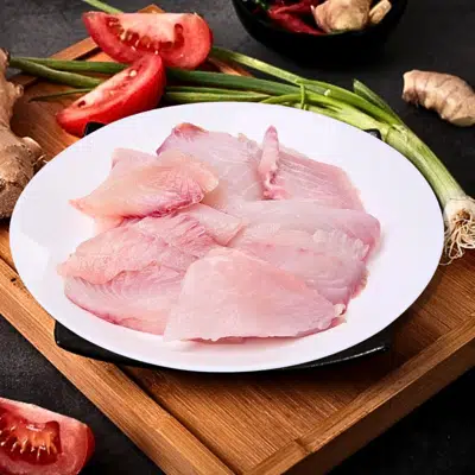
Could Singapore’s tilapia become the next global seafood darling, akin to Norwegian salmon? It’s an uphill battle, but not impossible. For one, tilapia is already widely consumed internationally (especially in the U.S. and parts of Europe/Asia), though mostly in frozen form from mass farms in China/Indonesia. Singapore can differentiate its product as a premium, urban-farmed version – similar to how some brands sell higher-end tilapia (e.g. Regal Springs’ lake-grown tilapia) as “gourmet tilapia”. By developing value-added products, Singapore’s tilapia could find niche markets abroad.
For example, tilapia’s mild flavor and flaky white flesh make it suitable as an ingredient in fish fingers, fish nuggets, or fish-and-chips filets. These are huge global market segments traditionally dominated by cod, pollock, or haddock.
With wild cod/haddock facing supply limitations, a sustainably farmed tilapia fillet could be marketed as a cheaper but comparably tasty substitute in fish & chips. The key is to ensure the fillet quality – Singapore’s tech could ensure the tilapia have a firmer bite and neutral taste (perhaps by tweaking feed or using slight saltwater finishing to firm up flesh).
Food scientists can work on processing methods like brining or coating to further improve texture for these uses. Product innovation could include seasoned tilapia burger patties, breaded tilapia cutlets, or ready-to-cook marinated tilapia portions, targeted at busy urban consumers who want healthy protein.
Another angle is leveraging rarity and story. Singapore’s production volumes will always be relatively small, so the tilapia can be almost “exclusive”. Just as Japanese Wagyu beef or Norwegian fjord trout are sold with a story of provenance and limited supply, Singapore can market its fish with a compelling narrative: “Grown in the futuristic vertical sea farms of Singapore – a city famous for cleanliness and quality – this tilapia is a rare delicacy that marries tradition with technology.”
Emphasizing the uniqueness (urban farmed fish from a high-tech nation) could intrigue high-end consumers and fine dining chefs overseas. In tasting events or trade shows abroad, Singapore could host “sustainable seafood from the tropics” experiences, where the tilapia is presented in creative dishes. Storytelling might highlight that it’s a product of Singapore’s national drive for food resilience – which adds a patriotic and aspirational aura.
If consumers associate the fish with cutting edge sustainability (like how Norway tied salmon to the purity of its fjords and Japan’s sushi culture), they may be willing to pay a premium.
Of course, none of this will succeed without generating actual demand. Here, modern marketing and consumer analytics tools come in. Singapore companies can tap FMCG AI technologies like NielsenIQ’s BASES to test product concepts and branding for tilapia-based products. Using AI-driven consumer panels and virtual concept testing, one can rapidly gauge how a new idea (say, “Singapore Smart Farm Tilapia Bites”) would be received by target demographics.
These tools simulate real consumer feedback, allowing firms to tweak marketing strategies before a full launch. For example, AI testing might reveal that U.S. consumers respond better to the term “sustainable tropical fish” than “tilapia” (due to tilapia’s low-end image). The company can then adjust packaging to downplay the species name and highlight the sustainability and quality aspects. Embracing data-driven product development increases the chances that when Singapore tilapia hits foreign shelves, it strikes the right chords in consumers’ minds.
Market Opportunities and Strategies for Singapore’s Agri-Food Products
To truly revitalize its agri-tech sector, Singapore must pursue a two-pronged market strategy: boost domestic consumption of local produce and capture lucrative niches overseas. Below are several recommendations and focal points:
- Rebrand and Educate for Domestic Acceptance: Within Singapore, a big hurdle is that consumers don’t strongly prefer local produce unless they perceive clear benefits. Thus, a concerted public education and branding campaign is needed to change perceptions. The messaging should emphasize the freshness, safety, and superior quality of local items – since surveys show these are the factors that sway Singaporeans who do buy local. For instance, vegetables harvested same morning will last longer in the fridge than week-old imports; fish from local farms can be guaranteed antibiotic-free and traceable, etc. Supermarkets and the SFA have already begun initiatives like the “SG Farmers’ Market” and “The Straits Fish” labels in FairPrice stores. These should be expanded and paired with in-store tastings, cooking demos, and influencer endorsements to give “Grown in Singapore” an appealing identity. Importantly, competitive pricing or promotions may be needed initially – perhaps government could subsidize a temporary price cut for local produce to encourage trial, or bundle deals (e.g. buy local fish, get local veggies discount) to nudge consumers to choose local. Over time, if repeat buyers agree the quality is worth it, a loyal base can form even if prices are slightly higher. The COVID period showed Singaporeans can rally around local food security when necessary; the goal is to sustain that awareness in peacetime by framing local produce as not just a fallback, but a superior choice for certain products.
- Target High-Value Export Markets: Singapore’s agri-tech output is never going to feed the world, but it can feed a premium market segment abroad. Potential target markets include: gourmet supermarkets and health food stores in the US, EU, Japan, and Middle East, and high-end hospitality (luxury hotels, restaurants) in major cities. These customers are willing to pay for novelty, quality, and sustainability. For example, Singapore could export its vertical-farmed lettuces and herbs to upscale grocers in Dubai or Hong Kong who crave pesticide-free, long-lasting greens (analogous to how Dutch greenhouse tomatoes or Californian organic greens command premium overseas). For seafood like the urban tilapia or barramundi, markets like the US (which already imports a lot of tilapia) might welcome a premium, safety-certified product for discerning shoppers. The Middle East, which imports >90% of food, is another market; Singapore already has strong trade ties there, and “halal-certified, clean & green” Singapore fish could find a niche among wealthy Gulf consumers. Storytelling and provenance will be key in export marketing: packaging should include the Singapore flag or a “Produced in Singapore” seal (leveraging Singapore’s nation brand of quality and reliability) and a snippet about the hi-tech farm origin. Trade missions and tastings for importers can help land distribution deals. Given the small volumes, it may be wise to focus on a few flagship products to build a reputation – e.g. Singapore’s “urban salmon” (tilapia) and “sky greens salad mix” could be signature exports that build the brand, after which other products can follow.
- Value-Add and Process for Shelf Life: As the user astutely asked, what if supply is high but demand lacking? One answer is to process the excess into value-added products with longer shelf-life. This is both a business opportunity and a hedge against fluctuations. If Singapore’s fish farms ramp up tilapia production and can’t immediately sell all fresh, they can divert a portion to make frozen products like fish fingers, breaded fillets, or even fish jerky. Similarly, imperfect or surplus vegetables from vertical farms can be made into kale chips, juices, or frozen mixes. By doing basic processing locally, the farms capture more of the value (instead of selling raw at thin margins) and create items that can be stored or exported widely. It also helps reduce food waste, aligning with sustainability goals. Government support can assist farms to set up mini processing lines (for filleting and freezing fish, or washing/cutting and packing veggies) – this was something farmers have called for, noting that post-harvest processing support would help profitability. There’s also potential in functional foods: e.g. using local mushroom or algae farms to produce protein snacks or supplements, given global demand for alternative proteins. These innovative products can be tested with AI-driven market research (like NIQ’s tools mentioned earlier) to hone in on what consumers abroad might accept . With a strong innovation pipeline, Singapore’s agri-tech sector could diversify beyond raw produce into an agro-food-tech industry that sells branded food products regionally.
- Enhance Funding and Ecosystem Support: To secure more funding relative to neighbors, Singapore’s agri-tech startups need a clear narrative and support system that de-risks investment. The government could consider establishing a dedicated Agri-Tech Venture Fund or increase co-investment schemes to match private capital, signaling confidence in the sector. As it stands, grants like the Agri-Food Cluster Transformation (ACT) Fund (S$60M pool) have helped some farms adopt technology, but many startups still find it hard to raise capital for operations and scaling. One issue identified is the lack of an agricultural R&D support ecosystem – unlike countries with agricultural extension services, Singapore farmers have few places to turn for technical advice or troubleshooting. To address this, Singapore can set up an Agri-tech Innovation Centre or Extension Service in partnership with universities, to provide expertise, conduct agronomy research tailored to local conditions, and freely disseminate best practices to farms. This would improve success rates and encourage young talent (they will be more inclined to join an industry with institutional support and knowledge resources). Showcasing success stories is also important for attracting funding: if a few local agri-tech companies achieve profitability or export wins, it will restore investor faith that Singapore ventures can lead – not lag – the region. Collaboration rather than competition with neighbors can also unlock funding: for instance, a joint Singapore-Malaysia vertical farm project or a Singapore-Indonesia seed technology trial could attract international agrifood investors who want to see regional integration. Essentially, leverage Singapore’s brand in finance and governance – its reputation for transparency and innovation – to draw global agri-food investors to base their Southeast Asia investments out of Singapore. This could channel more of the $1.7B regional funding into Singaporean companies or at least through Singapore as the hub.
- Lead with Tech and Sustainability Credentials: Finally, Singapore should double down on the areas it can genuinely lead the world: agri-tech innovation and sustainable urban solutions. Drawing inspiration from the Netherlands – a small country that became the world’s second-largest agricultural exporter by investing in tech and efficiency – Singapore can aim to punch above its weight. Dutch agriculture thrives on continual innovation (from greenhouse climate control to seed genetics) and exports both produce and technology globally . Singapore can similarly develop technologies suited for tropical urban farming and export those solutions to cities worldwide. Already, we see AI being integrated (e.g. AI apps for farmers in Indonesia and Vietnam , or Thai startups using AI for rice grading ). Singapore’s strength in AI and robotics can yield proprietary systems for automated farming, aquaculture monitoring, and supply chain optimization, which can be licensed or sold abroad, adding an intangible export to the agri-tech economy. Moreover, positioning all these efforts under the banner of sustainability will give Singapore an edge as the world shifts to greener food systems. The country can market itself as a living lab for climate resilient agriculture – from energy-efficient vertical farms to solar-cooled cold chains – attracting partnerships (and funding) from global organizations focused on sustainable development. By 2030, if Singapore can show that it’s producing 30% of its food with 1% of its land in a carbon-neutral way, that model itself becomes a valuable export.
Conclusion: From Languishing to Leading
Singapore’s agri-tech sector may be nascent and facing headwinds, but with the right strategies it can transform from languishing to leading – not just for itself, but as a catalyst for the region. The goal is not food self-sufficiency in the traditional sense, but resilience and influence: a Singapore that produces a meaningful share of its own healthy food (for security) and drives ASEAN’s agricultural upgrade (for opportunity).
By innovating to overcome physical limits, securing funding through smart positioning, and creating premium markets through branding and quality, Singapore can carve a distinctive place in the global agro-food landscape. This will require persistence and collaboration. As one commentary noted, there may need to be a “moderation of expectations” around instant results for 30×30 – growing a new industry takes time.
But the pieces are coming together: technology is advancing, some home-grown brands are emerging, and ASEAN neighbors are keen to work together on food security. With strategic investments, supportive policies, and a bit of Norwegian-style marketing creativity, Singapore’s agri-tech could very well write a success story that belies its size. In a future not far off, one might dine in London or Los Angeles and see Singapore-farmed produce and fish on the menu – a small country making a big impact on global plates, through ingenuity and strategic supply chain mastery. The journey from city garden to world market is challenging, but Singapore has shown before that no challenge is too big when viewed as an opportunity to innovate.
P.S: I like to thank Han Hui Hui for seeking my opinion on this subject in the wake of Singapore’s waning agri-tech companies, hence the publishing of this article. Food security was close to everyone’s hearts during the COVID-19 pandemic and has since lost its luster as everyone is now concerned about day-to-day livelihood. Yet, the plan for a rainy day like the next pandemic or natural disaster is always on the mind of master planners in little red dot Singapore.
About the Author
✍️🌏 Mar Vin, Foo is an advocate in Environmental, Social, and Governance (Economic) Sustainability, known for covering and driving impactful initiatives. As the former Founder of an environmental start-up. Mar Vin is redefining how the world tackles pressing topics from plastic pollution, technology pivots to health hazards. His innovative approach to writing and branding transforms professionals, enterprises and organizations for success.
Mar Vin is a former public sector practitioner turned commentator. His prior roles include:
📍 Leading and fixing real-time bus arrival tech;
📍 Observer whose proposal to suspend rail operations during the SMRT reliability crisis was taken up 3 months after public social media post;
📍 Leading contractual negotiations on major road infrastructure projects;
📍 Supporting COVID strategy to flatten the infection curve and secure hospital capacity;
📍 and Bridging the gap between policy and people
🎙️🙏 Recognized as a Top Voice in Corporate Sustainability on LinkedIn, Mar Vin leverages his platform to inspire meaningful dialogue on topics such as HR, capital markets, clean energy, waste management, climate action, corporate social responsibilities and more. His thought leadership reflects a blend of practical solutions, spirituality, and global responsibility, guiding both businesses and communities toward a greener future
🛐 Beyond his professional achievements, Mar Vin embodies a holistic worldview to create harmony in his personal life and business ventures. With a deep sense of purpose, he aims to unite innovation, environmental responsibility, and cultural understanding to leave a lasting impact on the world.
Sources:
- Singapore Food Agency & CNA reports on local farming;
- https://www.channelnewsasia.com/singapore/vegetables-seafood-singapore-food-price-cost-farmers-security-4442626
- AgFunder/ASEAN agritech investment data;
- https://agfundernews.com/3-agtech-startups-bringing-financial-inclusion-to-farmers-in-asia-pacific
- CNA “Big Read” on high-tech farming challenges;
- https://www.channelnewsasia.com/today/big-read/high-tech-low-returns-farming-4684566
- RADiCool cold chain innovation;
- https://www.eurekalert.org/news-releases/1089057
- Norway salmon marketing success ;
- https://www.salmonbusiness.com/what-started-in-tokyo-became-a-10-billion-habit-norwegian-salmon-at-40/
- SAFEF on “The Straits Fish” tilapia initiative
- https://aquaasiapac.com/2025/05/21/nbc-in-singapore-to-breed-fast-growing-saline-tilapia-to-supply-fry-for-local-farms/
- NielsenIQ on AI product testing ;
- https://nielseniq.com/global/en/solutions/innovation/artificial-intelligence
- Washington Post on Dutch agri-tech exports
- https://www.washingtonpost.com/business/interactive/2022/netherlands-agriculture-technology/



![#41💧【#可持续制造】| 你以为玻璃瓶更安全吗?真相可能超出你的想象。💧 [#SustainabilityMatters] | Is your glass bottle as safe as you think?](https://marvinfoo.com/wp-content/uploads/2025/06/ChatGPT-Image-Jun-21-2025-01_37_52-PM-1-768x1152.png)