Mr. Lee Kuan Yew Has Been Forgotten in This Election — And One Thing’s for Sure, He’s Not Coming Out From His Grave.李光耀先生在这场大选中被遗忘了
——可以确定的是,他不会从坟墓里站起来
🗓️ 1 May 2025 ✍️ By Mar Vin Foo 胡马宾 | Top Voice in Corporate Sustainability | Policy Commentator | Founder, MARVINFOO
As Singapore heads to the polls once again, there is a strange, almost eerie silence echoing across our political landscape — a silence shaped not by what is said, but by what is not. 当新加坡再次走向选举时,政治舞台上弥漫着一股诡异的沉默——这种沉默不是因为说了什么,而是因为有些话被刻意避而不谈。
Mr. Lee Kuan Yew, the very architect of modern Singapore, appears to have been airbrushed out of the 2025 elections. 现代新加坡的缔造者李光耀先生,似乎在2025年的大选中被“抹去”了。
No major rally call to his legacy. No reference to his nation-building ethos. No reminders of his oft-quoted ideals. 没有人高举他的遗产、提及他的治国理念,或重申他经常引用的信念。
Perhaps that’s because invoking him now would raise uncomfortable questions. 或许正因为一旦提起,就会引发一些难堪却必须面对的问题。
👔 Lee Hsien Yang Breaks the Silence | 李显扬打破沉默
On 30 April 2025, Mr. Lee Hsien Yang — youngest son of the founding Prime Minister — published a pointed opinion piece in The New York Times, titled: 2025年4月30日,建国总理的小儿子李显扬在《纽约时报》发表了一篇犀利的评论文章,标题为:
“My Father Founded Singapore. He Wouldn’t Like What It’s Become.” “我的父亲创立了新加坡。他不会喜欢它现在的样子。”
📖 Read the full article here 📖 此处阅读全文
My Father Founded Singapore. He Wouldn’t Like What It’s Become.*
2025-04-30
05:00:08 GMTBy Lee Hsien Yang
( New York Times ) — My father, Lee Kuan Yew, was the founder of Singapore. He guided the nation through its first 31 years with a firm hand as prime minister, pioneering a system of government that some have called benevolent autocracy.
His People’s Action Party monopolized political power and denied the people some basic freedoms. Under my father, it was also dedicated to ensuring shared prosperity, clean government and high-quality public services such as affordable housing. Singapore became a spectacular success, an oasis of stability, prosperity and efficiency.
Today that luster is tarnishing.
The party, which has governed uninterrupted since 1959, is no longer living up to its obligations to the people. At the same time, it is becoming more authoritarian, introducing oppressive laws in recent years. Singapore is still an autocracy but no longer the benevolent one my father envisioned.
This will be on the minds of many Singaporeans when they vote in parliamentary elections on Saturday. Today many people feel that they are living in a country that primarily benefits the wealthy, members of the ruling party and their cronies.
I revered my father and always wanted to believe well of him. But even I have come to realize that benevolent autocracy is a myth. Singaporeans need and deserve more open and accountable government, real multiparty democracy with a viable opposition and an end to a single party’s grip on power.
A simple family dispute led me to this realization.
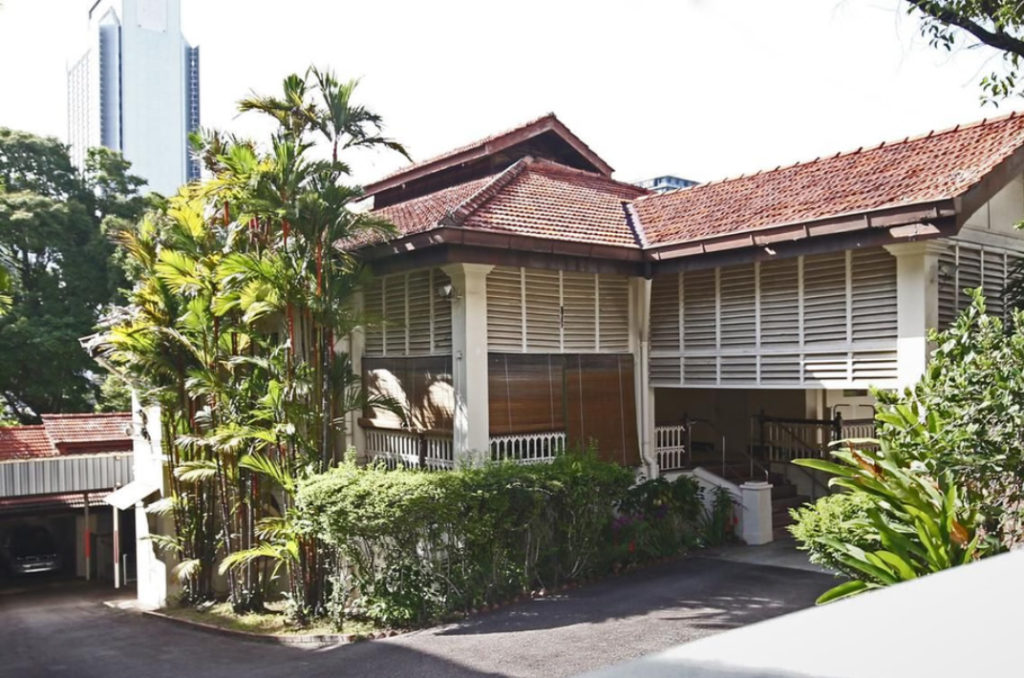
My father, who remained influential until his death in 2015, lived frugally in our old family home throughout his political career and retirement. He was focused on the well-being of Singapore and its people, not self-aggrandizement, and had said that he wanted the house demolished after his death.
My sister and I wanted to honor that wish. This put us at odds with our older brother, Lee Hsien Loong, who was prime minister for 20 years until last year and remains a powerful figure. The house, which has symbolic political value to him and the ruling party, is still standing, against my father’s wishes.
This disagreement should have stayed in the family. Instead, my wife, my son and I have faced a campaign of legal retribution. In 2022, fearing arrest, I left Singapore with my wife for Britain, where we have been granted asylum and live today.
My father was a product of Singapore’s struggle for nationhood. He believed a firm hand was needed after full independence from Britain in 1963, a bitter separation with Malaysia two years later and the country’s emergence as a tiny, multiracial, resource-poor city-state in the middle of the Cold War.
He held officials to high standards and removed those who fell short. He interacted with and listened to a wide spectrum of Singaporeans and was ready to adjust his approach when circumstances changed.
This is no longer the case. Today’s ruling elite is out of touch, and Singapore’s vaunted reputation for efficient, corruption-free governance is in danger.
The government has long claimed that the salaries it pays to its ministers, among the highest in the world, help prevent official corruption and ensure top-quality administration. Singapore still performs well in corruption perception indexes, but perception lags reality. A slew of scandals in recent years has implicated governmentministers, ruling party politicians and influentialstate-linkedcompanies.
The Economist’s latest index of countries most affected by crony capitalism, which was released in 2023, ranked Singapore fourth, after Russia, the Czech Republic and Malaysia. A number of cases indicate that because of its carefully cultivated clean image, Singapore has become a prime destination for those seeking to launder money, evade international sanctions or otherwise dodge financial scrutiny, including wealthy Chinese citizens, Russian entities and drug and arms dealers from Myanmar.
More important to average citizens is that Singapore’s wealth is no longer being fairly distributed. The country has become a playground of the superrich and is routinely ranked as one of the world’s most expensive cities to live in. Providing inexpensive, quality public housing was once a point of national pride; today many citizens can’t find affordable apartments, or they face competition for jobs from foreigners. Public transport breakdowns, flooding and data breaches add to the sense of decline in government competence.
At the same time, the government has doubled down on autocracy, introducing repressive and overly broadlaws in recent years. These are described as necessary to protect national security and social harmony or to combat fake news, but they give the government even more tools to silence dissent. As it did in my father’s time, the government continues to use police investigations, defamation lawsuits and other legal actions to intimidate political opponents, civil society groups and other critics. In February, with elections imminent, a court found Pritam Singh, the leader of the opposition Worker’s Party, guilty of lying under oath to a parliamentary inquiry, which he denies.
There is no chance that the government, headed by Prime Minister Lawrence Wong, will fall on Saturday. The People’s Action Party holds 83 of Parliament’s 93 elected seats and has a firm grip on the institutions of state power and the media. Singapore’s elections are not free and fair. Critics cite last-minute changes to electoral boundaries as signs of gerrymandering. A short nine-day campaign period and limitations on freedom of speech also put the opposition at a clear disadvantage.
In the previous elections, in 2020, the ruling party won 61 percent of the popular vote, among its worst showings, and the Worker’s Party took 10 seats, the most ever for an opposition party. Those results made clear that a growing number of Singaporeans want change. The underlying public concerns that contributed to the 2020 outcome have only intensified since then.
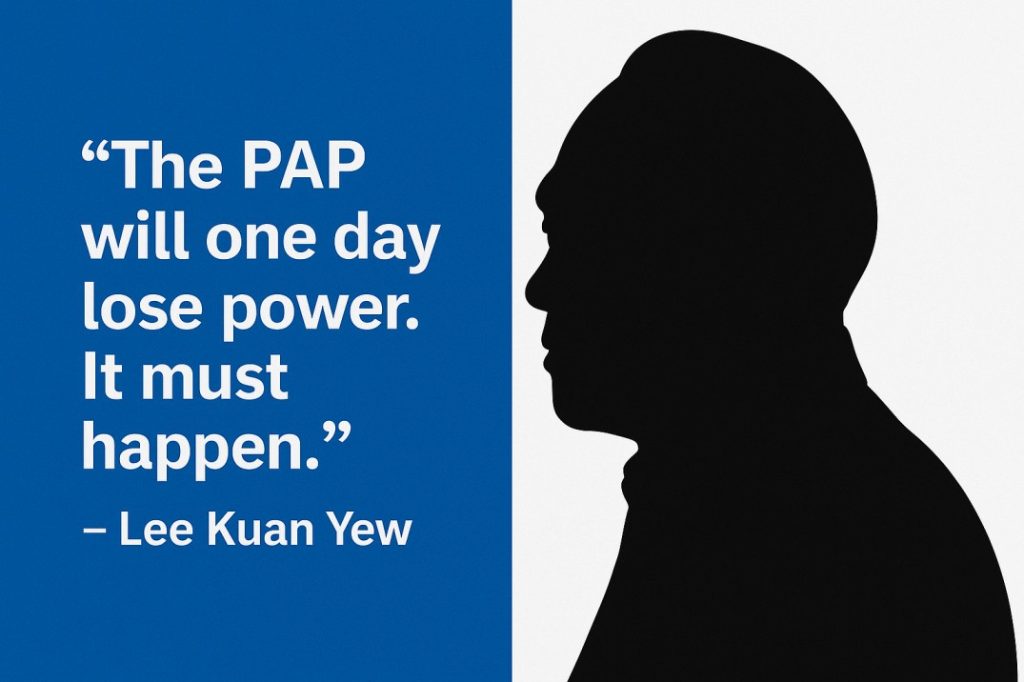
Singaporeans deserve open and accountable government and more say in the policies that affect them. Genuine democracy also will help make Singapore more resilient in withstanding the challenges of a fracturing world. Even my father predicted a day “must come” when the People’s Action Party would no longer be in power.
As successful as Singapore’s system was under my father, it is clear now that it really works only with a man like him in charge. The political scientist Samuel Huntington probably said it best: “The honesty and efficiency that Senior Minister Lee has brought to Singapore are likely to follow him to his grave.”
That prediction has sadly come true.
Lee Hsien Yang is a son of Singapore’s founder, Lee Kuan Yew. He is a former chief executive officer of Singapore Telecommunications Limited and held a number of other public- and private-sector roles. He is a member of the Progress Singapore Party.
He reminded us that while his father governed firmly, he stood for clean governance, shared prosperity, and humility in leadership. 他提醒我们,尽管李光耀强势执政,他始终坚持廉洁的施政、共享的繁荣以及领导者应有的谦逊。
Today, that contract with the people feels broken. 而如今,这份与人民的契约,似乎已经破裂。
Rising inequality, ministerial scandals, unaffordable homes, foreign job competition — these are not the Singapore Mr. Lee envisioned. 日益加剧的贫富差距、部长丑闻、买不起的组屋、外国人抢工作——这不是李光耀心目中的新加坡。
🏠 Oxley Road: The Symbol of Broken Intentions | 乌节路故居:违背遗愿的象征
Mr. Lee wanted his house at 38 Oxley Road to be demolished. It was never meant to be a shrine. 李光耀生前多次强调,他希望38乌节路的故居在他过世后被拆除。他不希望这里成为纪念堂。
Yet the house remains — against his will — and against the very principles he lived by. 但这个房子依旧矗立,不仅违背了他的意愿,也违背了他一生所坚守的原则。
If the ruling party won’t even honor his final wish, what else have they quietly discarded? 如果连李光耀最后的心愿都无法被尊重,那还有多少理念已在沉默中被遗弃?
✅ He’s Not Coming Back. It’s Our Turn Now. | 他不会再回来,现在轮到我们了。
Let’s be clear: Mr. Lee Kuan Yew is not rising from his grave to save us. 我们必须清醒地认识到:李光耀不会从坟墓里爬起来拯救我们。
That responsibility now falls on us — the people. 这份责任,现在落在我们每一个国人的肩上。
He once said: 他曾说过:
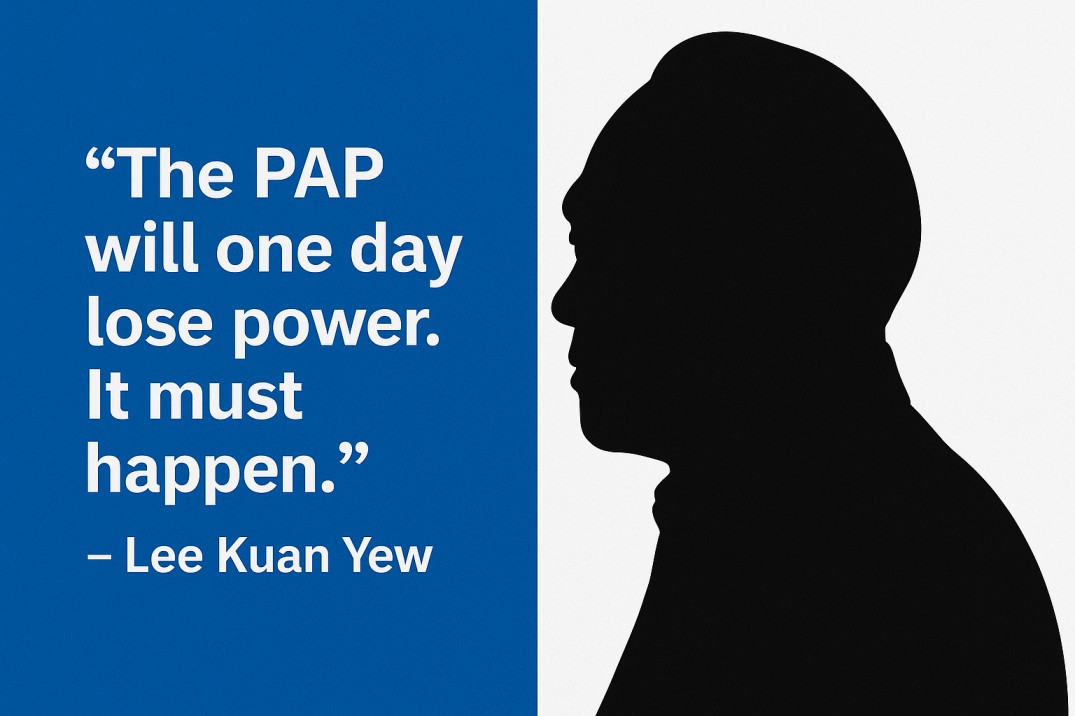
“At some point, the PAP will lose power. It must happen.” “总有一天,人民行动党会失去政权,这是必然。” — Lee Kuan Yew, 《Hard Truths to Keep Singapore Going》
The above was what Mr. Lee Kuan Yew wanted to convey but he worded it carefully in the manner below to not upset the current PAP cadre.
“There will come a time when the public will say, ‘Look, let’s try the other side.’ That day will come.”
以上正是李光耀先生想要传达的意思,只是他用下列更委婉的说法表达,以避免触怒现任人民行动党的中坚成员:
“总有一天,人民会说:‘我们来试试看另一边吧。’那一天终将到来。”
— Lee Kuan Yew, Hard Truths to Keep Singapore
That time could be this week, this month, or this year. 这个时刻,可能就在本周、这个月,甚至今年。
If there is a flicker of his fire left in us — his discipline, courage, and vision — then let us vote for the future he himself foresaw. 如果我们每个人心中都还有一点李光耀的火焰——他的自律、勇气与远见——那就让我们投下为新加坡未来铺路的一票。
📜 Conclusion 结语
Mr. Lee Kuan Yew never intended for the PAP to rule forever. He built a system — not a dynasty. 李光耀从未希望人民行动党永远执政。他建设的是制度,而非王朝。
Today, that system is under strain. 今天,这个制度已面临沉重压力。
Let us be the generation that reforms without fear, votes with clarity, and acts with integrity. 就让我们这一代,不惧改革,清醒投票,守护正义。
If there’s even a little bit of LKY left in us, let’s not just quote him — let’s fulfill what he dared to predict. 如果我们心中仍存有一点李光耀的精神,那就不要只是引用他的名言,而是实践他大胆的预言。
📚 Further Reading | 延伸阅读
- “At some point, the PAP will lose power.” Source: Hard Truths to Keep Singapore Going (2011) “人民行动党总有一天会失去政权。”——《坚定不移:确保新加坡前行的硬道理》
- On clean governance: “I have spent my life building up this system of clean government…” Source: LKY interviews and speeches “我一生致力于建立一个廉洁的政府体系。”
- On demolishing 38 Oxley Road: “I want the house demolished after my death.” Source: LKY’s Last Will & Cabinet records (2015)
- On future leadership needing change: “The time will come for others to make different decisions under different circumstances.” Source: Lee Kuan Yew: The Man and His Ideas (1998) “总会有人在不同环境下,做出不同的决定。”
- Lee Hsien Yang’s article: “My Father Founded Singapore. He Wouldn’t Like What It’s Become.” Published 30 April 2025, The New York Times 📖 Archived on MarVinFoo.com 📖 胡马宾网站中文版链接
🙋♂️ If there is that little bit of LKY within all of us, let’s invoke it — not with reverence, but with action.
🙋♂️ 如果我们心中还存有李光耀的一丝精神,就别光是缅怀——让我们用行动完成他未尽的改革。
This article is also published on LinkedIn. For more interesting stories, insights and articles, please visit the blog section of marvinfoo.com
这篇文章也发布在领英社交媒体。若想读阅类似的文章,请点击此处游览【胡马宾的博客页面】。
![#54 🚀 Lithan AI Masterclass: Future-Ready Skills in Action [💡 Upskill with Impact | #SkillsFuture | #AITransformation | #WorkforceDevelopment]](https://marvinfoo.com/wp-content/uploads/2025/07/IMG20250723161346-768x577.jpg)