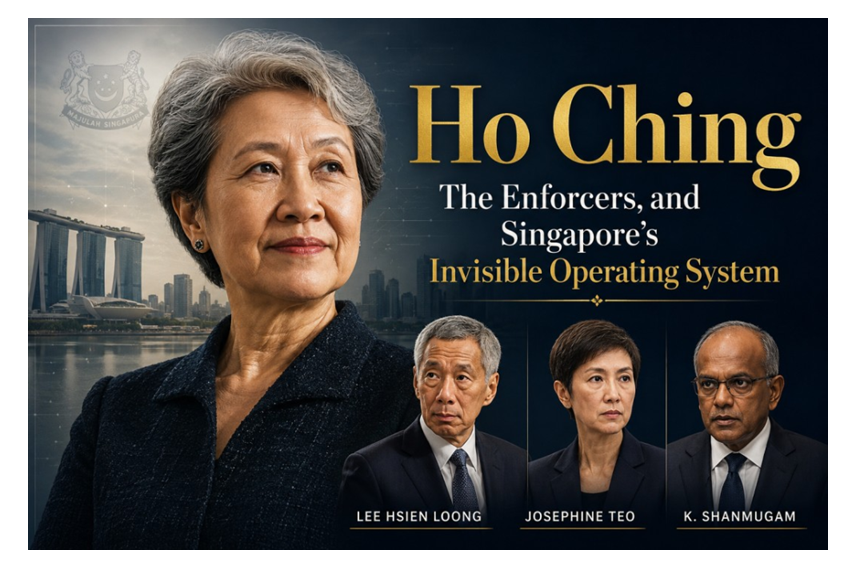
#148 Ho Ching, The Enforcers, and Singapore’s Invisible Operating System 何晶、《执法者》与新加坡的隐形操作系统
My previous article, “Professionalism, Restraint, and the Standards We Choose to Uphold,” spoke about slipping standards, public conduct, and the increasingly fragile balance between authority, restraint, and responsibility in modern Singapore.
Today, I wish to continue that discussion through a different lens.
A woman.
A technocrat.
An engineer.
A steward of capital.
And perhaps one of the most misunderstood figures in Singapore’s modern establishment:
Ho Ching.
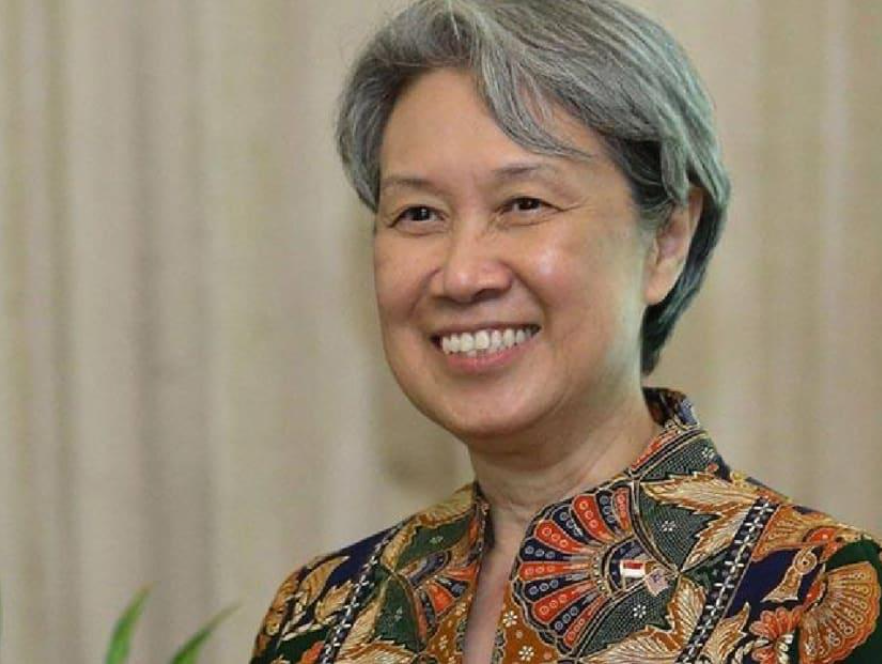
For many years, public discussions around Ho Ching often revolved around her being vocal online, opinionated, direct, or occasionally controversial. Critics questioned why someone of her stature would choose to engage so openly in public discourse instead of maintaining the polished silence often expected from elite institutions.
But perhaps that criticism itself reveals something deeper about society.
We have become so accustomed to politicians, executives, and public figures “playing safe” that when someone actually speaks candidly, reacts emotionally, or expresses concern beyond scripted talking points, people become uncomfortable.
Because genuine concern is messy.
And caring enough to speak always carries risk.
The Engineer Who Rewired a Sovereign Fund
Many younger Singaporeans may not fully remember the difficult years surrounding the Asian Financial Crisis.
It was a period where confidence, capital, and regional stability were deeply shaken. The old assumptions of endless Asian growth no longer looked invincible. Markets corrected brutally. Institutions were forced to rethink themselves.
When Ho Ching stepped into leadership at Temasek Holdings in 2004, the organisation was still largely perceived as a domestically concentrated state-linked holding company.
Under her stewardship:
- Temasek’s portfolio reportedly grew from approximately S$90 billion to over S$380 billion during her tenure.
- The portfolio diversified globally beyond Singapore into China, India, Europe, and the United States.
- Governance structures, investment systems, and institutional frameworks were modernised and professionalised.
- Temasek evolved from a passive custodian of state-linked assets into a globally respected long-term investment institution.
These were not cosmetic changes.
They were structural.
Strategic.
Institutional.
And most importantly, they required difficult decisions during periods of uncertainty.
One may debate specific investments, including failures like Merrill Lynch during the Global Financial Crisis or later controversies such as FTX. But history should also judge the broader trajectory fairly: Temasek under Ho Ching became significantly more resilient, globalised, and future-facing than before.
The Difference Between Administration and Transformation
Running a nation and transforming an investment institution are not the same task.
One is political stewardship.
The other is capital stewardship.
Singapore’s economy during certain phases faced criticism for slowing dynamism, rising costs, widening social anxieties, and a perceived overreliance on old growth formulas. Many Singaporeans quietly questioned whether leadership had become overly bureaucratic, overly cautious, or too dependent on managing stability rather than creating new frontiers.
Against that backdrop, an uncomfortable observation emerged among some business circles:
Was the stronger strategic execution actually happening elsewhere within the broader establishment ecosystem?
Because while the national mood occasionally felt administratively managed, Temasek itself was becoming increasingly global, adaptive, and institutionally ambitious under Ho Ching’s leadership.
This is not to diminish the immense complexity of governing Singapore.
But it is fair to observe that different individuals contributed differently to Singapore’s long-term resilience.
And in Ho Ching’s case, her contributions were substantial.
儒家思想, Institutional Conservatism, and the Invisible Boundaries of Acceptability
To understand reactions toward figures like Ho Ching, one must also understand the deeper cultural operating systems that continue to shape much of Asia, including Singapore.
At the heart of many East Asian societies lies a long historical inheritance influenced by 儒家思想 — Confucian civilisational values emphasising hierarchy, order, restraint, social harmony, and respect for authority.
These values helped build stable societies.
But like all systems, they also carry shadows.
In highly structured environments, individuals who deviate too far from accepted norms often attract disproportionate scrutiny. This applies especially to:
- outspoken women,
- emotionally expressive leaders,
- unconventional personalities,
- independent thinkers,
- and people who do not comfortably fit traditional expectations of quiet conformity.
A man who speaks forcefully may still be tolerated within patriarchal frameworks as “assertive leadership.”
A woman doing the same may unconsciously trigger discomfort because she disrupts deeply embedded expectations surrounding femininity, obedience, and restraint.
This is not unique to Singapore.
It exists across much of Asia.
But Singapore’s version became particularly sophisticated due to its historical circumstances.
After the racial tensions and riots of the 1960s, the state understandably prioritised stability, predictability, and racial harmony above almost everything else. Over time, this produced an institutional culture that became highly sensitive to anything capable of destabilising social cohesion.
The result was a system that often evolved toward managed neutrality:
- carefully calibrated messaging,
- cautious public behaviour,
- tightly moderated discourse,
- and an instinctive preference for low-volatility personalities.
On paper, such systems appear racially neutral — and often genuinely aspire to be.
Yet sociologically, majority-culture assumptions can still quietly shape what is considered “acceptable,” “professional,” or “safe” within institutions.
This does not necessarily require malicious intent.
Sometimes it is simply how dominant cultural norms reproduce themselves over time: through language, through bureaucracy, through hiring preferences, through social comfort zones, through elite networks, and through unwritten expectations.
In this context, figures like Ho Ching become unusually interesting.
Because she simultaneously operated:
- within the establishment,
- yet occasionally outside its expected behavioural scripts.
A technocrat.
A woman.
A powerful executive.
Someone capable of both discipline and unpredictability.
And perhaps that is precisely why reactions toward her have always been so emotionally charged.
The Enforcer, The Punching Bag, and the Politics of Controlled Outrage
Every governance system eventually produces a particular archetype.
The enforcer.
Not necessarily the most loved figure.
Not always the most publicly charismatic.
But the one tasked with carrying the political burden of unpopular decisions.
In Singapore’s context, few figures embody this more visibly than K. Shanmugam.
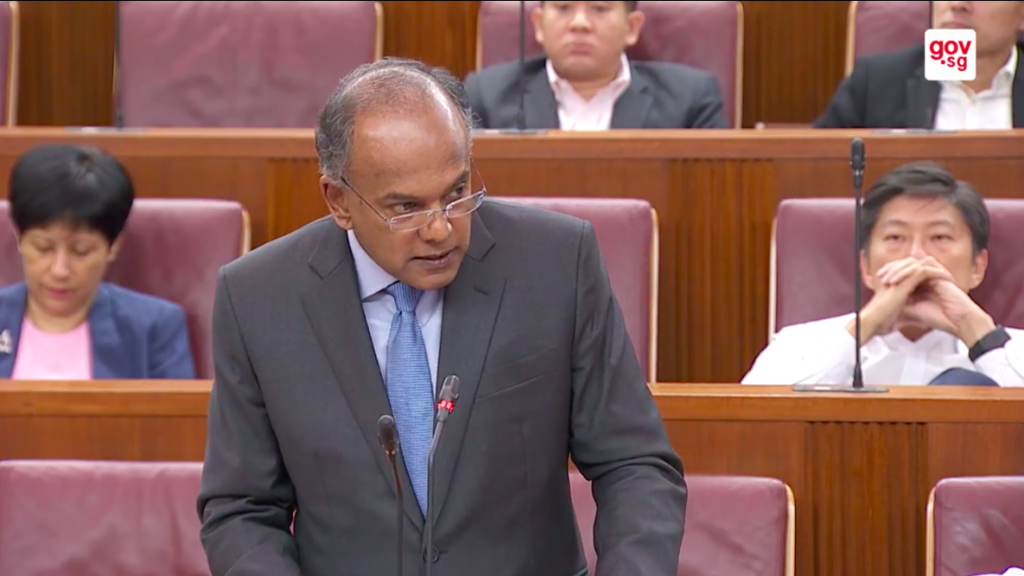
Over the years, both he and his constituency of Yishun somehow became recurring symbols within public discourse:
- strict enforcement,
- elite governance,
- hardline policies,
- legal rigidity,
- and occasionally the frustrations ordinary Singaporeans feel toward the broader establishment itself.
Whether fair or unfair, Yishun gradually evolved into a strange cultural metaphor within Singapore’s internet age — part humour, part social anxiety, part political projection.
And perhaps that symbolism itself says something deeper about modern governance.
Because in tightly managed systems, public frustration rarely vents evenly across institutions.
Instead, societies subconsciously channel their anger toward visible personalities.
The “face” of enforcement.
The minister associated with discipline.
The one willing to absorb public hostility while preserving broader institutional stability.
In many Asian governance traditions influenced by hierarchy and statecraft, this role is not entirely accidental.
Throughout imperial history, there were always officials tasked with implementing harsh policies while rulers maintained strategic distance from direct emotional backlash.
One could call it political insulation.
Or perhaps, borrowing from ancient terminology:
帝皇术。
The Art of Imperial Rule.
This does not necessarily imply conspiracy.
Nor does it mean individuals like Shanmugam are powerless participants.
On the contrary, one thing even critics would struggle to claim is that Shanmugam is unintelligent.
Far from it.
Which raises an interesting question:
If someone politically experienced repeatedly walks into situations that generate enormous optical backlash, is it simply incompetence?
Or is part of the role precisely to become the lightning rod?
The designated absorber of public outrage so that pressure does not destabilise the broader structure itself?
I do not claim to know the answer.
But sophisticated political systems throughout history have rarely operated purely on surface appearances alone.
Especially small states navigating immense geopolitical, economic, racial, and social pressures simultaneously.
And perhaps that is why modern Singapore increasingly feels less like a simple democracy-versus-authoritarianism debate, and more like a constant balancing act within a permanent grey zone of survival.
A place where:
- order must coexist with resentment,
- meritocracy with hierarchy,
- multiculturalism with majority norms,
- openness with control,
- and stability with carefully managed pressure release valves.
In such systems, the enforcer is rarely loved.
But historically, the enforcer is often necessary.
Clan Associations, Gatekeeping, and the Quiet Anxiety of Identity
Recently, I walked into the Nanyang Hakka Federation, formerly known as the Nanyang Khek Community Guild.
The atmosphere was revealing.
The air felt cautious.
Measured.
Suspicious.
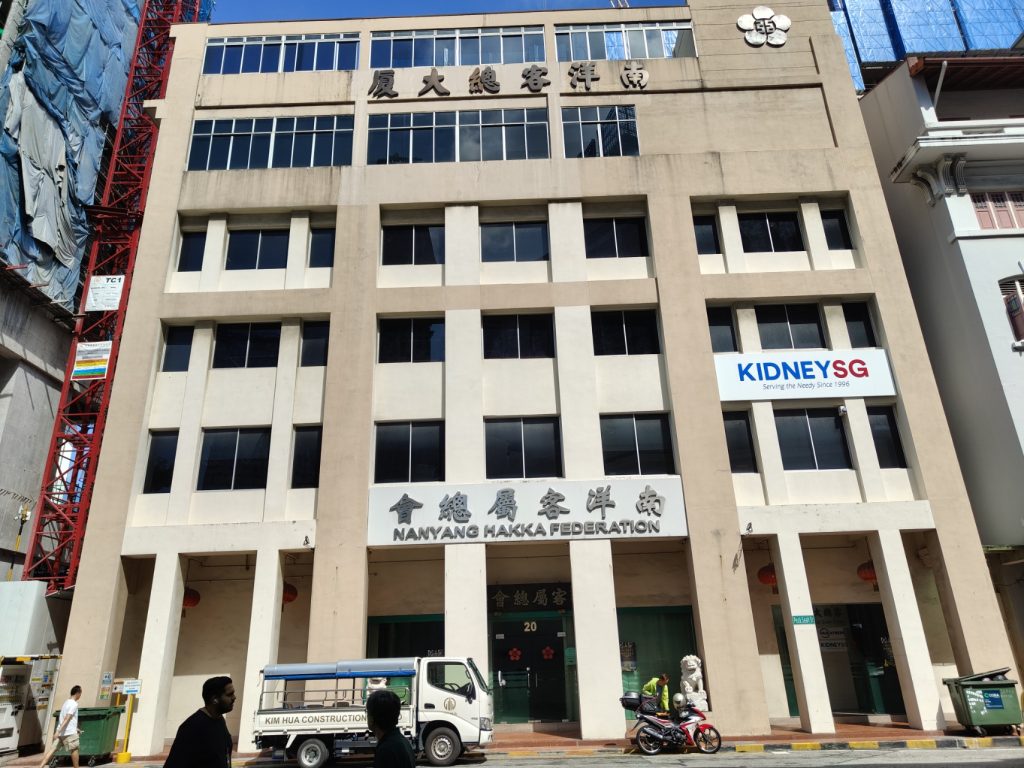
If not for my strong grasp of the Chinese language and my understanding of Hakka culture, I genuinely wondered whether I would have been welcomed so easily by some of the traditional gatekeepers within the system.
Only then did I begin to understand why some of my elders quietly hinted that I should walk in independently, without referrals or visible alignment from them.
Inside the premises, the most prominently displayed political figures appeared to be Lee Hsien Loong and Josephine Teo.
Curiously, there also did not appear to be any similarly prominent photographs of Ho Ching displayed within the premises.
Perhaps there are innocent explanations.
Perhaps institutional preferences.
Perhaps simply internal curatorial decisions.
But symbolism matters.
Especially in institutions tied to heritage, identity, influence, and power networks.
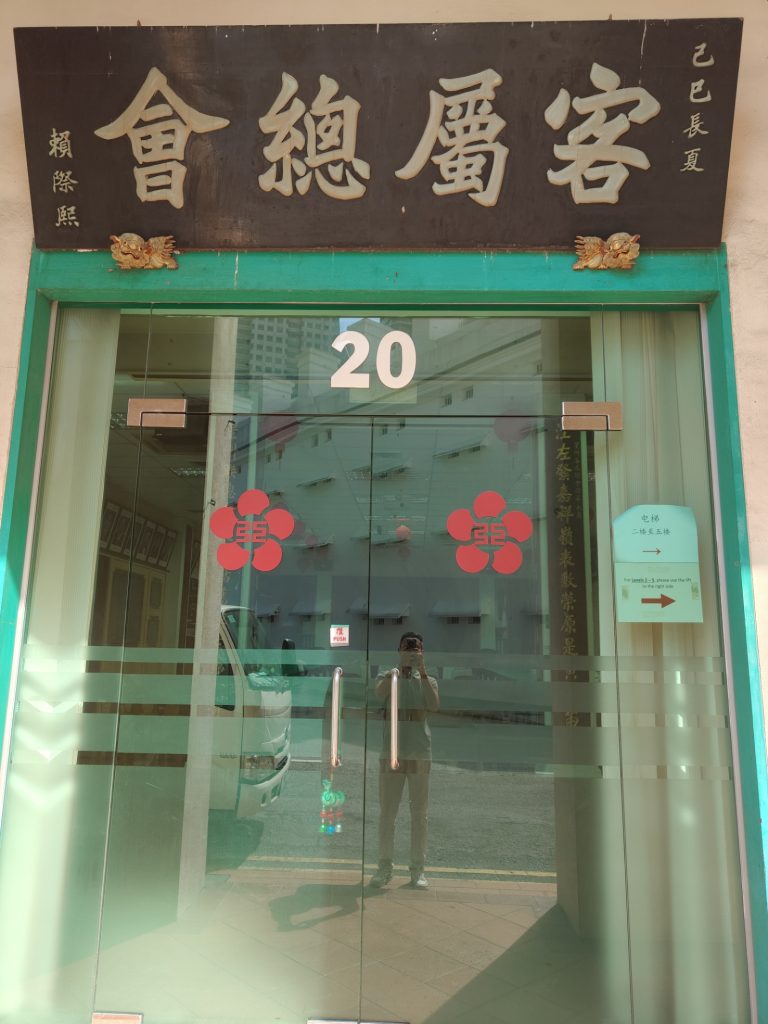
The visual pairing of Lee Hsien Loong and Josephine Teo was itself interesting, particularly when viewed against broader public optics over the years.
More recently, both Lee Hsien Loong and Josephine Teo were also publicly seen together during launch tours of newly opened national attractions and cultural spaces — symbolic appearances that naturally reinforce perceptions of political alignment and establishment continuity in the eyes of observers.
Public appearances matter because institutions communicate not only through policy, but also through imagery, proximity, and signalling.
I previously touched on some of these themes in my earlier article discussing power structures, gender dynamics, and institutional behaviour.
Separately, another curious detail stayed with me.
Teo Eng Cheong — husband of Josephine Teo — appeared as a LinkedIn profile visitor to my account, after which the platform suggested a potential connection. I eventually sent a connection request, though no engagement followed.
Perhaps it was algorithmic coincidence.
Perhaps simple professional curiosity.
Or perhaps merely one of those small moments modern digital systems produce every day.
Still, in tightly networked societies, people naturally begin reading meaning into silence, proximity, and non-response.
Especially in environments where direct conversations are often replaced by signalling, intermediaries, and carefully calibrated distance.
Even the evolution of the organisation’s name is sociologically interesting.
The older term “Community Guild” carried the feeling of a grassroots dialect association.
The newer term “Federation” sounds more formalised, centralised, institutionalised — similar to many modern umbrella structures that increasingly align themselves with broader state-linked ecosystems.
This may simply reflect modernisation.
Or perhaps it reflects how clan organisations gradually evolved from independent cultural bodies into entities operating closer to the gravitational influence of national institutions and political frameworks.
Again, I raise this as observation, not accusation.
Of course, silence means many things to different people.
To some, silence means professionalism.
To others, silence means caution.
And to still others, silence eventually begins to resemble consent to the systems already in motion around them.
And perhaps that is the final irony of Singapore itself.
A small island.
A tightly connected elite ecosystem.
A society where politics, clans, institutions, business networks, and social hierarchies constantly overlap within confined spaces.
Sometimes physically.
Sometimes psychologically.
Sometimes politically.
Perhaps that is why certain quotes become immortal in the public imagination.
To borrow from one of Josephine Teo’s most memorable remarks that Singaporeans still jokingly reference today:
“You only need a very small space.”
Indeed.
In Singapore, perhaps all that is required for power, influence, proximity, signalling, suspicion, alliances, rivalries, and political theatre —
is also just a very small space.
A small cabinet.
A small island.
A small room.
A small network.
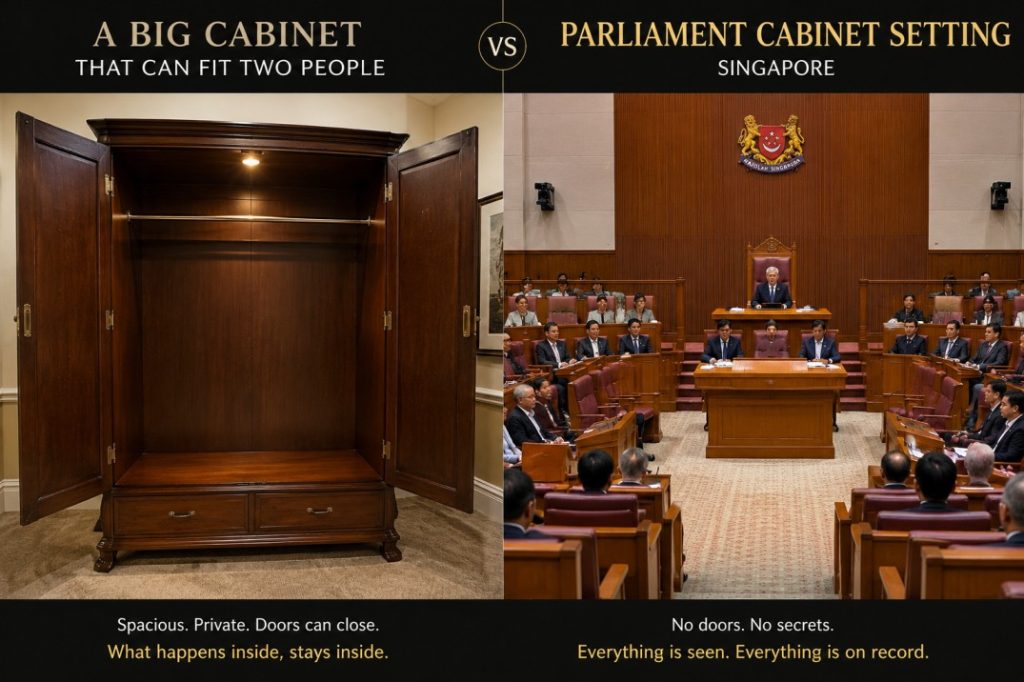
And sometimes, within such tightly compressed systems, the distance between governance, loyalty, performance, survival, and silent compromise becomes smaller than people dare openly admit.
This article is also published on LinkedIn.
何晶、《执法者》与新加坡的隐形操作系统
我上一篇文章《Professionalism, Restraint, and the Standards We Choose to Uphold(专业、克制,以及我们选择维护的标准)》谈到了新加坡社会逐渐滑落的标准、公共行为,以及权力、克制与责任之间日益脆弱的平衡。
今天,我想从另一个角度继续这个话题。
一个女人。
一个技术官僚。
一个工程师。
一个资本的掌舵者。
也可能是新加坡现代体制里,最被误解的人物之一:
何晶。
至少,她愿意真诚地开口
多年以来,公众对何晶的讨论,往往集中在她“太敢说话”、“太有意见”、“太直接”,甚至偶尔“太具争议性”。
很多人质疑:为什么一个身处如此高位的人,会选择如此公开地表达自己,而不是像许多体制人物那样,保持一种经过精心包装的沉默?
但也许,这种批评本身,恰恰揭示了社会更深层的问题。
我们早已习惯了政治人物、企业高层、公共人物“安全地发言”。
以至于,当有人真正带着情绪、带着关切、带着真实感去表达时,人们反而开始感到不安。
因为真正的关心,从来都不是整齐、干净、无风险的。
而“愿意开口”,本身就是一种代价。
重塑主权基金的工程师
很多年轻的新加坡人,未必真正经历过亚洲金融风暴时期的低谷。
那是一个资本、信心、区域秩序全面动荡的时代。
曾经看似不可撼动的“亚洲增长神话”被现实狠狠修正。
市场暴跌。
制度被迫重新思考自身。
2004年,当何晶接手淡马锡控股(Temasek Holdings)时,淡马锡仍主要被视为一个高度集中于本地资产的政府控股机构。
在她的领导下:
- 淡马锡资产规模从约900亿新元增长至超过3800亿新元;
- 投资布局大幅国际化,扩展至中国、印度、欧美市场;
- 治理结构、投资体系与机构化能力全面升级;
- 淡马锡从“国家资产保管者”,转型为全球级长期资本机构。
这些变化,不是表面的。
而是结构性的。
战略性的。
制度性的。
更重要的是——这些决定,都是在巨大不确定性中完成的。
当然,历史也会记得她的一些失败投资,例如金融危机时期的美林,以及后来的FTX事件。
但如果以更长远的角度看,何晶时代的淡马锡,确实变得更加全球化、更具韧性、更面向未来。
治国,与改造机构,从来不是同一种能力
经营一个国家,与改造一个投资机构,从来不是同一种任务。
一个,是政治治理。
一个,是资本治理。
新加坡在某些阶段,也曾面对经济增长放缓、社会焦虑扩大、成本上升,以及创新动力不足的批评。
不少人开始怀疑,国家是否越来越偏向“维稳式管理”,而不是开创新局。
也正是在这种背景下,商界中开始出现一种微妙观察:
真正具有战略执行力的人,是否其实在体制的另一个层面?
因为当整个社会氛围逐渐显得官僚、谨慎、保守时,淡马锡却在何晶手中,越来越国际化、越来越灵活、越来越具野心。
这并不是否定治理国家的复杂性。
而是必须承认:
不同的人,对新加坡的长期稳定,贡献的方式并不一样。
而何晶的贡献,毫无疑问是巨大的。
儒家思想、制度保守主义,与“可接受边界”
若要理解社会为何对何晶有如此复杂的情绪,也必须理解整个东亚社会更深层的文化操作系统。
包括新加坡。
许多东亚社会的核心,长期受到儒家思想影响:
强调等级、 秩序、 克制、 服从、 以及对权威的尊重。
这些价值观曾帮助亚洲建立稳定社会。
但所有系统,都有其阴影。
在高度结构化的环境里,任何偏离主流规范的人,往往都会受到更严厉的审视。
尤其是:
- 敢说话的女性;
- 情绪表达明显的领导者;
- 不按剧本行事的人;
- 独立思考者;
- 不愿安静服从的人。
男性强势,常被称为“领导力”。
女性强势,却容易被形容成“难搞”。
而何晶,从来都不是那种“适合被摆设”的女性。
她是工程师出身。
系统导向。
执行导向。
有时带情绪。
有时毫不掩饰。
也许正因为这种真实性,她才会让许多人感到不安。
因为沉默很容易。
制度式发言很容易。
公关稿式人格很容易。
真正背负责任地说话,很难。
《执法者》、“出气筒”,以及被管理的愤怒
每一个治理体系,最终都会产生一种角色。
执法者。
未必最受欢迎。
未必最有魅力。
但却必须承担“不受欢迎决定”的政治代价。
在新加坡,这个角色,很大程度上落在尚穆根(K. Shanmugam)身上。
多年以来,他与义顺(Yishun)仿佛逐渐变成一种社会象征:
- 强硬执法;
- 精英体制;
- 高压治理;
- 法律铁腕;
- 以及人民对体制不满时的投射对象。
义顺,甚至逐渐演变成一种网络文化符号。
半玩笑。
半焦虑。
半政治投射。
但这背后,也许揭示了更深层的现实:
在高度管理化的制度中,人民的愤怒,并不会平均分配。
社会往往会把情绪集中投射到某些“代表人物”身上。
执法者。
纪律执行者。
那个负责承受公众怒火的人。
而在亚洲传统政治文化里,这种角色从来都不是偶然。
帝王需要距离。
执行者负责承受。
古代如此。
现代未必完全不同。
这,就是所谓的:
帝皇术。
我并不是说存在阴谋。
也不是说Shanmugam毫无主观意识。
恰恰相反。
没有人会认真认为他是个愚蠢的人。
所以问题来了:
如果一个经验丰富的政治人物,一再陷入巨大“政治观感危机”,那究竟只是失误?
还是某种“角色功能”本身?
那个负责吸收社会压力的人?
我没有答案。
但历史上的成熟政治体系,从来都不只是表面那么简单。
宗乡会馆、把关文化,与身份焦虑
最近,我走进了南洋客属总会(Nanyang Hakka Federation)——也就是过去的“南洋客属公会(Nanyang Khek Community Guild)”。
空气中的感觉,很明显。
谨慎。
戒备。
带着某种审视。
如果不是因为我中文能力还算扎实,又熟悉客家文化,我甚至怀疑自己是否会那么容易被接受。
直到那一刻,我才真正理解,为何一些长辈曾暗示我:
“你自己进去,不要通过我们介绍。”
馆内最显眼的位置,挂着的是李显龙与杨莉明(Josephine Teo)的照片。
有趣的是,我却没有看到何晶的显著照片。
也许只是巧合。
也许只是内部安排。
但象征,从来都很重要。
尤其在涉及身份、权力、宗族、政治网络的空间里。
李显龙与杨莉明的“并列呈现”,本身就很耐人寻味。
尤其是在近年来,两人也频繁一起出现在新国家景点、文化设施与活动开幕巡访中。
这种公开同框,本身就会强化外界对于政治联盟与体制延续性的联想。
因为制度不只是通过政策来沟通。
它也通过:
影像、 站位、 距离、 同框、 以及象征。
我之前在另一篇关于权力结构与制度文化的文章中,也曾提到类似主题。
另外,还有一个细节让我印象深刻。
杨莉明的丈夫——杨绍梁(Teo Eng Cheong)——曾浏览过我的LinkedIn个人页面,之后LinkedIn还主动建议我与他建立联系。
我后来发送了邀请。
但没有任何回应。
也许只是算法巧合。
也许只是职业上的好奇。
也可能只是现代社交平台里一个微不足道的小插曲。
但在高度网络化的社会里,人们自然会开始解读:
沉默、 距离、 靠近、 以及“不回应”本身的意义。
尤其是在一个很多事情都通过“暗示”、“中间人”、“保持距离”来运作的环境里。
甚至,“Community Guild(公会)”后来改名为“Federation(联合会)”这件事,本身也很有社会学意义。
“公会”带有浓厚的民间、草根、方言社群色彩。
“联合会”则更制度化、更中央化、更像被纳入更大的官方生态之中。
也许这只是现代化。
也许它反映的是:宗乡组织正在逐渐从独立民间文化体,演变成更靠近国家权力框架的延伸结构。
我这里只是观察,不是指控。
当然,沉默对不同的人来说,有不同意义。
对一些人而言,沉默是专业。
对另一些人而言,沉默是谨慎。
而对更多人而言,沉默久了,就会逐渐像是一种默认与认同。
新加坡最后的讽刺
也许,这正是新加坡最深层的讽刺。
一个小岛。
一个高度紧密连接的精英生态。
一个政治、宗乡、商业、体制、人脉与社会阶层高度重叠的社会。
有时是物理上的。
有时是心理上的。
有时是政治上的。
也正因如此,某些名言才会在公众记忆里永远流传。
借用杨莉明最经典、至今仍被新加坡人不断调侃的一句话:
“只需要很小的空间。”
确实。
在新加坡,
权力、 影响力、 靠近、 暗示、 猜疑、 联盟、 竞争、 政治戏剧——
或许也都只需要:
一个很小的空间。
一个小内阁。
一个小房间。
一个小圈子。
一个小网络。
而在如此压缩的系统里,
治理、 忠诚、 表演、 生存、 以及沉默式妥协之间的距离,
往往比人们愿意承认的,还要更近。