#85 Singapore’s Food Identity in Flux: Welcoming Change While Holding Ground #85 新加坡的饮食身份正在重塑:欢迎改变,也要守住根基
中文版在英文刊文下方
In Singapore today, there’s a growing tension between heritage narratives and market realities. We champion hawker culture, Peranakan heritage, and food icons passed down through generations; yet in the same breath, longtime operators are being squeezed out as new Chinese restaurant brands proliferate, rents soar, and immigrant capital fills the void.
I believe this transformation isn’t merely a displacement; but a necessary dilution of dominance, a reset of the playing field, and a chance for Singaporean Chinese to reinvent our role as cultural bridges.

Heritage vs Displacement: The Paradox at Ground Level
The government proudly touts hawker culture as a national heritage to be safeguarded. But on the ground, many beloved local cafés and stalls have folded under property pressures. The CNA Voices article on café and F&B closures highlights how rising costs, landlord demands, and thin margins are forcing small operators to shutter.
“Landlords and operators raise rents beyond local hawkers’ reach”; that disconnect between policy symbolism and economic reality is widening.
Meanwhile, new Chinese immigrant–backed chains are entering heartlands and malls with strong staying power. They bring capital, network connections, and economies of scale that older local family-run businesses often lack the resources to counter.
From Monopolies to Mixture: Why I Welcome the Change
To some, the influx of fresh Chinese gastronomic brands signals cultural erosion. But I see something more promising: a break in entrenched local monopolies. For decades, a few dominant Chinese-Singaporean business clans have controlled supply, real estate, and influence in the Chinese F&B ecosystem. Their dominance limited innovation, market entry, and fair competition.
The arrival of new Chinese diaspora; from Hunan, Hakka, Guangzhou, Sichuan dilutes those old concentrations. It forces existing players to adapt, promotes diversity in taste, and injects fresh capital and ideas.
In this sense, I don’t cling to old names just because they are familiar. I welcome a new mix of Chinese identities in Singapore, especially when it challenges stasis, staleness, and cultural rigidity.
Why Singapore Turned the Tap Wide — Roots, Strategy, and Identity
Weak Roots, Western Lean
Historically, many Chinese Singaporeans adopted Western education, Christian denominations (Methodist, Protestant), and English-dominant lifestyles. The result: a drifted relationship with China, linguistically and culturally. By contrast, new immigrants arrive with deeper dialect, regional, and cultural ties to various Chinese provinces.
To remain relevant in Asia’s new economic order, Singapore has been incentivised explicitly and implicitly to import Chinese talent, networks, and consumption capital. The open immigration “tap” is in part a strategic hedge: plug in the cultural and business connectivity that a Western-leaning local Chinese population may not fully supply.
Food as Early Marker
Food is often the first sign of deeper cultural realignment. In recent years:
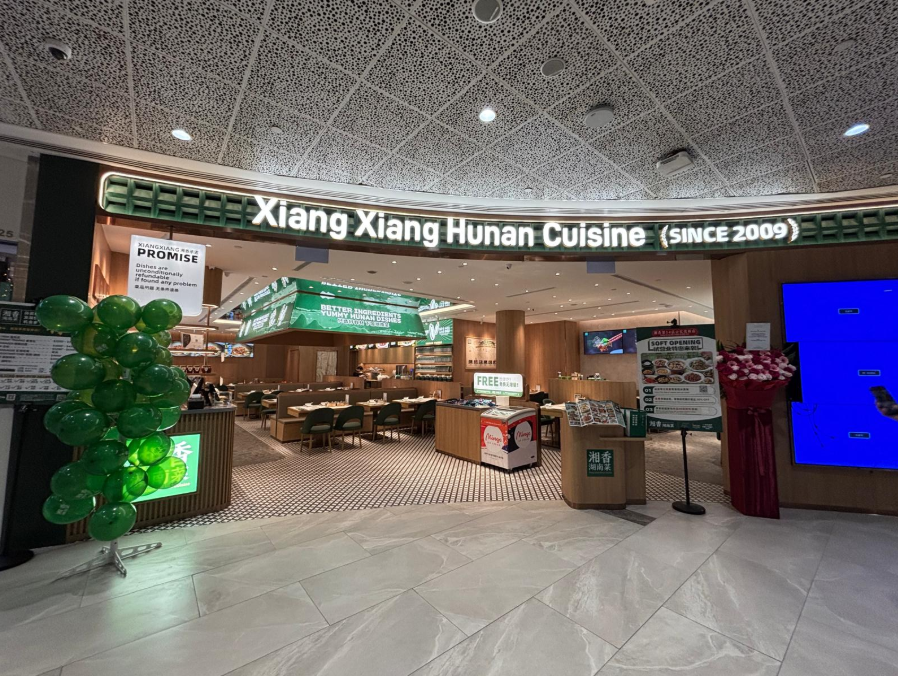
- Xiang Xiang Hunan Cuisine has grown aggressively. The brand began in Chinatown (Smith Street) in 2009 and by 2024 had expanded to 15 outlets across Singapore, rebranding under one unified identity.
- Its dishes like Hunan Stir-Fry Pork, Golden Broth Sour & Spicy Fish, 18-Second Angus Beef Stir-Fry have become local signatures.
- Many outlets now sit in heartland malls (AMK Hub, Sengkang Grand, Seletar Mall).
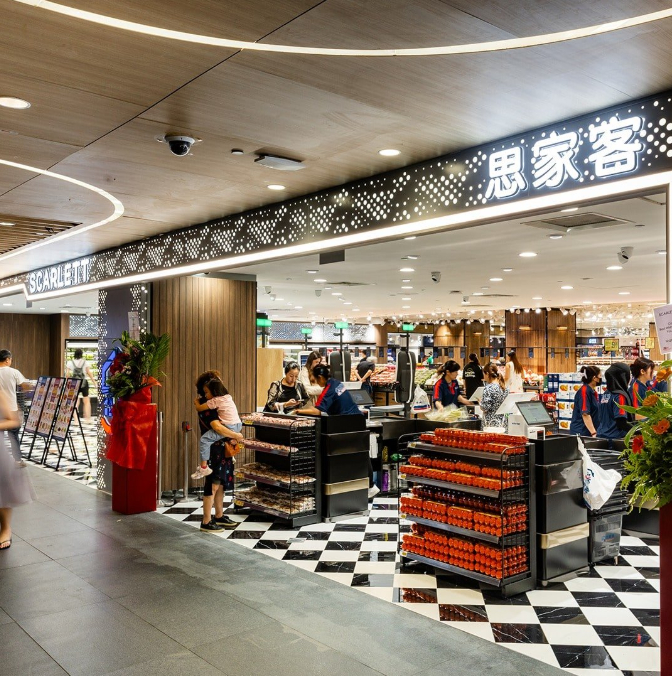
- Scarlett Supermarket (思家客) is another example; a primarily China-focused grocery chain, now with 39 outlets across Singapore, selling snacks, condiments, frozen goods, sauces, and daily essentials imported from China.
- Some Scarlett outlets also operate hot food stations and fresh/ready-to-eat counters, pushing into the restaurant and grocery hybrid space.
Consider mala (麻辣香锅 / mala xiang guo): once niche, it’s now mainstream. The dish is a customizable stir-fry in a spicy, numbing sauce has been globalised through diaspora Chinese cuisine and proliferated in Singapore’s heartlands.
These shifts are not neutral; they carry cultural weight. The trends suggest that Cantonese cuisine’s dominance (fueled by Hong Kong pop culture in the ’80s–’90s) is giving way to mainland regional cuisines because today’s immigrant wave is directly aligned with those regions.
Bridging East and West: Singaporeans’ Strategic Role
Rather than resist this shift, Singaporean Chinese can strategically position ourselves as intercultural bridges. We are uniquely placed: English-leaning, globally exposed, and experienced in mediating East-West trade, culture, and growth.
Here’s how we can contribute meaningfully:
- Collaborate and co-found with new Chinese immigrant entrepreneurs, combining their operational and dialect networks with our institutional and international networks.
- Export Singapore brands into China or diaspora markets using these new partnerships.
- Advocate structural support, not just nostalgia: push for SME protections, rent subsidy schemes, landlord regulation, and cultural grants that help local F&B coexist with new entrants.
- Document evolving heritage: record the stories of old hawkers, Nyonya kitchens, Baba-Peranakan narratives, and fold them into living, evolving food identity rather than treating them as static relics.
Caveats & Cultural Anchors
This is not an unqualified endorsement of “anything goes.” Risks exist:
- Overwriting: Local, fragile food traditions may vanish if they are not actively preserved.
- Cultural alienation: For older generations and less mobile Singaporeans, a sudden shift in the familiar foodscape may feel disorienting.
- Economic inequality: Immigrant-backed brands may have capital advantages that small locals can never match without systemic support.
So the question is not whether change should happen, but how it can happen with equity, respect, and continuity.
Closing & Call to Reflexivity
Singapore is changing, and changing fast. Locals are out; new immigrants are in. Just as the Peranakan kitchens faded into history, the current Singapore Chinese which is a hybrid, Western-leaning, moderate may also be transitory. But instead of mourning a loss, we can choose to participate in the remaking: shaping a future in which heritage and innovation coexist, and where Singaporeans don’t get sidelined but rather become translators and connectors between East and West.
Further Reading & References
- Café closures and rising costs (CNA Voices) — the structural pressures on small F&B operators: https://www.channelnewsasia.com/today/voices/cafe-food-and-beverage-fb-business-eatery-singapore-closure-5365741
- Reddit conversation about hawker displacement & identity (e.g. “hawks being chased out”) — anecdotal, grassroots voice: https://www.reddit.com/r/singapore/s/awwByxLPDL
- Scarlett Supermarket official site (product range, store numbers): https://www.scarlettsupermarket.com.sg/
- Xiang Xiang Hunan Cuisine official & background: https://xiangxianghunancuisine.com/
P.S.
When the “We First” rhetoric was met with public pushback and taken down by Singaporeans in the weeks after the National Day Rally, ministers pivoted quickly. In the past few days, the messaging has shifted to a softer “You”-focused theme — an interesting sign of how public sentiment and grassroots identity are forcing adjustments at the top.
This article was written after a reader suggested that I write an opinion on this topic. Thank you for your readership and engagement.
This article is also published on LinkedIn.
One important point which I like to highlight is the need for the local Hokkien community to be more diversified; to prevent the entrenched and already powerful Hokkien community deter Hokkiens from Fujian, China who are keen to migrate to Singapore but faces exclusion due to non-related power bases to the local Hokkien clans and community. Clans should help integration and not force allegiance; instead, diversity and inclusivity mean respecting the freewill of the individual.
#85 新加坡的饮食身份正在重塑:欢迎改变,也要守住根基
今天的新加坡,正处在 “传承叙事”与“市场现实” 的拉扯中。我们大力宣扬小贩文化、娘惹美食与代代相传的国家味觉符号——但与此同时,许多经营多年的老字号却因租金高涨被迫关门,而一批又一批来自中国的新品牌迅速崛起、资本雄厚,稳占社区商场。
我认为,这场转变不只是取代,更是 必要的稀释 ——它重置了权力格局,也给新加坡华人一个机会,重新定位自己,成为东西方的桥梁。
传统与被取代:基层现实的矛盾
政府大力宣告要“保护小贩文化”,但在地面上,许多熟悉的咖啡馆与摊位因租金压力、营运成本上升而被迫结业。 CNA Voices 关于咖啡馆和餐饮业者倒闭的文章指出,房东加租、运营成本飙高,使得小本经营者无法生存。
“政策上高喊传承,但经济环境却逼得本地小贩无路可走”——这种象征与现实的落差正在扩大。
与此同时,背靠新移民资本的新中式餐饮品牌正进驻各大商场与邻里社区,凭借资金、人脉和规模化管理站稳脚跟。
从垄断到多元:为何我欢迎这种变化
对一些人来说,新一波中国餐饮品牌的涌入象征着文化被侵蚀。但我看到的是另一种可能:打破本地旧有的经济垄断。 过去几十年,新加坡华人商业圈中有少数家族长期掌控餐饮供应、地产与渠道资源,限制了创新和新玩家的进入。
如今,来自 湖南、客家、广州、四川 等地的新移民加入,稀释了这些旧势力,迫使市场重组,也带来了资本、创意与竞争。
因此,我不盲目怀旧。对我来说,新的华人混合体 是必要的,也能让僵化的商业与文化格局获得新生。
为何新加坡大开移民之门:根源、战略与身份
根基浅薄、偏西化
长期以来,许多新加坡华人接受西式教育,英语为主,信仰基督教、卫理公会、新教等。这导致我们与中国的语言与文化联系相对薄弱。反观新移民,多数保有浓厚的方言、地域与文化纽带。
为了在亚洲新经济格局中保持相关性,新加坡显然在 战略性地引入中国人才、资本与消费力。开放移民的大门,是一种 文化与商业的对冲:弥补本地华人无法全面提供的中国连结。
食物是最早的文化风向标
饮食往往是文化变动的第一信号。近年来:
- 湘湘湘菜馆(Xiang Xiang Hunan Cuisine) 在本地快速扩张。品牌 2009 年起家于牛车水,至 2024 年已在全岛开出约 15 家分店,并统一品牌形象。
- 招牌菜包括 湘炒肉、金汤酸辣鱼、18 秒安格斯小炒黄牛肉,已成为许多食客的新宠。
- 门店广布在 AMK Hub、盛港广场、实里达商场等邻里大型商场。
- 思家客超市(Scarlett Supermarket) 也是一例——一个专注中国商品的连锁超市,至今在新加坡已开出约 39 家门店,贩售零食、调味料、冷冻食品与日用品;部分分店还设有 现煮热食区与简餐档口,直接将“超市+餐饮”模式带进社区。
- 麻辣香锅 曾是小众,如今已完全主流化;可自由搭配的麻辣锅物在新加坡社区随处可见。
这些趋势并非中性。它们意味着:曾因 80–90 年代港片风潮而国际化的粤菜霸主地位,正被中国内地各区域菜系取代——因为当下的移民潮,直接来自这些地区。
新加坡华人的机会:成为东西文化桥梁
与其抗拒,不如主动 重塑定位。新加坡华人长期受西式教育、英语流利、国际化视野强,正好可以:
- 与新移民合伙创业:结合他们的本土网络与我们的国际化与制度熟悉度。
- 把新加坡品牌带入中国或全球华人市场,利用新移民的人脉和消费趋势。
- 推动制度性支持:要求政府不仅给传承奖章,也要改革租赁环境、支持本地中小餐饮企业与文化创业。
- 记录并演化在地文化:把小贩、娘惹、峇峇的故事转化为活的传承,而非博物馆式的怀旧。
风险与底线
这并不意味着“任何改变都欢迎”。风险包括:
- 过度覆盖:若无保护,本地脆弱的饮食传统可能彻底消失。
- 文化疏离:年长一代或较少出国的人,可能在熟悉的饮食环境骤变时感到被边缘化。
- 经济失衡:背后有强大资本的新品牌,常常是小型本地商家无法匹敌的。
所以问题不在于 要不要变,而在于 如何公平、尊重且延续地去变。
结语
新加坡正在快速改变。本地人正在退出舞台,新的移民正在走上前台。就像娘惹厨房终将淡出历史,如今这种英语主导、偏西化的“新加坡华人混合体”也可能只是过渡形态。 与其被动怀旧,不如 积极参与重塑:让传统与创新共存,让新加坡人不再被边缘化,而是成为东西方文化与商业的桥梁与翻译者。
延伸阅读
- 咖啡馆与餐饮业者倒闭的深层原因(CNA Voices) https://www.channelnewsasia.com/today/voices/cafe-food-and-beverage-fb-business-eatery-singapore-closure-5365741
- Reddit 社区关于小贩被迫迁移、饮食身份流失的讨论 https://www.reddit.com/r/singapore/s/awwByxLPDL
- 思家客 Scarlett Supermarket 官方网站 https://www.scarlettsupermarket.com.sg/
- 湘湘湘菜馆官方资料 https://xiangxianghunancuisine.com/
附言
在今年国庆群众大会(National Day Rally)之后,政府宣传的 “We First” 口号遭到民间反弹并被撤下。仅仅几天内,部长们便迅速转向以 “You” 为核心的新叙事与宣传主题——这正说明基层身份认同的压力,已经逼使高层调整话语与沟通方式。
一位读者建议我在这个课题上发表言论,感谢关注。
此刊文也发布在领英社交媒体。
重要的一点是,福建新移民务必多元化; 避免现有掌权的本地福建社群排挤想移民到新加坡却被边缘化的福建人。宗会应帮助新移民融合本地社会,而不是用权威促使服从;因为多元会代表尊重个人的意愿。