
Concrete Batteries: A Subsea Solution for Renewable Energy Storage – Newsletter #28
🔋🔌 Concrete Batteries: A Subsea Solution for Renewable Energy Storage
As the world accelerates toward renewable energy adoption, efficient and scalable storage solutions become paramount. Traditional methods like lithium-ion batteries and pumped hydro storage have limitations in cost, scalability, and geographical feasibility. Enter an innovative approach: submerged concrete spheres acting as gravity-based energy storage systems.
🌏 The Concept: Harnessing Ocean Depths
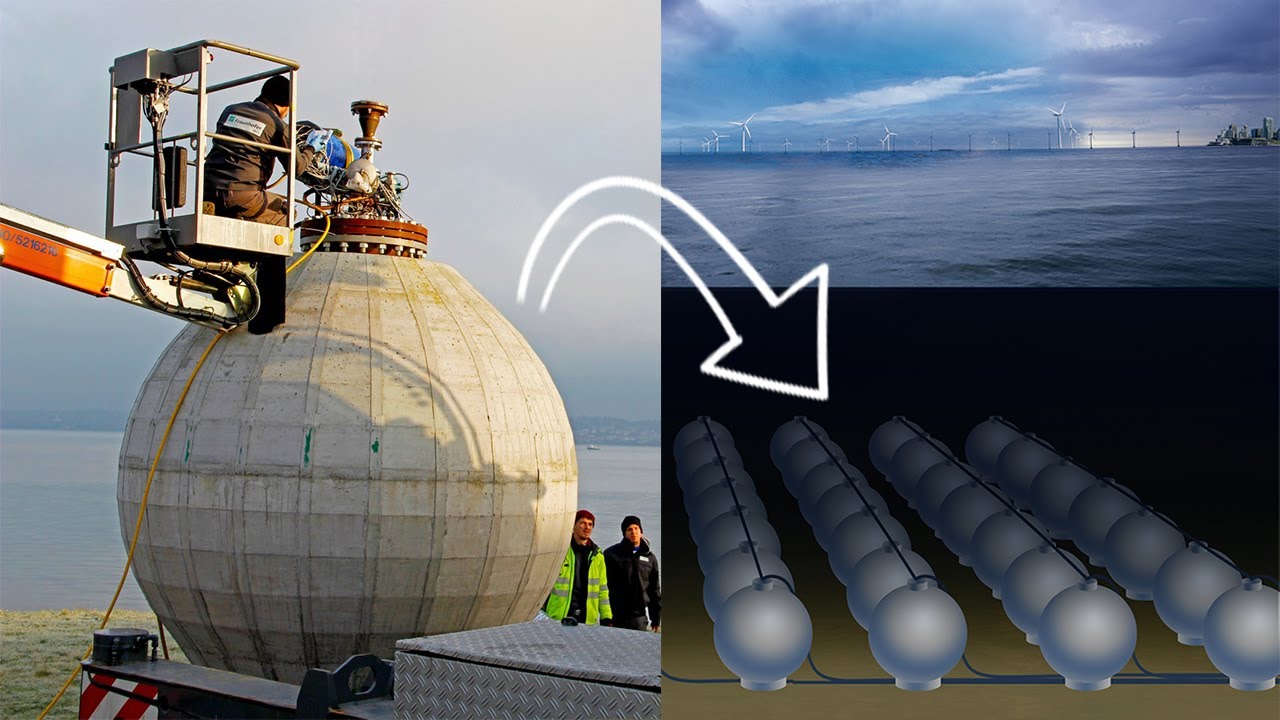
The principle is elegantly simple. A hollow concrete sphere is placed on the seabed and connected to the power grid via underwater cables. During periods of excess energy production, such as midday solar peaks, electricity powers a pump that expels water from the sphere, creating a vacuum. When energy demand rises, water rushes back into the sphere due to external pressure, driving a turbine to generate electricity. This mechanism mirrors traditional pumped hydro storage but utilizes the ocean’s depth instead of elevation differences on land.
✅ Advantages Over Traditional Storage
- Cost-Effectiveness: Concrete is abundant and inexpensive compared to materials like lithium. Estimates suggest storage costs around $0.046 per kilowatt-hour, making it competitive with other storage technologies .
- Longevity: These systems boast a lifespan of 50 to 60 years, with turbines and generators requiring replacement only every 20 years .
- Scalability: The ocean offers vast potential for deployment. Researchers estimate a global storage capacity of up to 817,000 gigawatt-hours, sufficient to power hundreds of thousands of homes.
- Environmental Considerations: Submerged installations minimize land use and visual impact, addressing common concerns associated with land-based energy infrastructure.
📜 Current Developments
Following successful tests in Germany’s Lake Constance, a collaborative project involving Fraunhofer IEE, Sperra, and Pleuger Industries is underway off the coast of California. A nine-meter-diameter, 400-ton concrete sphere has been submerged at depths of up to 600 meters. This prototype aims to demonstrate the viability of the technology in real-world ocean conditions
♻️ Integration with Renewable Energy Sources
These underwater storage systems are particularly suited for pairing with offshore wind farms. By storing excess energy generated during peak production times, they can release power during lulls, ensuring a consistent energy supply. This synergy enhances grid stability and maximizes the utility of renewable sources.
🙋♂️ Looking Ahead
As the energy sector seeks sustainable and efficient storage solutions, submerged concrete spheres present a promising avenue. Their cost-effectiveness, durability, and scalability position them as a valuable component in the transition to a renewable energy future.
For a visual explanation of this technology, consider watching the following video: