
#176 When Personal Conduct Tests Institutional Trust: Lessons from Corporate Life, Community Networks and Entrepreneurship 当个人行为考验机构信任:从职场、社团网络到创业历程的反思
From multinational corporations and Hakka clan associations to e-commerce platforms and public institutions — why reputation must be supported by accountability, and why respect should never require surrendering independent judgment.
By Mar Vin Foo | 12 October 2026
Reputation Takes Generations to Build
Reputation is not built overnight.
For a multinational corporation, it may take decades of investment, innovation and customer relationships. For a clan association, it may take generations of community service, philanthropy and cultural preservation. For a government, it rests on public confidence in the integrity of its institutions.

Yet institutional goodwill can be tested by the conduct of individuals who are associated with those institutions.
Over the years, I have encountered situations that have made me question the relationship between institutional reputation, personal conduct and the trust we extend to others.
Some occurred during my corporate career. Others arose through business introductions, community networks, entrepreneurial ventures and online marketplaces.
They differ in their circumstances, and I do not suggest they form a coordinated pattern. But they raise a common question:
When someone benefits from the reputation of an institution, what responsibilities accompany that association?
The answer matters particularly in Asia, where business, family, community, seniority and personal relationships frequently intersect.
We are taught to respect our elders, value introductions, maintain harmony and avoid burning bridges.
Those principles can create strong communities.
But they become less helpful when respect is confused with unquestioning obedience, or when an introduction is mistaken for a guarantee of integrity.
When Professional Recognition Becomes a Question
Earlier in my career, I worked for a major multinational enterprise technology services company with a long heritage in the global computing industry.
I was introduced to the opportunity by a senior Hakka from Dapu (大埔), Guangdong, who was then involved in executive recruitment.
At the time, I regarded the introduction as an opportunity and the relationship as one grounded in professional goodwill and shared community heritage.
During my employment, I worked on a multimillion-dollar commercial opportunity involving a Swiss client.
I subsequently received an account from a colleague in the United States concerning how credit for that opportunity had been attributed internally, including to my then supervisor, Catherine Foong.
I was not privy to every management discussion and cannot independently verify that account in its entirety.
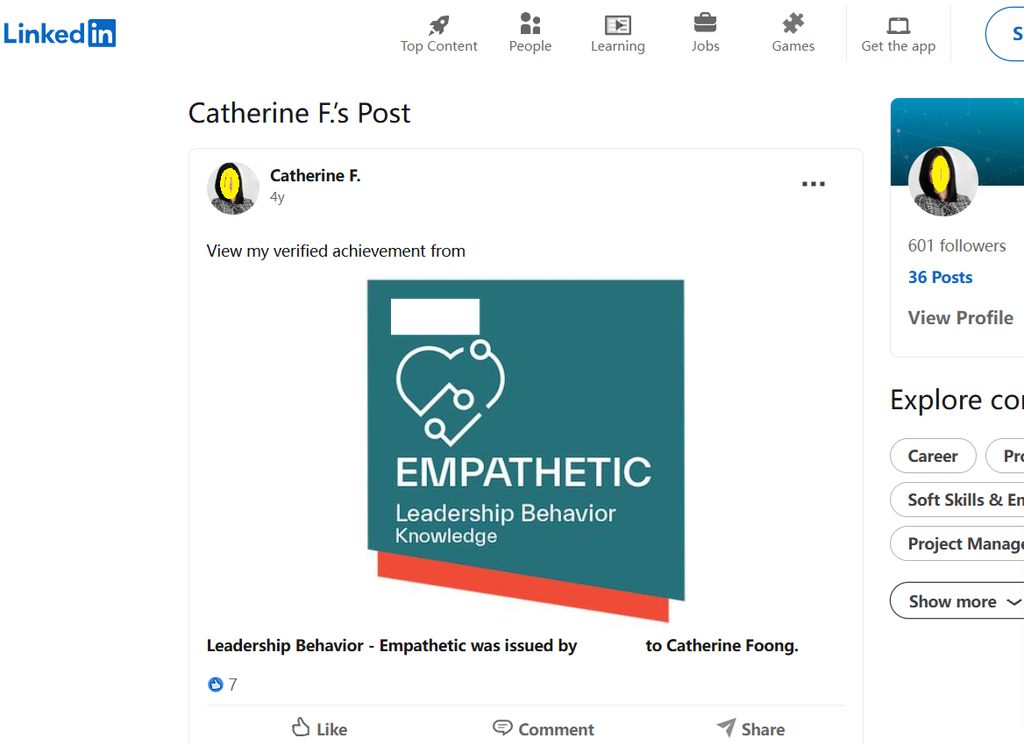
Nevertheless, the experience shaped my views on professional recognition, transparency and the importance of protecting the contributions of those who develop commercial opportunities.
I later engaged the same senior Hakka over professional assistance, but our discussions did not result in an agreed commercial arrangement.
These experiences taught me that personal introductions, shared heritage and professional seniority should never replace clear expectations and mutual accountability.
The broader lesson is not that every disappointing professional experience reflects deliberate misconduct.
Rather, it is that organisations should make recognition, responsibility and commercial expectations sufficiently transparent that employees and business partners are not left wondering where their contributions stand.
A multinational corporation may invest heavily in values, ethics, employee recognition and leadership development.
The real test is whether those principles remain meaningful when questions arise about who originated an opportunity, who developed the relationships and who ultimately receives recognition.
Professional credibility should be earned through contribution, not assumed through position alone.
The Elder Who Offers Help — and the Importance of Boundaries
More recently, while developing Thousand Ships, a Singapore-led platform pursuing commercial and infrastructure opportunities in the Philippines and beyond, I encountered another situation that made me reflect on trust and professional boundaries.
I met Robin Lim, who identified himself as a Hakka from Meixian (梅县), Guangdong, and spoke of his background in international banking, investment relationships and institutional connections.
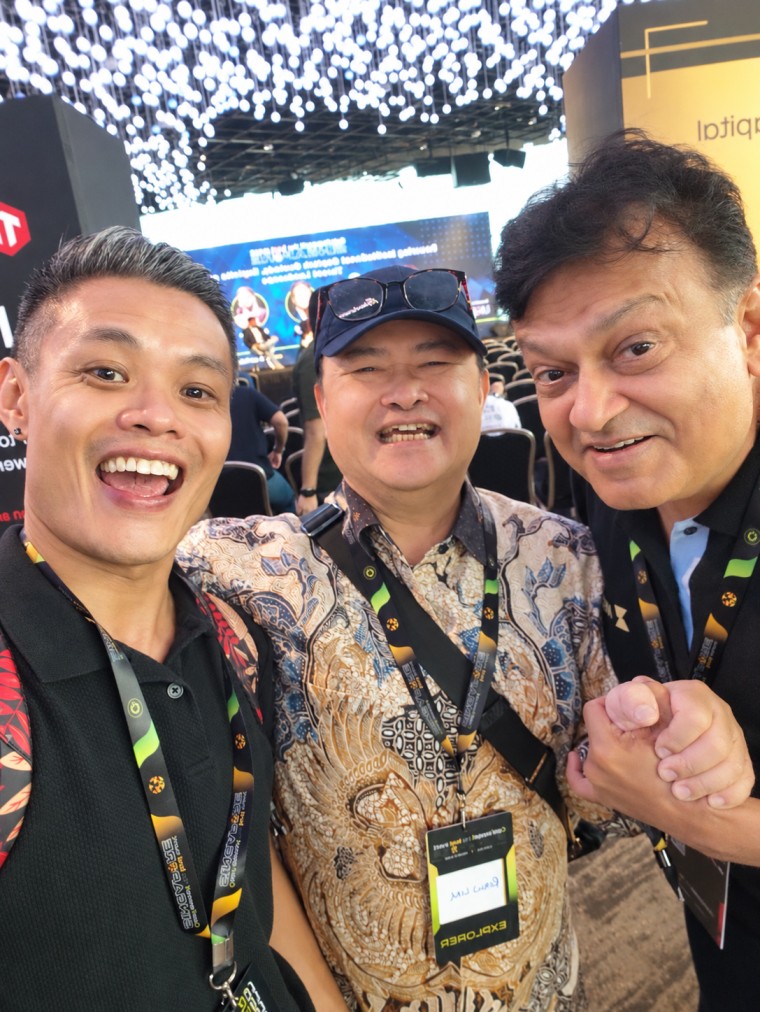
He referred to professional affiliations and financial capabilities that would naturally be of interest to someone developing cross-border projects.
As with many business encounters, I listened with an open mind.
In Asia, introductions often begin through informal networks, alumni groups, clan associations or shared cultural connections.
During our discussions, I became increasingly conscious of the need to protect the identities of our project counterparties and the commercial groundwork behind Thousand Ships.
Approximately two to three days after one of our encounters, a member of Thousand Ships informed me that our Philippine project sponsor had received an approach from another interested party.
I have not established any connection between that approach and Robin Lim. The timing alone is insufficient to draw such a conclusion.
Nevertheless, the experience reminded me that founders must be disciplined about what they disclose, when they disclose it and to whom.
Goodwill is valuable, but confidentiality and clear commercial boundaries are equally important.
There is a meaningful distinction between a conversation about potential investment and an agreement to provide access to a project’s counterparties, locations or commercially sensitive information.
The first is exploratory.
The second requires clarity about purpose, authorisation and responsibility.
Trust should open the door to a relationship. It should not automatically open the door to someone else’s contacts, confidential information or years of groundwork.
This is especially important in cross-border ventures, where the originator of an opportunity may be geographically distant from local counterparties.
A founder must remain open to introductions while protecting the work that makes those introductions commercially meaningful.
When Familiarity Becomes a Commercial Blind Spot
These two experiences occurred at very different stages of my professional journey.
One arose during my corporate career, following an introduction by a Hakka headhunter from Dapu.
The other arose while building Thousand Ships, following an encounter with a Hakka businessman from Meixian.
I do not suggest that their shared Hakka heritage establishes any connection between the events, nor that either experience represents the wider Hakka community.
Indeed, the reason these experiences prompted reflection was that I had hoped our shared cultural background would provide a foundation for mutual respect.
But they reinforced an uncomfortable truth:
A shared surname, dialect, ancestral homeland or association membership tells us very little about how someone will behave when commercial interests are at stake.
The obligation to respect elders should never become an obligation to surrender one’s judgment.
Nor should an entrepreneur have to choose between preserving community harmony and protecting the work, relationships and intellectual capital developed over many years.
A healthy community does not demand unquestioning loyalty.
It earns loyalty through fairness, transparency and accountability.
The Hakka Question: When Community Solidarity Meets Internal Hierarchy
I have written previously about divisions and prejudices that can exist not only between racial communities but also within them.
In my earlier article, Racism Within and Beneath Each Racial Line, I explored how shared ethnicity does not necessarily eliminate distinctions of dialect, ancestry, status or social standing.
My own family background has made me sensitive to these questions.
Although I identify with my Hakka heritage, my family’s ancestral roots and surname do not always fit neatly into the dominant community narratives associated with particular Guangdong-origin networks.
I have also carried a longstanding family account concerning my great-grandfather’s cooling-water recipe, which, according to family history, was appropriated without fair compensation or recognition.
I cannot independently establish the full historical record or the responsibilities of particular individuals across those generations.
But the story has remained meaningful to me because it concerns something larger than a recipe.
It concerns the ownership of ideas, the recognition of contribution and the ability of individuals without institutional influence to protect what they create.
That concern continues to resonate in modern business.
Today, intellectual property may take the form of software, a platform architecture, an investment thesis, a commercial introduction or a carefully developed project opportunity.
The underlying principle remains the same.
The person who contributes an idea, creates a relationship or undertakes the groundwork deserves fair recognition and appropriate protection.
I do not believe Hakka elders, or elders of any other community, should be judged collectively by individual experiences.
Many have contributed enormously to education, philanthropy, enterprise and the preservation of culture.
Those contributions deserve recognition.
But respect for tradition should coexist with the freedom to question, disagree and make independent decisions.
The Invitation to Serve — and the Right to Think Independently
My interactions with community organisations have also brought me into contact with younger leaders and opportunities for participation.
I was encouraged by Mark Lee to consider participating in the youth community of the Chinese chambers of commerce, alongside opportunities to engage with Hakka community networks.
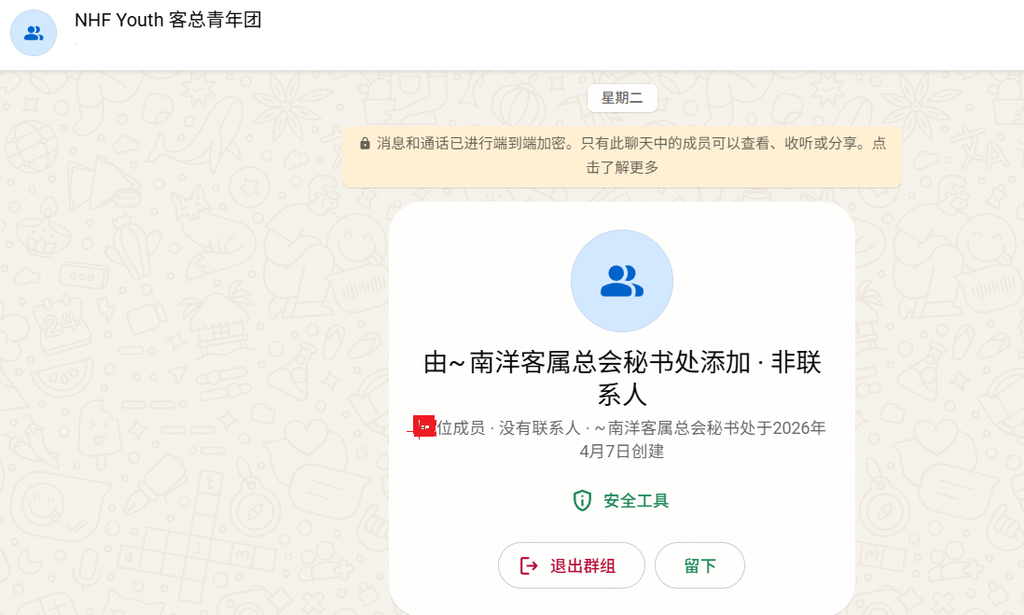
When I mentioned these invitations during a conversation with Robin Lim, I perceived his response as less than enthusiastic.
There was another part of that conversation that left me uncomfortable.
Robin spoke about the Nanyang Hakka Federation in a manner I interpreted as teasing or dismissive, making remarks that appeared to question whether the association had sufficient money or funding and suggesting that it might need his financial assistance.
He had initially been jovial, and I recognise that humour can be interpreted differently by different people.
I cannot say whether he intended the remarks as a joke, criticism or a genuine offer of assistance.
Nevertheless, as someone relatively new to Chinese clan associations and their traditions, I found the exchange discomforting.
I had expected an elder with experience in community networks to speak constructively about the organisations that preserve our heritage, particularly when addressing someone still learning about them.
The encounter prompted me to reflect on a broader question.
If clan associations were founded to preserve culture, strengthen solidarity, support education and encourage mutual assistance, how do they ensure that members continue to uphold those values?
Membership should not confer immunity from reasonable expectations of conduct.
Nor should seniority automatically make someone’s opinions representative of an association.
At the same time, an individual’s private remarks should not be mistaken for an official position, and a disagreement or an ill-judged joke alone should not become grounds for exclusion.
Perhaps it is time for clan associations and professional societies to periodically review their membership standards, codes of conduct and processes for addressing concerns — not to punish dissent, but to ensure that their founding values remain meaningful in contemporary society.
A community should be judged not only by the traditions it preserves, but also by the standards it expects of those who invoke its name.
I cannot speak for Robin’s private intentions, and I do not believe any individual should be treated as speaking for an entire association.
The experience nevertheless reinforced my belief that younger professionals should be free to build relationships across different community and business networks without feeling obligated to seek the approval of any particular elder.
An invitation to serve should be an invitation to contribute — not an expectation of personal allegiance to an elder, sponsor or intermediary.
I intend to share this article with youth representatives of various clan associations, including Nanyang Hakka, and with younger members of Chinese chambers of commerce.
My purpose is not to encourage distrust of elders.
It is to encourage younger professionals to distinguish mentorship from control, guidance from pressure, and genuine opportunity from obligations that have never been openly explained.
From Community Networks to Global Platforms: My AliExpress Experience
The question of reputation extends far beyond corporate boardrooms and community associations.
Consider global e-commerce platforms.
On 15 September 2026, I purchased a laptop through AliExpress, based on a listing advertising an Intel Core i9-10980HK processor and Windows 11 Pro.
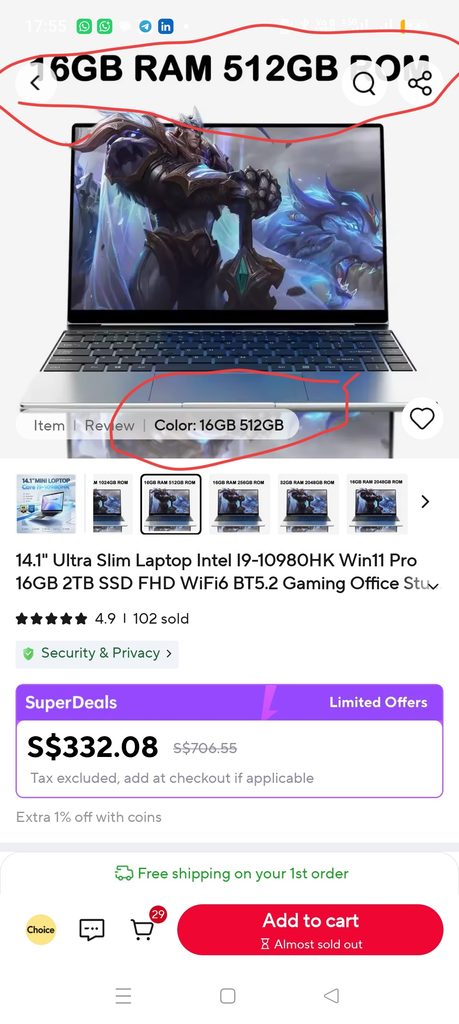
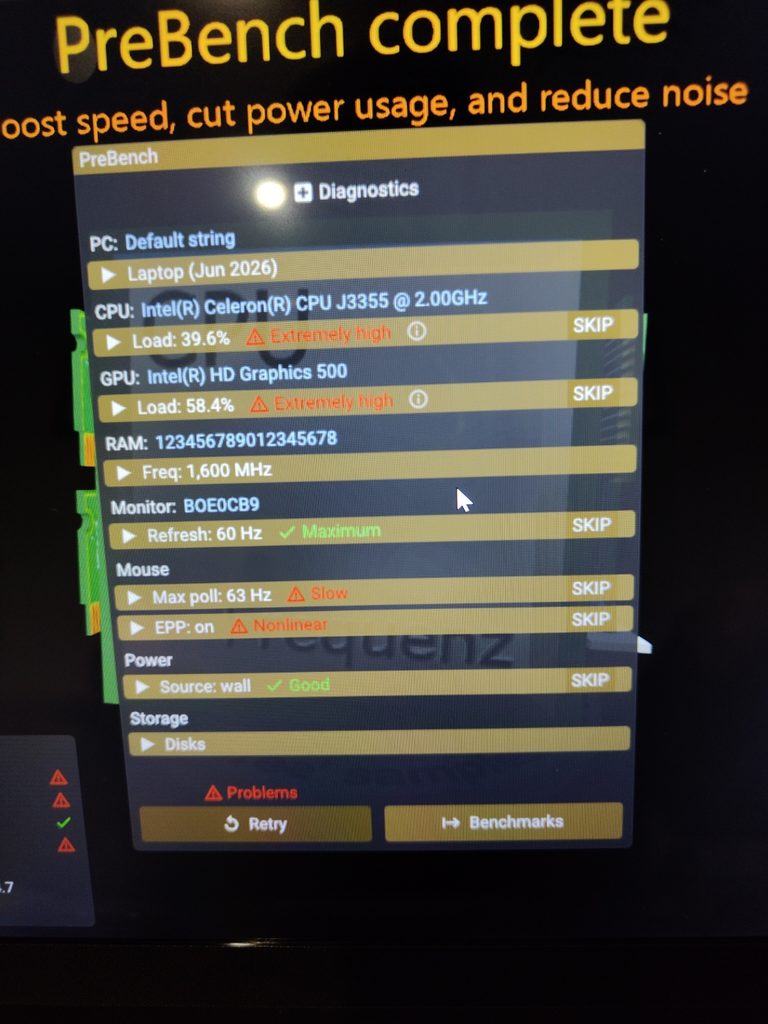
When the laptop arrived on 21 September, diagnostic software identified a substantially different processor: an Intel Celeron J3355, with Intel HD Graphics 500.
The system also appeared to be running Windows 10 Pro rather than the advertised Windows 11 Pro.
These were not minor cosmetic differences.
They went to the heart of what had been advertised and what I understood myself to be purchasing.
I pursued the platform’s dispute process.
The proposed resolution involved either a partial refund of approximately S$50 or a full refund subject to returning the laptop to Hong Kong, with the seller reportedly responsible for return shipping.
However, when I attempted to complete the return process, the interface presented a shipping-carrier selection field without available options.
That prevented me from entering the tracking details needed to advance the return.
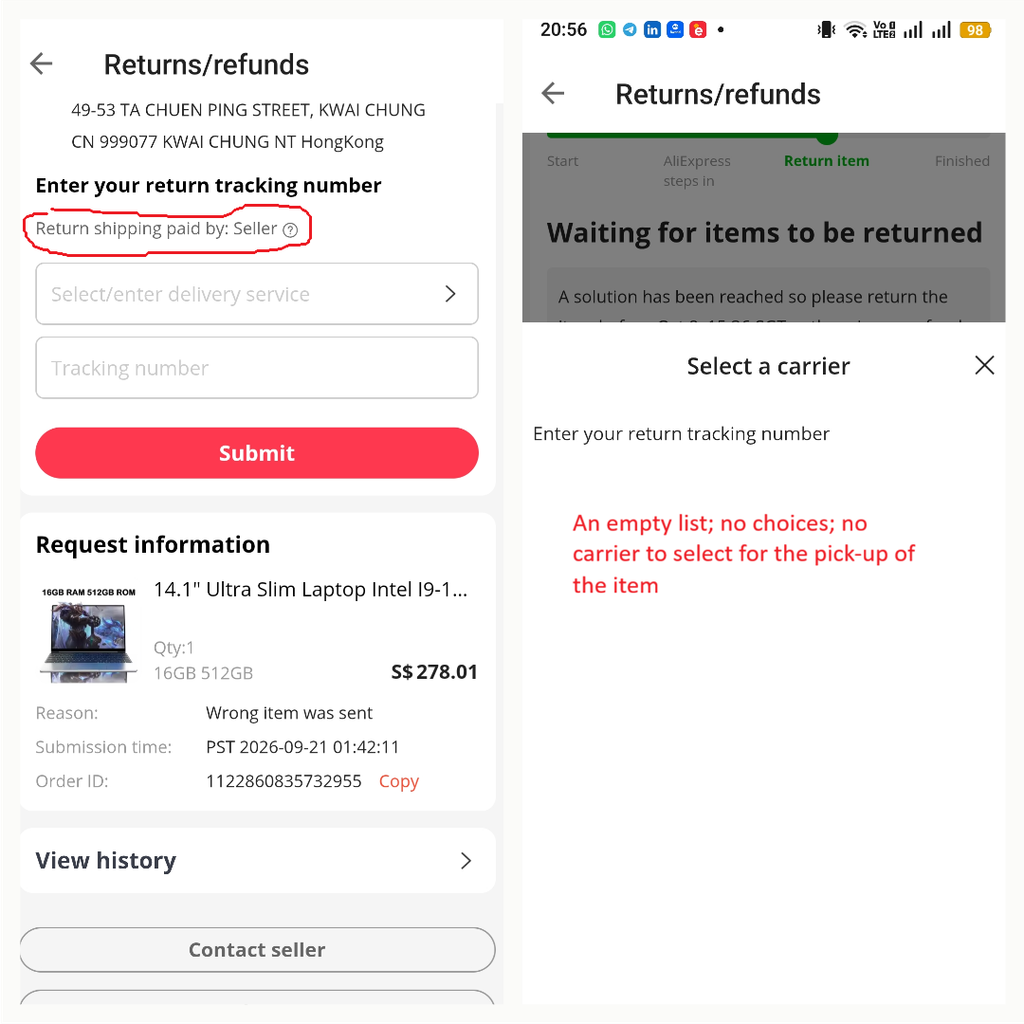
I documented the problem through screenshots and a screen recording, and subsequently lodged a credit-card dispute with Citi for S$269.70.
The platform’s return documentation displayed S$278.01, a difference I have not independently reconciled.
At the time of writing, the dispute remains unresolved.
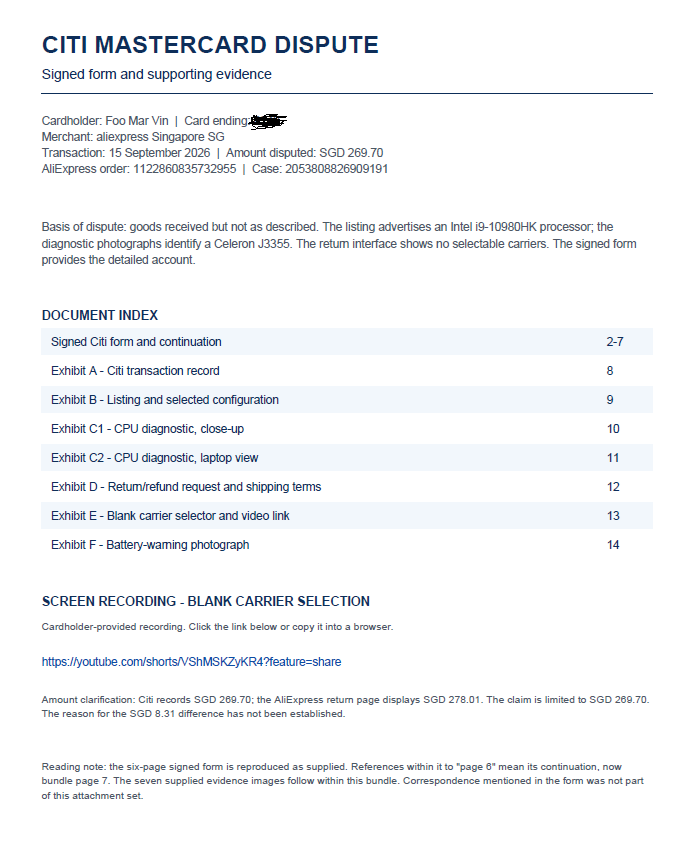
Screen recording of the carrier-selection problem can be found here.
I have had satisfactory experiences with other online purchases, including on AliExpress and competing marketplaces.
I therefore do not regard one transaction as proof that an entire platform is dishonest.
But the experience raises important questions.
If an advertised product differs substantially from the item delivered, how effectively does the platform verify the seller’s claims?
If a buyer is instructed to return an item, what happens when the platform’s own interface prevents completion of the process?
And if ratings and reviews are central to marketplace trust, how can customers distinguish authentic feedback from potentially manipulated signals?
I have no evidence that reviews relating to my transaction were manipulated. The question concerns the reliability of the wider trust mechanisms on which buyers are encouraged to depend.
A platform’s reputation rests not merely on attracting sellers and buyers but on providing a fair and workable remedy when a transaction goes wrong.
A dispute-resolution process that cannot be completed is not a meaningful resolution, regardless of how reassuring the policy sounds.
I documented the return-interface problem in a short screen recording.
The broader lesson is that trust cannot be outsourced to branding, ratings or written policies.
It must be demonstrated when a customer encounters a problem.
When Public Figures Appear Alongside Questionable Company
The same distinction between association and accountability matters in public life.
Singapore has previously seen public discussion surrounding photographs of political figures at social events attended by Su Haijin, who was subsequently convicted in connection with a major money-laundering case.
A photograph showing people at the same event does not establish friendship, knowledge of wrongdoing or participation in criminal activity.
That distinction is essential.
Public figures cannot reasonably be expected to know the full background of every individual present at a large gathering.
At the same time, photographs, endorsements and public appearances can create impressions of proximity, influence and legitimacy.
This is why reputational risk matters.
Someone seeking credibility may benefit from being seen beside a respected official, business leader, philanthropist or community elder — even when the relationship is superficial.
Similarly, criminal activities associated with scam operations in parts of Southeast Asia remind us that the appearance of commercial legitimacy is not proof of lawful conduct.
The proper response is neither guilt by association nor blind acceptance of appearances.
It is proportionate due diligence, transparency and a willingness to distinguish verified relationships from implied ones.
A photograph is evidence of proximity, not necessarily evidence of trust, endorsement or integrity.
The Problem With Organisations That Reward Results but Ignore Conduct
Across these experiences, I see a recurring institutional challenge.
Organisations are often very good at celebrating achievement.
They publish success stories, recognise prominent members, display photographs of influential guests and highlight impressive commercial figures.
But they can be much less effective at examining how those achievements were obtained.
Was credit attributed fairly?
Were introductions authorised?
Were commercial boundaries respected?
Did the people involved make accurate representations about their roles, resources and authority?
Were complaints handled fairly?
And when something went wrong, did the institution investigate the concern or simply protect its public image?
These questions apply to multinational corporations, clan associations, startup incubators, SMEs, chambers of commerce, online marketplaces and government institutions.
No institution can guarantee that every person associated with it will behave impeccably.
But every institution can decide what standards it expects, how it responds to concerns and whether its reputation can be borrowed without accountability.
A strong organisation should not fear legitimate questions.
It should fear becoming a place where legitimate questions cannot be asked.
What Responsible Institutions Must Do Differently
I believe several principles deserve renewed attention.
First, distinguish affiliation from endorsement. Membership in a clan association, chamber of commerce or professional organisation should not imply that the institution guarantees a member’s financial capability, commercial integrity or authority to represent others.
Second, recognise the originators of value. In corporate and entrepreneurial environments, those who develop opportunities, relationships and intellectual property deserve fair recognition and clear protection.
Third, make commercial expectations explicit. Introductions, advisory work, fundraising discussions and project participation should have transparent boundaries. Seniority and personal relationships should never replace written agreements where significant interests are involved.
Fourth, create credible ways to raise concerns. A person should not have to choose between reporting questionable conduct and being excluded from a professional or community network.
Fifth, encourage independent judgment among younger members. The next generation should inherit the best values of its institutions, not an expectation to comply unquestioningly with every request from a senior figure.
Sixth, periodically revisit membership standards and founding values. Clan associations and chambers should have fair, transparent processes for addressing conduct inconsistent with their stated principles, while respecting members’ rights to disagree, express opinions and receive fair treatment.
Finally, institutions must be willing to protect their names.
If someone invokes an organisation’s reputation to obtain access, influence or commercial advantage, that organisation has an interest in ensuring its name is not being used misleadingly.
This is not about rejecting tradition.
It is about ensuring that tradition remains worthy of respect.
A Message to the Younger Generation: Respect Is Not Submission
I particularly want this message to reach younger members of our clan associations, professional societies and business chambers — including those in their forties and below who are developing their careers, companies and community roles.
Many of us grew up hearing that we should listen to our elders.
There is wisdom in that advice.
Experience matters. History matters. The sacrifices made by earlier generations deserve recognition.
But age does not confer infallibility.
A senior member may offer excellent guidance in one situation and poor advice in another.
A successful businessman may be knowledgeable about his industry but have no authority over your choices.
An elder who introduces you to an opportunity does not thereby acquire ownership of your future, your contacts or your work.
You may respect someone’s age without accepting their instructions. You may appreciate an introduction without surrendering your independence. And you may decline a request without betraying your community.
Ask questions.
Verify representations.
Understand what is being requested and who benefits.
Protect your work, your relationships and your reputation.
Do not allow the fear of appearing disrespectful to override your judgment.
If an opportunity is genuine, it should withstand reasonable scrutiny.
If a relationship is healthy, it should withstand a polite refusal.
If a mentor truly wants you to succeed, your independence should be a source of pride rather than resentment.
The strongest contribution younger generations can make to our associations is not unquestioning compliance.
It is to bring integrity, competence, courage and fresh thinking into institutions that deserve to remain relevant for generations to come.
The Bridge I Am No Longer Willing to Cross
I have spent much of my career building bridges — between companies, markets, cultures, technologies and people.
I continue to believe in the value of those bridges.
Thousand Ships itself is built around the idea that meaningful progress requires cooperation across borders, industries and communities.
But cooperation cannot survive without boundaries.
Trust is not an invitation to exploit.
Respect is not a licence to command.
A shared heritage is not a commercial entitlement.
And an association’s reputation is not a personal asset that any individual may borrow for private advantage.
I do not expect everyone I meet to agree with me. Nor do I expect every business relationship to succeed.
I do expect transparency about intentions, respect for the work of others and the freedom to make my own decisions.
That is the standard I intend to uphold in my own work, and the standard I hope younger generations will expect of the people and institutions around them.
To younger members of our clans and chambers: do not feel compelled to follow instructions merely because they come from an elder. Walk your own path, remain grounded in your values, and trust that principled decisions will serve you better over the long run than temporary approval from powerful people.
And to Hakka elders and seniors, I ask you to respect my independence, refrain from using seniority to influence my decisions, and seek my consent before using photographs or public associations with me for your own professional or commercial promotion.
This article is also published on LinkedIn, Facebook and more.
当个人行为考验机构信任:从职场、社团网络到创业历程的反思
从跨国企业、客家宗亲组织,到电子商务平台与公共机构——为什么声誉必须以问责为基础,而尊重长辈也不应以放弃独立判断为代价。
作者:Mar Vin Foo(胡氏)|2026年10月12日
声誉的建立,需要几代人的努力
声誉,从来不是一朝一夕建立起来的。
对于跨国企业而言,声誉可能来自数十年的投资、创新与客户关系。对于宗乡会馆而言,它可能凝聚了几代人的社区服务、慈善事业与文化传承。对于政府而言,声誉则建立在公众对制度廉洁与公正的信心之上。
然而,当与这些机构有关联的个人,其言行引起争议时,机构多年积累的信誉也可能受到考验。
这些年来,我经历了一些事情,让我不断思考机构声誉、个人操守,以及人与人之间信任的关系。
有些经历发生在我的企业职业生涯中,有些则来自商业引荐、宗乡社团、人际网络、创业活动与电子商务平台。
这些事件各有不同背景,我并不认为它们构成某种有组织的共同模式。然而,它们都指向同一个问题:
当一个人受益于某个机构的声誉时,他是否也应该承担维护这份声誉的责任?
这个问题在亚洲尤其值得思考,因为商业、家庭、社群、辈分与人际关系,往往紧密交织。
我们从小被教导要尊敬长辈、珍惜引荐、维护和谐,以及不要轻易断绝人脉关系。
这些传统观念有其价值,也有助于建立稳固的社群。
但如果尊重被误解为无条件服从,或者把一场引荐当成对个人诚信的保证,这些观念便可能失去原有的意义。
当职场贡献与功劳归属成为疑问
在职业生涯较早的阶段,我曾任职于一家拥有悠久全球计算机产业背景的大型跨国企业科技服务公司。
当时,我是通过一位祖籍广东大埔、从事高管招聘工作的客家前辈介绍,才获得这个工作机会。
我原本认为,这不仅是一项职业发展机会,也是一段建立在专业善意与共同客家文化背景之上的关系。
任职期间,我参与推动一项涉及瑞士客户、价值数百万美元的商业项目。
后来,一位身在美国的同事向我转述了公司内部有关该项目功劳归属的情况,其中涉及我当时的主管 Catherine Foong。
我并未参与所有内部管理层讨论,因此无法独立核实该同事所述的全部情况。
不过,这段经历确实改变了我对职场贡献、透明度,以及商业机会开发者应如何获得认可的看法。
后来,我再次与当初介绍我入职的客家前辈商谈专业服务合作,但双方经过讨论,最终未能达成商业协议。
这些经历让我明白:人际引荐、共同文化背景与资历辈分,都不应该取代清晰的合作条件与相互问责。
我想表达的,并不是每一次不愉快的职场经历,都意味着有人蓄意不当行事。
真正的问题是,机构是否能够建立足够透明的制度,让员工和合作伙伴清楚了解自己的贡献、职责与应得的认可。
跨国企业可以在企业价值观、商业道德、员工表扬及领导力发展方面投入大量资源。
但真正的考验,是当商业机会由谁开拓、客户关系由谁建立,以及最终功劳归谁等问题出现时,这些价值观是否依然能够发挥作用。
专业信誉应该来自实际贡献,而不应仅凭职位高低来决定。
当长辈主动提供帮助:信任与商业界限同样重要
最近,在发展**千船(Thousand Ships)**的过程中,我又遇到一件让我重新思考信任与商业界限的事情。
千船是一个以新加坡为基础、致力于推动菲律宾及其他市场商业与基础设施项目的平台。
我认识了 Robin Lim。他自称祖籍广东梅县,是客家人,并谈及自己在国际银行业、投资关系及机构网络方面的背景。
他也提及一些专业关系及资金能力。对于正在发展跨境项目的创业者而言,这些话题自然具有一定吸引力。
与许多商业会面一样,我起初抱着开放态度交流。
在亚洲,许多商业关系都从非正式人脉、校友网络、宗乡会馆,或者共同文化背景开始。
然而,在交流过程中,我越来越意识到,必须妥善保护千船项目合作方的身份,以及我们此前投入大量时间建立的商业基础。
在其中一次会面后的约两至三天,一位千船成员告诉我,我们在菲律宾的项目合作方接到了另一名有意参与者的接洽。
我至今没有证据证明这次接洽与 Robin Lim 存在任何关联。单凭时间上的接近,并不足以得出这样的结论。
不过,这件事提醒我,创业者必须清楚掌握何时、向谁,以及在什么条件下披露商业信息。
善意固然重要,但保密措施与明确的商业界限同样不可或缺。
讨论潜在投资机会,与同意对方直接接触项目合作方、项目地点或商业敏感信息,是两回事。
前者属于初步交流。
后者则必须明确目的、授权范围与相关责任。
信任可以成为建立关系的起点,却不意味着对方因此自动取得接触你的人脉、机密信息,以及多年商业成果的权利。
对于跨境项目而言,这一点尤其重要。
项目发起人可能远在另一个国家,而实际合作伙伴却身处当地。
创业者必须对合作机会保持开放,同时保护那些使合作机会具有商业价值的前期成果。
当熟悉感成为商业判断的盲点
这两段经历,发生在我职业生涯的不同阶段。
第一段发生在企业职场,涉及一位祖籍大埔的客家猎头前辈。
第二段发生在发展千船期间,涉及一位祖籍梅县的客家商人。
我并不认为,两人同属客家背景,就意味着两件事之间存在联系,更不认为他们的个人言行能够代表整个客家社群。
恰恰相反,正因为我们拥有共同的文化背景,我才曾希望这种联系能够成为相互尊重的基础。
但这些经历让我重新认识到一个现实:
同姓、同方言、同祖籍,甚至同属一个宗乡组织,都不足以证明一个人在商业利益面前会如何行事。
尊敬长辈,不等于必须放弃自己的判断。
创业者也不应该被迫在维护社群和谐,与保护自己多年建立的工作成果、人脉关系和知识产权之间作出选择。
一个健康的社群,不应该要求成员无条件效忠。
它应该通过公平、透明与问责,赢得成员真正的信任。
客家人的问题:当宗亲团结遇上内部辈分与阶层
我过去曾撰文讨论,偏见与隔阂不仅可能存在于不同种族之间,也可能存在于同一种族内部。
在此前发表的文章 《种族之间与种族内部的歧视》(Racism Within and Beneath Each Racial Line) 中,我探讨了共同族群身份,并不必然消除方言、祖籍、社会地位与人际圈层之间的差异。
我的家族背景,也让我对这些问题格外敏感。
虽然我认同自己的客家文化传承,但家族祖籍与姓氏背景,并不总能完全融入某些以广东地区为中心的客家社群叙事。
此外,我家族中一直流传着一段关于曾祖父所创制的清凉水配方的往事。
根据家族口述历史,这项配方曾被他人取用,却没有获得公平的补偿或认可。
我无法独立核实当年的完整历史记录,也无法确定跨越数代的事件中,个别人士应承担什么责任。
但这段家族记忆,对我而言始终具有特殊意义。
因为它所涉及的,远远不只是一份配方。
它关乎创意的归属、贡献者应获得的认可,以及缺乏机构影响力的个人,是否有能力保护自己的创造。
这个问题,在今天的商业世界依然存在。
如今,知识产权可能是一套软件、一项平台架构、一份投资构想、一段商业引荐关系,或者一个经过长期筹备的项目机会。
但背后的原则始终相同。
提出创意、建立关系,以及承担前期开发工作的人,都应该获得公平认可与适当保护。
我不认为客家长辈,或任何其他社群的长辈,应该因为个别事件而受到集体评判。
许多前辈在教育、慈善、企业发展及文化传承方面作出了巨大贡献。
这些贡献值得肯定。
但尊重传统,也应该与独立思考、提出疑问及表达不同意见的自由并存。
受邀参与社团:独立思考的权利不应受到限制
随着我逐渐接触华人社团,也有机会认识一些年轻领导者,并了解不同的社团参与机会。
Mark Lee 曾鼓励我考虑参与中华总商会体系中的青年社群,同时我也有机会接触客家社团网络。
当我在与 Robin Lim 的谈话中提及这些邀请时,我感觉他的反应并不特别积极。
当然,这只是我对当时交流的个人感受。我无法代替他解释其真实想法,也不认为任何一个人的言论可以代表整个社团。
但在同一次交流中,还有一段对话让我感到不太自在。
Robin 曾以一种在我听来带有调侃甚至轻视意味的口吻,谈及南洋客属总会(Nanyang Hakka Federation)。
他的言谈似乎在质疑该会是否拥有足够的资金,并提到它是否需要他的经济协助。
起初,他的态度相当开朗,也带有玩笑性质。
我理解,不同的人对幽默有不同的解读。
我无法确定他当时究竟是在开玩笑、表达批评,还是认真提出协助。
不过,作为一名刚开始深入接触华人宗乡会馆及其传统的人,我听了之后确实感到不舒服。
我原本期待,一位熟悉社团网络的前辈,在面对仍在学习与认识这些组织的后辈时,能够以更具建设性的方式谈论那些致力于保存文化传承的机构。
这段经历让我开始思考一个更广泛的问题。
如果宗乡会馆创立的初衷,是保存文化、促进团结、支持教育,以及发扬互助精神,那么这些组织如何确保会员持续认同并实践其创会价值?
会员身份,不应意味着个人可以不受合理行为规范约束。
辈分高,也不代表个人意见就自动成为社团立场。
但与此同时,私人谈话不应该被误认为机构的正式意见,而一次意见分歧或不恰当的玩笑,也不应单独成为排除会员的理由。
也许,是时候让宗乡会馆与专业团体定期检视会员准则、行为规范,以及处理相关意见与投诉的机制。
目的不是惩罚不同声音,而是确保创会精神在今天依然具有实际意义。
衡量一个社群,不应只看它保存了多少传统,也应该看它如何要求那些借用其名义与声誉的人承担责任。
这段经历进一步坚定了我的看法:年轻专业人士应该有自由,跨越不同社团与商业网络建立关系,而不必认为自己必须得到某位长辈的批准。
受邀参与社团,应该意味着有机会贡献力量,而不是必须向某位前辈、引荐人或中间人表达个人效忠。
我计划将这篇文章分享给不同宗乡会馆的青年代表,包括南洋客属总会,以及华人商会的年轻成员。
我的目的,并不是鼓励年轻人不信任长辈。
而是希望大家能够分辨:
什么是提携,什么是控制;什么是指导,什么是施压;什么是真正的机会,什么又是从未被明确说明的隐性义务。
从宗乡网络到全球平台:我的 AliExpress 购物经历
关于机构声誉的问题,并不局限于企业职场与社团组织。
全球电子商务平台,同样面临信任与问责的考验。
2026年9月15日,我通过 AliExpress(速卖通) 购买了一台笔记本电脑。
商品页面标示的规格包括 Intel Core i9-10980HK 处理器及 Windows 11 Pro 操作系统。
9月21日收到电脑后,我使用诊断软件检查,却发现处理器被识别为 Intel Celeron J3355,显示芯片为 Intel HD Graphics 500。
系统看起来也运行着 Windows 10 Pro,而非广告所述的 Windows 11 Pro。
这并非外观或细节上的轻微差异。
它直接涉及商品宣传的核心规格,以及我购买时所理解的产品内容。
于是,我通过平台提出争议处理申请。
当时提出的解决方式,包括约 50新元的部分退款,或在将电脑退回香港后获得全额退款。据相关安排,退货运费应由卖家承担。
然而,当我尝试完成退货程序时,系统要求选择物流承运商,却没有提供任何可选项目。
这使我无法输入追踪资料,也无法继续完成退货流程。
我通过截图与屏幕录像记录了问题,随后向 Citi 提交了一项金额为 269.70新元 的信用卡交易争议申请。
另一方面,平台的退货文件显示 278.01新元。两者之间的差额,我尚未能够独立核实其原因。
截至本文撰写时,争议仍未解决。
过去,我在 AliExpress 及其他电子商务平台,也曾有过满意的购物经验。
因此,我不会因为一笔交易,就认定整个平台不诚实。
但这段经历确实提出了几个值得重视的问题。
如果收到的商品与广告所列的核心规格明显不同,平台究竟如何核实卖家的宣传内容?
如果买家被要求退货,但平台本身的操作界面却阻碍了退货流程,责任应该如何处理?
如果商品评分与消费者评价是平台建立信任的重要机制,消费者又该如何辨别真实反馈与可能受到操纵的评价?
我没有证据证明与这笔交易有关的评论受到操纵。这里提出的问题,是消费者所依赖的整体信任机制是否足够可靠。
电子商务平台的声誉,不应只建立在吸引多少卖家与买家之上。
更重要的是,当交易出现问题时,平台能否提供公平、可执行的补救方式。
如果争议解决程序在实际操作中无法完成,那么无论政策写得多么完善,都难以称得上真正有效的解决机制。
我也通过一段简短的屏幕录像,记录了退货界面出现的问题。
这件事提醒我,信任不能完全交给品牌、评分或书面政策来承担。
当消费者真正遇到问题时,平台如何处理,才是信任最重要的考验。
当公众人物与有争议的人物同场出现
机构关联与个人责任之间的区别,在公共生活中同样重要。
新加坡过去曾出现有关政治人物出席社交活动,并与后来因重大洗钱案被定罪的 Su Haijin(苏海金) 同场合影的公众讨论。
但同场出席活动或出现在照片中,并不能证明双方存在私人交情、知悉违法行为,或参与任何犯罪活动。
这一区别至关重要。
我们不能合理地要求公众人物,在大型活动中事先了解每一位出席者的完整背景。
与此同时,合照、公开露面与社交活动,也可能让外界产生某种接近权力、拥有影响力或获得认可的印象。
这正是声誉风险值得关注的原因。
有人可能因为与受尊敬的官员、企业领袖、慈善家或社团前辈同框,而获得额外的可信度,即使双方实际上并没有深厚关系。
同样,东南亚部分地区与诈骗活动有关的犯罪案件,也提醒我们,表面上的商业正规形象,并不等于实际行为必然合法。
合理的态度,既不是仅凭关联就推定有罪,也不是毫无保留地相信外在形象。
我们需要的是适度尽职调查、透明度,以及分辨真实关系与暗示性关系的能力。
一张合照只能证明双方曾经同处一地,并不必然代表信任、背书或诚信。
当机构重视成绩,却忽略行为过程
回顾这些经历,我看到一个反复出现的制度性挑战。
许多机构都很擅长庆祝成绩。
它们发布成功故事、表扬杰出会员、展示与重要人物的合照,并强调令人印象深刻的商业数字。
但对于这些成绩究竟如何取得,却未必同样重视。
功劳是否得到公平分配?
商业引荐是否获得授权?
合作边界是否受到尊重?
有关人士是否准确说明自己的身份、资源与权限?
投诉是否得到公平处理?
当问题出现时,机构究竟愿意认真了解情况,还是只希望维护表面的公共形象?
这些问题不仅适用于跨国企业,也适用于宗乡会馆、创业孵化器、中小企业、商会、电子商务平台及公共机构。
没有任何机构能够保证所有与其有关联的人都始终行为得当。
但每个机构都可以决定自己坚持什么标准、如何处理合理的疑虑,以及是否允许个人在缺乏问责的情况下借用其声誉。
真正强大的机构,不应该害怕合理的问题。
它应该警惕的是,一个让人不敢提出合理问题的环境。
负责任的机构,应该如何改变?
我认为,有几个原则值得重新重视。
第一,区分会员身份与机构背书。 加入宗乡会馆、商会或专业团体,不应该自动意味着机构保证该会员拥有某种财务能力、商业诚信,或代表他人的权限。
第二,认可真正创造价值的人。 在企业与创业环境中,开发商业机会、建立合作关系及创造知识产权的人,应获得公平认可与明确保护。
第三,清楚说明商业合作条件。 引荐、顾问服务、融资讨论及项目参与,都应设有透明的合作边界。涉及重大商业利益时,辈分与私人关系不应取代书面协议。
第四,建立可信的意见反映机制。 任何人都不应该因为提出合理疑虑,就必须担心被排除在专业或社群网络之外。
第五,鼓励年轻成员独立思考。 下一代应该继承机构最优秀的价值观,而不是继承对每一位资深人士无条件服从的期待。
第六,定期检视会员标准与创会价值。 宗乡会馆与商会应该建立公平、透明的机制,处理与其公开价值观不符的行为,同时尊重会员表达不同意见的权利,并确保所有相关人士受到公平对待。
最后,机构也必须懂得保护自己的名誉。
如果有人借用机构的声誉来取得商业接触、影响力或个人利益,机构就有理由确保自己的名称没有被误导性地使用。
这并不是要否定传统。
而是要确保传统依然值得后人尊重。
给年轻一代的话:尊重,不等于服从
我特别希望这篇文章能够传达给宗乡会馆、专业团体与商会中的年轻成员,包括四十岁及以下、正在发展事业、创业或承担社群职责的朋友。
我们许多人从小就被教导,要听长辈的话。
这项教导有它的智慧。
经验值得重视,历史值得理解,上一代人的付出也值得肯定。
但年龄并不意味着一个人永远正确。
一位前辈,可能在某件事情上提供非常宝贵的意见,却在另一件事情上作出不适合你的建议。
一位成功商人,可能非常了解自己的行业,却不代表他有权决定你的人生方向。
一位长辈曾经为你介绍机会,也不代表他因此拥有你的未来、人脉或工作成果。
你可以尊重一个人的年纪,却不必接受他的每一道指示。你可以感谢一次引荐,却不必交出自己的独立性。你也可以礼貌拒绝一项要求,而不意味着背叛自己的社群。
学会提问。
核实对方的陈述。
弄清楚别人究竟要求你做什么,以及谁将从中受益。
保护你的工作成果、人际关系与个人声誉。
不要因为害怕被视为不尊重长辈,就放弃自己的判断。
如果一个机会是真实而合理的,它应该经得起适当审视。
如果一段关系是健康的,它应该容得下一次礼貌的拒绝。
如果一位导师真正希望你成功,他应该为你的独立成长感到欣慰,而不是因此产生不满。
年轻一代能够为宗乡会馆带来的最大贡献,并不是毫无保留地服从。
而是将诚信、能力、勇气与新思维带入这些值得继续传承的机构。
我不再愿意跨越的那条界线
在职业生涯中,我花了很多时间搭建桥梁。
连接企业与市场,连接不同文化、技术与人群。
直到今天,我依然相信这些桥梁的价值。
千船(Thousand Ships) 的发展理念,本身就建立在跨越国界、行业与社群合作的基础之上。
但没有界限的合作,难以长久维持。
信任,不是允许别人占便宜的邀请函。
尊重,不是指挥他人的许可证。
共同文化背景,不代表任何商业权益上的特权。
一个机构的声誉,也不是任何个人可以随意借用、谋取私人利益的资产。
我不期待遇见的每个人都认同我,也不期待每一段商业关系都能成功。
但我希望人与人之间能够坦诚说明意图,尊重彼此的工作成果,并允许对方自由作出决定。
这是我希望自己能够坚持的标准,也是我期待下一代在面对不同人士与机构时,能够共同维护的价值观。
致宗乡会馆与商会中的年轻朋友:不要因为某项指示来自长辈,就觉得自己必须服从。走自己的路,坚守自己的价值观。相比为了获得有权势者一时的认可而作出妥协,坚持原则的决定,往往更能在漫长的人生道路上保护你。
最后,我也想对客家社群的各位长辈与前辈说:请尊重我的独立性,不要以辈分影响我的个人决定。若希望使用与我的合照,或公开展示与我的关系,作为个人职业或商业推广的一部分,请先征得我的同意。


![[Singapore National Employers Federation (SNEF) 财政预算案2025 华文座谈会 | 听见华商的声音,迈向更好的未来]](https://marvinfoo.com/wp-content/uploads/2025/03/IMG_20250310_173102-768x1013.jpg)