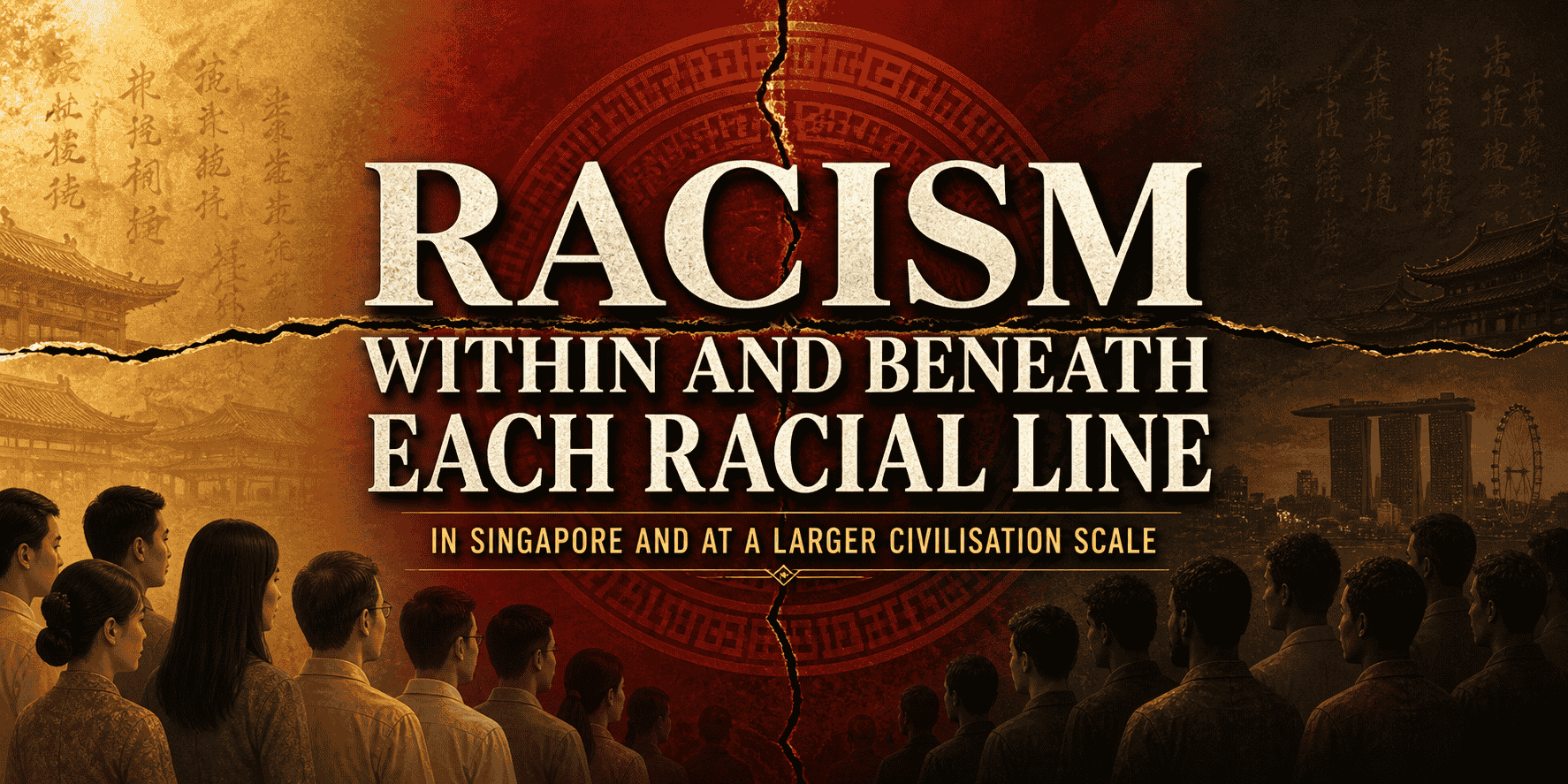
#140 Racism Within and Beneath Each Racial Line 🔷 种族之内、种族之下的歧视
In Singapore and at a Larger Civilisation Scale
中文版在下方
In Singapore, we pride ourselves on racial harmony.
But harmony across races often hides a more uncomfortable truth:
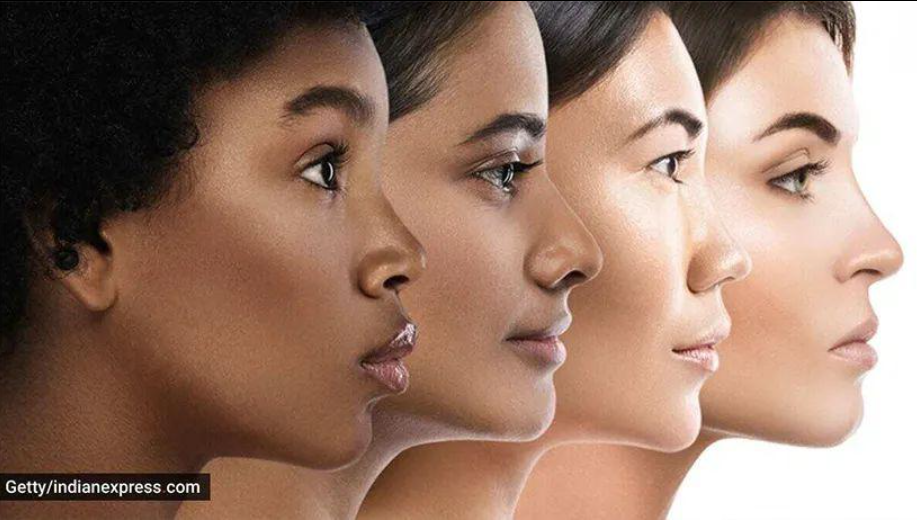
There are fractures within each race—and we rarely talk about them.
The Silent Hierarchy Within the Majority

As a Chinese Singaporean, I have experienced something many will not say openly:
Not all Chinese are treated equally by other Chinese.
There are unspoken filters:
- Skin tone
- Language (Mandarin vs English)
- Dialect lineage
- Religious alignment
- Cultural conformity
No one announces them.
But they operate quietly—in schools, in clans, in business, in networks.
A Conversation That Never Continued

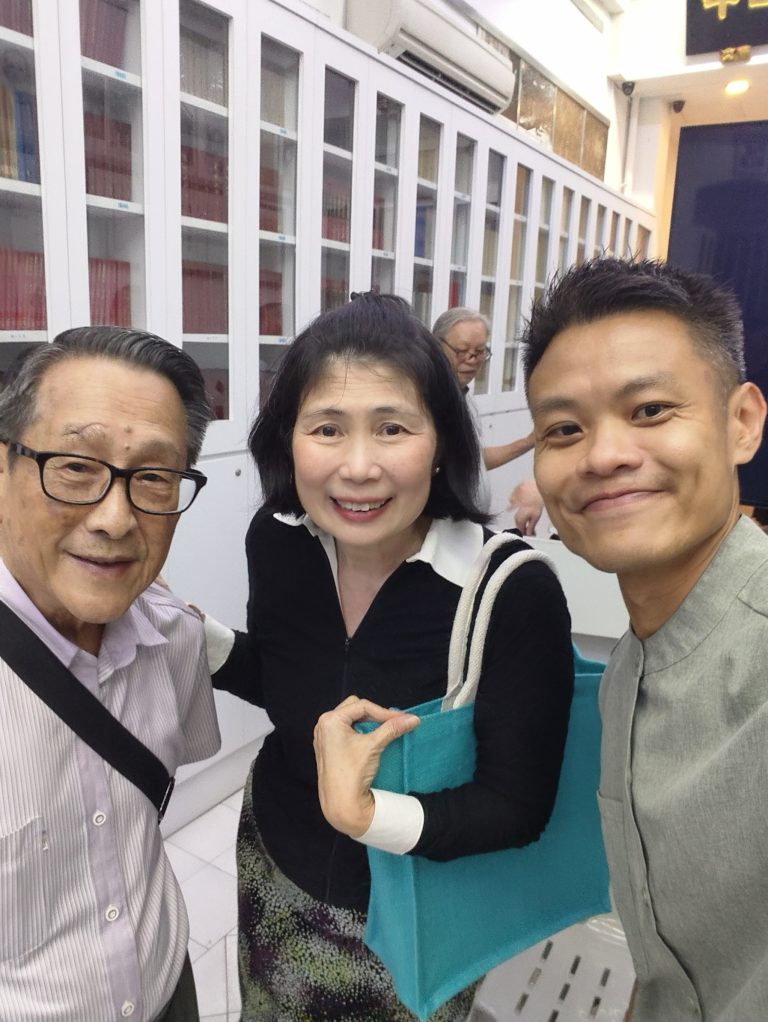
At a 2025 Chinese New Year luncheon, I was introduced to Chan Sen Meng.
In a brief moment, he suggested that my situation might have been the result of internal targeting or sabotage.
There were people around. I did not probe further.
I followed up later. Silence.
In 2026, when we met again:
- The interaction was brief
- The body language was distant
- The handshake felt rushed
Maybe it was nothing.
Or maybe it reflects something deeper:
In certain circles, issues are not confronted—they are distanced.
Another council member told me to just be a member, suggesting that I should not run for office.
When You Don’t “Look Chinese Enough”

Within the Chinese community, there is an unspoken expectation:
- Fair-skinned
- Familiar-looking
- Culturally aligned
Anything outside that spectrum becomes… noticeable.
Not rejected outright.
But quietly marked.
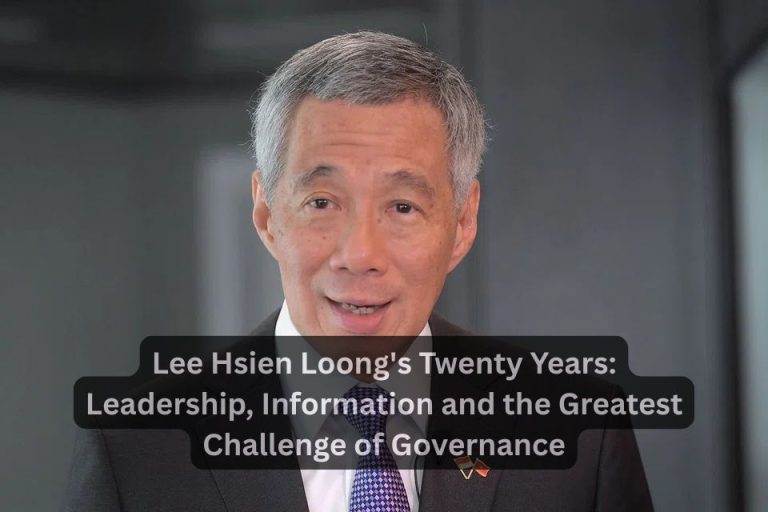
Even in the family of Lee Hsien Loong, public attention around his son—who has albinism—has shown how quickly difference becomes a point of curiosity.
A private-hire driver once filmed and questioned him about his identity and whereabouts.
That moment was not just about privacy.
It revealed something deeper:
Even within the majority race, difference is not always embraced—it is examined.
When Recognition Is Not Neutral
I see this tension within my own family.
Both of my children are capable.
Both have their own strengths, character, and potential.
Yet one—fairer-skinned, more conventionally aligned with expectations—has received significantly more institutional recognition:
- Scholarships
- Character awards
- National-level nominations
The other—darker in complexion, with a different presence—walks a quieter path.
This is not about ability.
Because they are both capable.
But outcomes do not always feel random.
When Systems Start Labelling
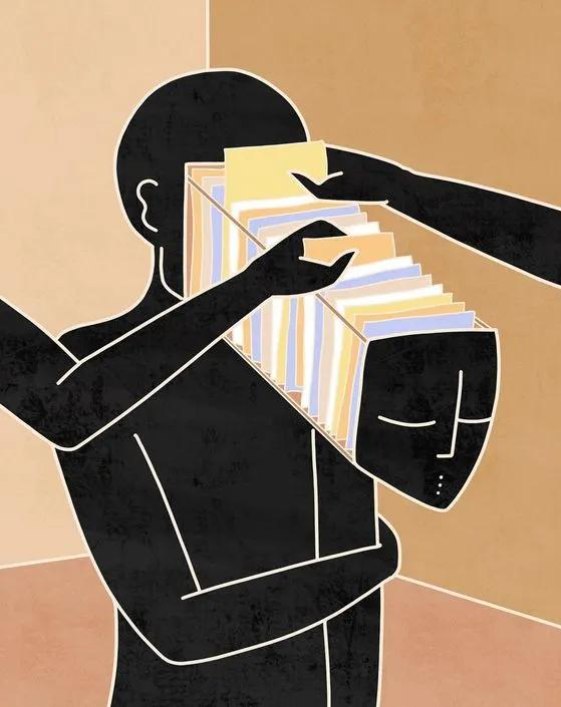
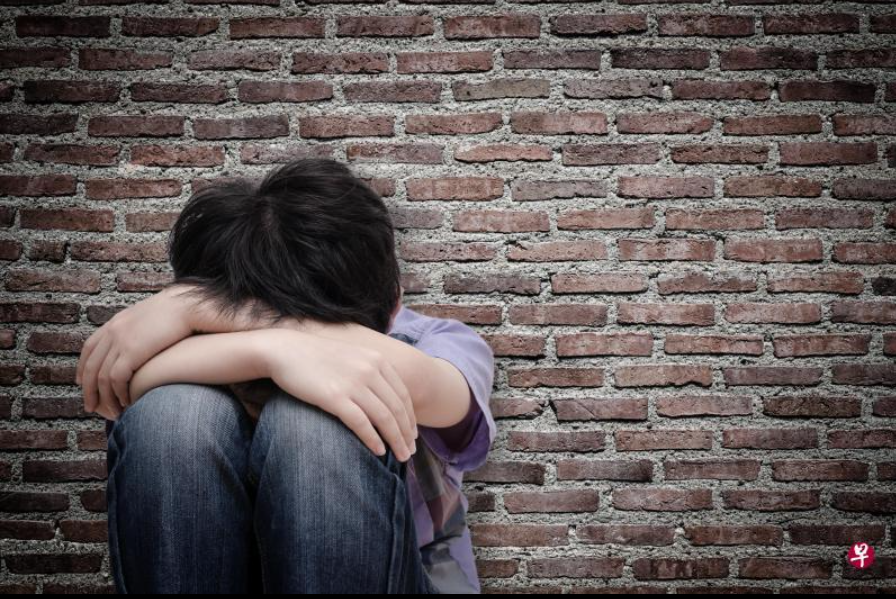
There was a time when one of my children was involved in a school incident.
He was the victim.
But the narrative began forming in the opposite direction.
Counselling was suggested. Intervention was proposed. A label was beginning to take shape.
I intervened directly—with teachers, with leadership—and to their credit, the school corrected the situation.
But the experience left a deeper question:
If we had not stepped in, would the label have remained?
When “Fitting In” Is Still Not Enough
Some might assume exclusion happens because one does not meet expectations.
But what happens when you do?
I speak and write fluent Chinese—comfortably across formal, cultural, and written contexts.
I can operate within traditional clan environments without difficulty.
And yet, that has not fundamentally changed how I am perceived.
Because what I have come to realise is this:
Language may grant you access—but it does not guarantee acceptance.
🔥
I meet the language, the culture, and the expectations. Yet the distance remains.
The Data We Don’t Like to Sit With
Singapore continues to report hundreds of suicide deaths each year, with figures in recent years reaching one of the highest levels in decades.
These are not just numbers.
They are people who have passed through systems:
- Schools
- Workplaces
- Counselling channels
- Clinical environments
Before reaching that point.
We often ask:
“Why didn’t they seek help?”
But a harder question is this:
What happens after they do?
When Help Becomes a Label
Following my earlier reflections, readers reached out privately.
Their experiences shared a pattern:
- Once labelled, individuals were treated differently
- Their identity narrowed to a diagnosis
- Social and professional opportunities shifted
Not always intentionally.
But repeatedly.
Some described it as:
From concern → to classification → to isolation
No system sets out to harm.
But when processes become rigid, and labels become identities,
the outcome can still be deeply damaging.
When Inclusion Becomes Selective
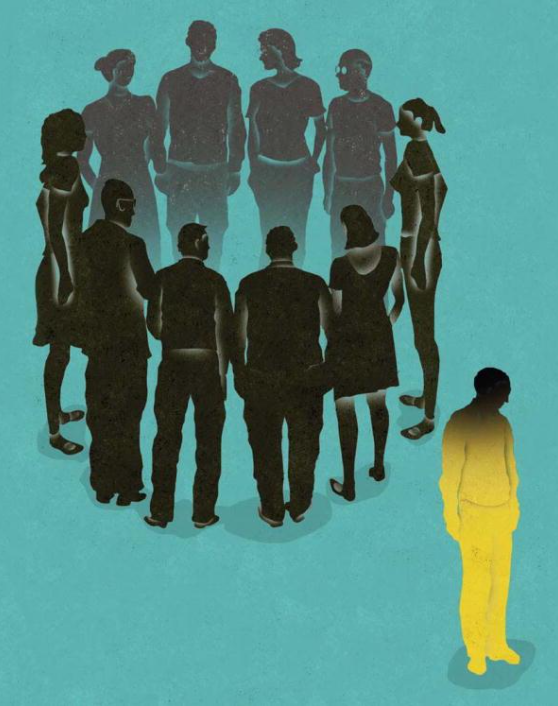
For a long time, I believed that stability in Singapore came from maintaining what has worked since independence—including the existing racial balance.
But experience changes perspective.
What appears inclusive on the surface does not always translate into inclusion where it matters most:
- Access to opportunities
- Fairness in business dealings
- Protection of livelihood
In recent experiences—including ongoing commercial disputes involving cross-border Chinese-linked networks such as those connected to the Jin Jiang ecosystem—I have begun to see a different pattern:
Inclusion at the surface. Control at the core.
The Risk of Concentrated Cultural Power
This leads to a difficult but necessary question:
What happens when influence within a community becomes too concentrated?
Not just economically—but culturally, socially, and institutionally.
Because when networks become tightly aligned around:
- Language
- Identity
- Cultural expectations
They can unintentionally reinforce:
- Gatekeeping
- Homogeneity
- Resistance to difference
Not through policy.
But through behaviour.
From Representation to Reinforcement
Community organisations were originally meant to:
- Preserve heritage
- Support members
- Build bridges
But over time, there is a risk that any such structure—if not constantly renewed—can begin to:
Reinforce a narrow definition of who belongs.
And when that happens:
- New voices feel unwelcome
- Different profiles are filtered out
- Diversity within the same community is reduced
A Question Worth Asking
So the issue is not whether community federations or clan structures should exist.
The real question is:
Are they evolving fast enough to reflect the diversity within the community itself?
Because today’s Chinese community is not one-dimensional.
It includes:
- English-speaking professionals
- Multi-religious identities
- Cross-cultural operators
- Individuals who do not fit traditional moulds
If these realities are not reflected, then inclusion becomes symbolic—not structural.
What True Inclusion Requires
True inclusion is not about numbers.
It is about:
- Fair access
- Equal treatment
- Openness to difference
- Accountability within networks
Because without these:
Any system—no matter how established—can unintentionally become exclusionary.
🔥
Diversity is not just about balancing races. It is about ensuring that no single narrative—within any race—becomes dominant enough to silence the rest.
When Business Mirrors the Same Pattern
This pattern extends beyond social systems.
I am currently dealing with litigation involving a joint venture between Singapore-based Chinese interests and a China-linked entity associated with the Jin Jiang network.
On paper, it is a commercial matter.
In reality, it reflects something more layered:
- Cultural alignment
- Network positioning
- Silent gatekeeping
- Strategic distancing
Chinese dealing with Chinese—yet not always with fairness.
And when you do not fit neatly into expected moulds, you begin to see how exclusion operates:
Not loudly. But precisely.
Racism Is Not Always About Race
What I have come to understand is this:
Racism is not always about one race against another.
Sometimes it is:
- Conformity vs deviation
- Acceptance vs quiet exclusion
- Inclusion vs silent filtering
And these dynamics exist within the same race.
A Civilisation-Level Reflection
At scale, every civilisation faces this question:
How much difference can it tolerate?
Because when systems become too optimised, too structured, too controlled—
They begin to standardise identity.
And anything outside that standard becomes something to:
- Adjust
- Label
- Or quietly exclude
Final Thought
Singapore is often described as efficient, stable, and successful.
But success comes with a deeper responsibility:
To ensure that order does not come at the cost of individuality.
Because the most dangerous systems are not the ones that openly reject you.
They are the ones that quietly redefine you— and expect you to accept it.
And a Reflection at the end of this article
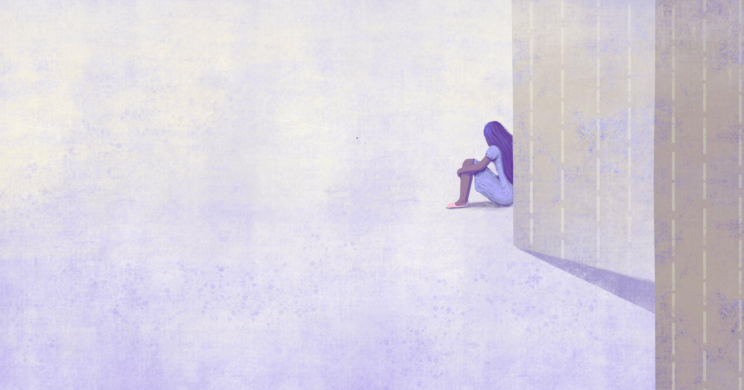
Perhaps this is also why, across history, some societies instinctively resist systems that appear orderly, efficient, and unified on the surface. Because when everything looks aligned, harmonious, and unquestioned, it often means the deeper tensions are no longer visible—not because they have been resolved, but because they are no longer allowed to surface, to be debated, or even to be acknowledged. And in such environments, those who do not fit, who question, or who are quietly marked as different, do not always face open rejection. Instead, they experience something far more subtle:
They are distanced, deprioritised, and eventually forgotten— not through force, but through silence.
This article is also published on LinkedIn.
🔷 种族之内、种族之下的歧视

在新加坡,以及更大文明尺度之下的观察
在新加坡,以及更大文明尺度之下的观察
在新加坡,我们一直以种族和谐为傲。
但种族之间的和谐,往往掩盖了一个更令人不安的事实:
每一个种族内部,都存在裂痕——而我们很少谈论它。
多数族群内部的隐形阶层
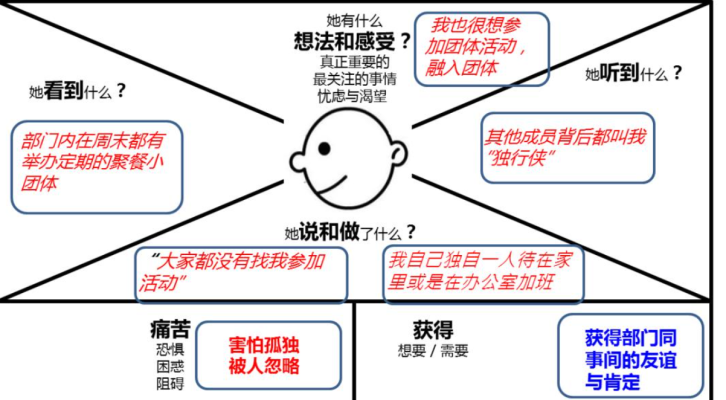
作为一名华人新加坡人,我经历过一件很多人不会公开承认的事情:
华人之间,并非一视同仁。
存在着一些不成文的筛选标准:
- 肤色
- 语言(华语 vs 英语)
- 方言背景
- 宗教取向
- 文化认同
没有人会明说。
但这些标准,悄然运作在:
学校、会馆、商业圈、人脉网络之中。
一段没有继续的对话
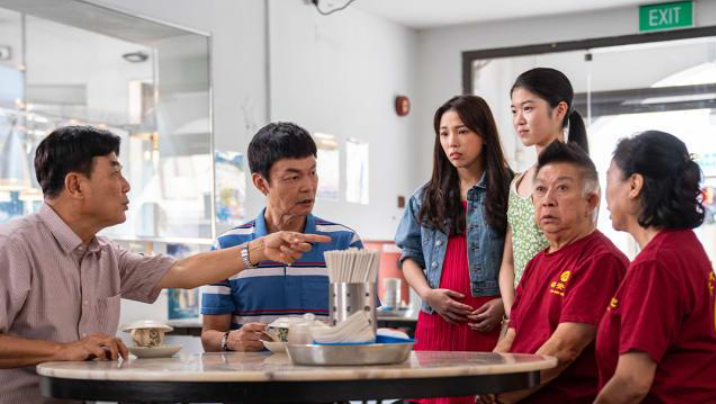
在2025年的一场农历新年午宴上,我被介绍给曾宪民先生(新加坡宗乡会馆联合总会会长)。
在一个短暂的交流中,他提到:
我的处境,可能涉及内部的针对或打压。
当时人多,我没有追问。
之后我尝试联系他——没有回应。
到了2026年再见面时:
- 互动非常简短
- 肢体语言明显疏离
- 握手仓促结束
也许什么都没有发生。
但也可能,这正体现了一种更深层的现实:
在某些圈子里,问题不会被正面面对——而是被“处理”为距离。
另一名委员则叫我做会员就好,似乎暗示我别竞选。
当你“不够像华人”时

在华人社群中,存在一种默认的“形象标准”:
- 白皙肤色
- 看起来“典型”
- 文化上契合
任何偏离这个范围的个体,都会变得“显眼”。
不会被公开排斥。
但会被默默标记。
即使是在 李显龙,Lee Hsien Loong的家庭中,其患有白化症的儿子,也曾因外貌而引发公众关注。
一位私召车司机甚至拍摄并询问他的身份与住处。
这不仅仅是隐私问题。
它反映出更深层的现象:
即使在同一族群中,“不同”也未必被接纳,而是被审视。
当认可并非中立
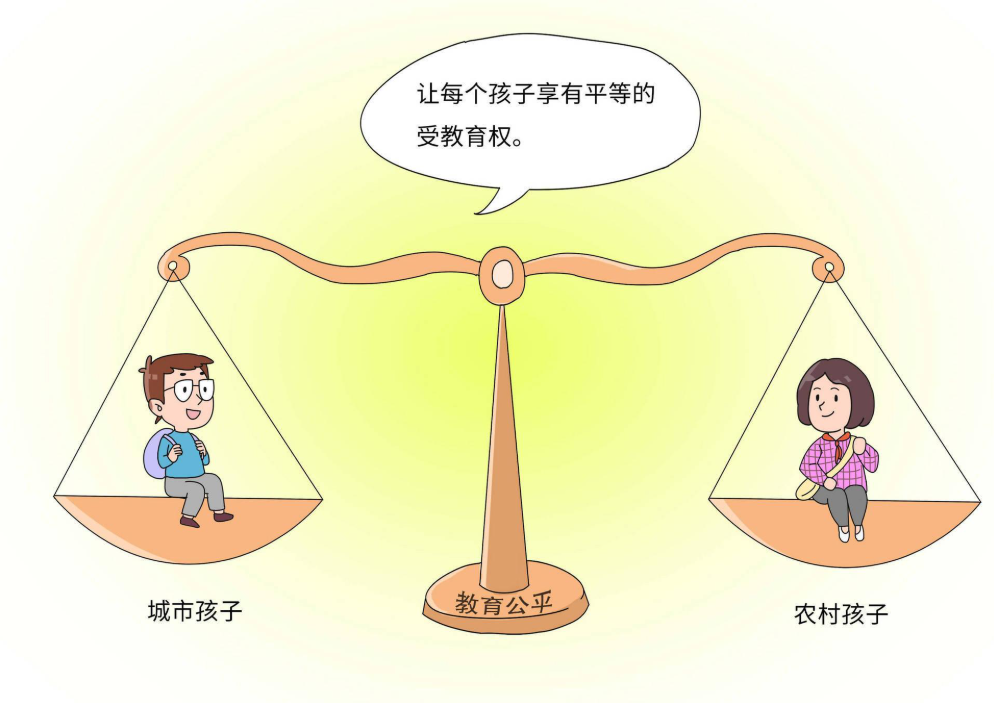
我在自己的家庭中,也看到了这种张力。
我的两个孩子都具备能力。
他们各自拥有不同的优势与特质。
但其中一位——肤色较白、较符合主流审美——获得了更多制度性的认可:
- 奖学金
- 品格奖
- 国家级提名
而另一位——肤色较深、气质不同——则走着较为低调的路径。
这并不是能力问题。
因为他们同样优秀。
但结果,却并不总是随机。
当系统开始“标签化”
曾有一次,我的孩子卷入一场校园事件。
他是受害者。
但叙事却开始朝相反方向发展。
辅导建议出现了。 干预机制启动了。 一个“标签”,正在形成。
我亲自介入,与教师、校方沟通。
最终,学校纠正了判断。
但留下的问题是:
如果我没有介入,这个标签是否会一直存在?
当“符合条件”仍然不够
有人可能会认为,被排斥是因为不符合标准。
但如果你符合呢?
我能够流利地说与写中文——不仅是日常交流,而是在正式、文化与书面层面都能自如运用。
我可以在传统会馆环境中正常运作。
然而,这并没有改变我被看待的方式。
我逐渐明白:
语言可以让你进入,但不代表你被真正接纳。
🔥
我符合语言、文化与所有期待。 但距离依然存在。
我们不愿面对的数据
近年来,新加坡每年都有数百宗自杀案例,数字达到数十年来的高点。
这不仅仅是统计。
这些人,在走向终点之前,往往都曾经过系统:
- 学校
- 职场
- 辅导体系
- 医疗与心理系统
我们常问:
“为什么他们不求助?”
但或许我们更应该问:
他们求助之后,发生了什么?
当“帮助”变成标签
在我分享这些观察之后,一些读者私下联系我。
他们的经历呈现出一种模式:
- 一旦被标签化,就被区别对待
- 身份被缩减为一个诊断
- 社交与机会发生变化
并非出于恶意。
但却反复发生。
有人这样描述:
从关心 → 分类 → 隔离
系统本意不在伤害。
但当标签变成身份,
结果仍然可能是深刻的伤害。
当“包容”变成选择性包容
过去,我曾认为,新加坡的稳定来自于维持建国以来有效的结构——包括种族比例。
但经历改变了看法。
表面上的包容,并不等于在关键层面的包容:
- 机会获取
- 商业公平
- 生计保障
在近期的经历中——包括涉及锦江体系相关跨境商业纠纷——我开始看到另一种模式:
表面是包容,核心是控制。
文化权力过度集中的风险
这引出了一个重要问题:
当某个社群的影响力过度集中时,会发生什么?
不仅是经济层面,更包括文化、社会与制度层面。
当网络围绕以下因素紧密构建:
- 语言
- 身份
- 文化标准
它可能无意中强化:
- 把关
- 同质化
- 对差异的抗拒
不是通过政策。
而是通过行为。
从代表性走向强化性
会馆与社群组织本意是:
- 传承文化
- 支持成员
- 搭建桥梁
但若不持续更新,
它们可能逐渐:
强化一种狭窄的“归属定义”。
结果是:
- 新声音难以进入
- 不同类型的人被过滤
- 内部多样性下降
一个值得思考的问题
问题不在于这些组织是否应该存在。
真正的问题是:
它们是否足够进化,以反映当今社群的多样性?
因为今天的华人社群,已经不再单一:
- 英语主导者
- 多宗教背景
- 跨文化从业者
- 非传统路径个体
若这些现实未被反映,
所谓包容,只是象征,而非结构。
真正的包容是什么

真正的包容,不是数字。
而是:
- 公平的机会
- 平等的对待
- 对差异的开放
- 网络中的问责机制
否则:
任何系统——无论多成熟——都可能变得排他。
🔥
多元化不仅仅是种族之间的平衡。 而是防止任何一种叙事,在种族内部压制其他声音。
当商业复制同样模式

这种模式也延伸到商业领域。
我目前正处理一宗涉及新加坡华人与中国锦江体系相关的合资纠纷。
表面上,这是商业问题。
实际上,它反映出更复杂的结构:
- 文化对齐
- 人脉位置
- 无声的把关
- 策略性的疏离
华人与华人之间,
也未必公平。
而当你不符合既定模式,
你会看到排斥如何发生:
不是大声的,而是精准的。
种族歧视不只是种族之间
我逐渐明白:
种族歧视,并不总是不同种族之间的冲突。
它也可以是:
- 一致 vs 偏离
- 接纳 vs 排斥
- 包容 vs 筛选
而这些,都可能发生在同一族群内部。
文明层面的思考
在更大尺度上,每一个文明都会面对一个问题:
它能容纳多少差异?
当系统过度优化、过度结构化、过度控制时,
它会开始标准化身份。
任何偏离标准的个体,都会被:
- 调整
- 标签化
- 或悄然排除
结语
新加坡常被视为高效、稳定与成功的典范。
但成功,也带来更高的责任:
确保秩序不会以牺牲个体为代价。
因为最危险的系统,不是公开拒绝你。
而是:
悄悄重新定义你—— 然后期待你接受。
最后的反思
或许这也是为什么,在历史上,一些社会本能地抗拒那些表面看似高效、统一与和谐的体系。
因为当一切看起来过于一致、没有争议、没有分歧时,
往往不是问题已经解决,
而是问题已经不再被允许出现、被讨论、甚至被承认。
在这样的环境中,
那些不符合、敢质疑、或被默默标记为“不同”的人,
并不会总是遭遇公开的排斥。
他们经历的,往往是一种更隐蔽的过程:
被疏离,被边缘,被遗忘—— 不是通过压迫,而是通过沉默
One Comment