#103 Systems That Hold Nations Together — And What Happens When They Fail Us 《支撑国家的系统──以及当它们开始崩塌时》
A MAR VIN Foo Newsletter Issue
(Featuring: Zhang Xueliang, Dr. Goh Keng Swee, Tunku Abdul Rahman, broadband failures, and the systems thinking needed for The Thousand Ships vision.)
SECTION 1 — THE FORGOTTEN CHANGEMAKERS
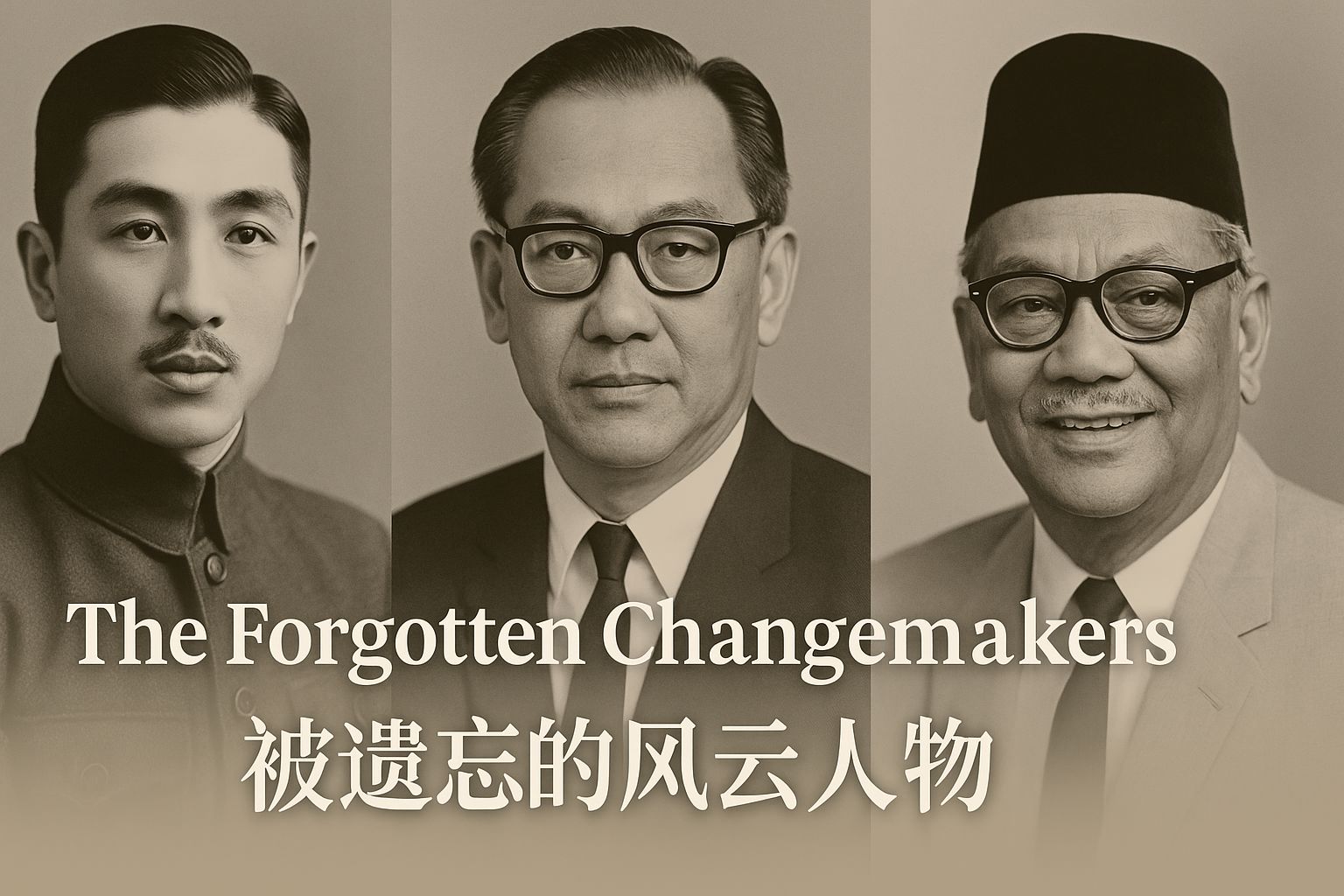
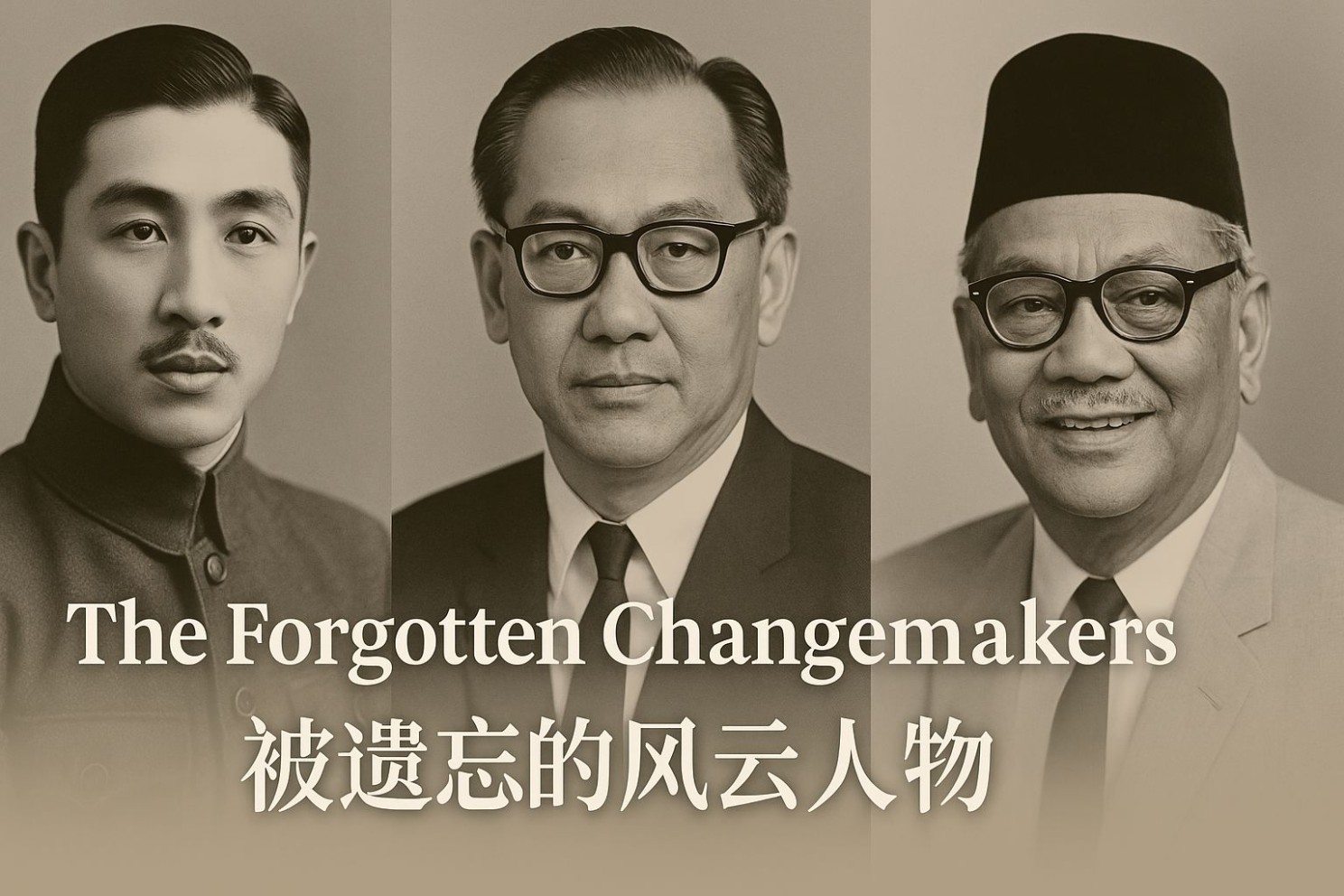
Zhang Xueliang, Dr. Goh Keng Swee & Tunku Abdul Rahman — Leaders Who Carried Nations on Their Shoulders
History remembers empires, victories, and turning points — but too often, it forgets the individuals who sacrificed their own futures to protect the destiny of their people.
Three such figures stand out:
- General Zhang Xueliang, son of the powerful Zhang Zuolin, who grew up with the burden of Northeast China on his shoulders. Despite his status as a warlord’s heir, he did the unthinkable — he placed the fate of a fragmented China above political loyalty, forcing Chiang Kai-shek to unite with the Communists against Japan. He paid with 50 years of house arrest and exile, living out his last decades in the United States. In his later life, Zhang Xueliang became a Christian, devoting his days to reflection and prayer — a humbling contrast to the fiery military prince he once was.
- Dr. Goh Keng Swee, the quiet architect behind Singapore’s economy, defence, and education systems. A man who disliked public attention but shaped almost everything Singapore stands on. His humility concealed a mind of brutal clarity and discipline.
- Tunku Abdul Rahman, the statesman who led Malaya to independence and later saw the painful separation of Singapore. Despite disagreements and political pressure, he always placed peace above pride.

These were leaders who understood a truth nearly forgotten in our time:
Real leadership is measured not by power, but by the burdens one is willing to bear for a larger mission.
Zhang Xueliang fought for unity. Goh Keng Swee built for longevity. Tunku Abdul Rahman negotiated for stability.
Their stories echo through our present — especially in an age where systems that once held societies together are beginning to falter under new pressures.
And that brings us to today’s world, where even something as basic as connectivity can reveal a deeper structural flaw.

SECTION 2 — WHEN MODERN INFRASTRUCTURE FAILS
When Broadband Contracts Outlast Reliability — And When Teenagers Start Noticing Something Is Wrong
The most surprising insight about Singapore’s broadband struggles did not come from industry veterans or network engineers.
It came from a teenager.
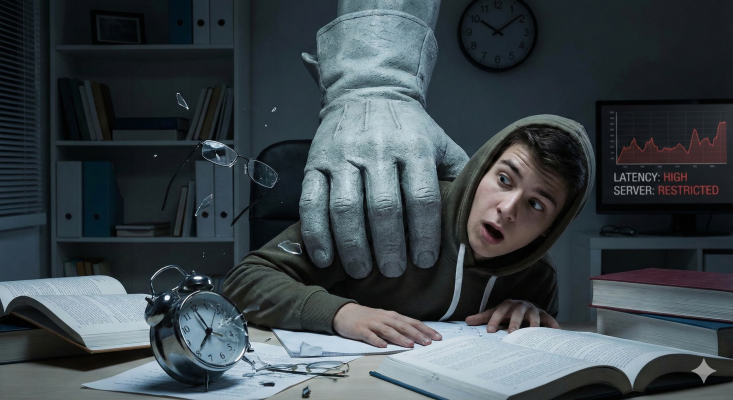
After suffering repeated lag spikes, high ping, and inconsistent gameplay, his conclusion was simple:
“Uncle, the only way to get stable servers now is to use a VPN. Our government is deliberately holding back access — not just to information, but now gaming.”
Whether or not this is true, the fact that a teenager even believes this reflects a concerning erosion of trust.
Let’s examine why this perception is spreading.
1. When Upgrading Speed Doesn’t Fix Congestion
Parents are encouraged to upgrade from:
- 1Gbps → 2Gbps
- 1Gbps → 5Gbps
- 1Gbps → mesh systems
And yet:
- Latency remains high
- Ping is unstable
- Servers are unreachable
- Gaming performance worsens
This raises an uncomfortable question:
If speed isn’t the bottleneck, why is the public told that upgrading will solve it?
When consumers spend hundreds upgrading plans and equipment only to see no improvement, suspicion naturally grows.

2. Is Telco Congestion Being Masked as Consumer Fault?
Teenagers are noticing this first.
They see:
- Lag despite high-end routers
- Lag despite wired connections
- Lag despite 5Gbps plans
- Lag despite close WiFi proximity
- Stable connections only when using VPNs
This leads to a new hypothesis emerging among youth:
“Telcos are deliberately letting international routes degrade so consumers will think they need higher-tier plans.”
This may or may not be true, but the perception itself signals a breakdown of trust in infrastructure providers.
3. The Bigger Question Teenagers Are Asking: Is This Social Engineering?
Teenagers today are more tech-literate than previous generations. They understand VPNs, routing, server selection, and bandwidth allocation.
So when they experience:
- High ping to overseas servers
- Stable latency only via VPN
- Random access issues during school holidays
They draw their own conclusions.
Some believe:
“The government is trying to reduce gaming access to force students to spend more time studying.”
Again — this is not a claim of fact.
But the perception matters because it arises organically from repeated negative experiences.
When youth believe that:
- Information is gated
- Gaming is throttled
- Overseas connections are restricted
- Productivity is lowered through engineered friction
…they conclude that their lived experience is being shaped by invisible hands.
In a hyper-connected society, this has psychological consequences.
4. The Paradox: Social Engineering That Reduces Productivity
Even if the intention were to “reduce gaming time,” the outcome is ironically the opposite.
When broadband becomes unreliable:
- Teenagers spend more time troubleshooting
- More time retrying logins
- More time reconnecting to servers
- More time waiting for lag to settle
Instead of studying, they waste mental energy on connectivity failures.
The result?
Singapore’s attempt at social engineering — intentional or not — decreases the productivity of its youth.
It becomes a system that frustrates everyone:
- Students cannot play or study efficiently
- Parents pay more but get less
- Telcos lose credibility
- The national digital economy weakens
- Trust erodes quietly, especially among younger citizens
And this erosion of trust is the most dangerous bottleneck of all.

5. When Teenagers Turn to VPNs to “Fix” Local Infrastructure
The final irony:
A VPN — a tool meant for privacy, not gaming — becomes the solution to Singapore’s broadband problems.
Teenagers now say:
“VPN is the only way to unlock stable gameplay. Singapore’s network is the bottleneck, not the game.”
When the next generation believes that:
- foreign servers are more reliable than national ones
- alternative networks outperform local telcos
- paid VPNs solve problems that premium broadband cannot
— we are witnessing a systemic failure of faith in national infrastructure.
This matters not only for gaming.
It matters for Singapore’s future digital competitiveness.
SECTION 3 — THE BRIDGE: WHAT LEADERS OF THE PAST TEACH US ABOUT FAILING SYSTEMS TODAY
Zhang Xueliang risked everything to force unity because he recognised that China would fall without a coordinated national response.
Goh Keng Swee built Singapore’s economy because he understood that systems, not speeches, create stability.
Tunku Abdul Rahman held Malaya together through compromise and restraint because he knew that leadership must serve the people, not ego.
Contrast that with today:
- When network congestion rises, customers suffer.
- When infrastructure fails, families face disruption.
- When customer service falters, people lose trust.
- When leaders prioritise PR over engineering, systems decay.
The principle remains:
A system survives only when its leaders honour their responsibility to those who depend on it.
When telecommunications — the lifeblood of modern society — becomes unreliable, that is not merely an inconvenience.
It is a sign that systems thinking has eroded.
SECTION 4 — THE THOUSAND SHIPS: WHY THIS MATTERS TO OUR FUTURE
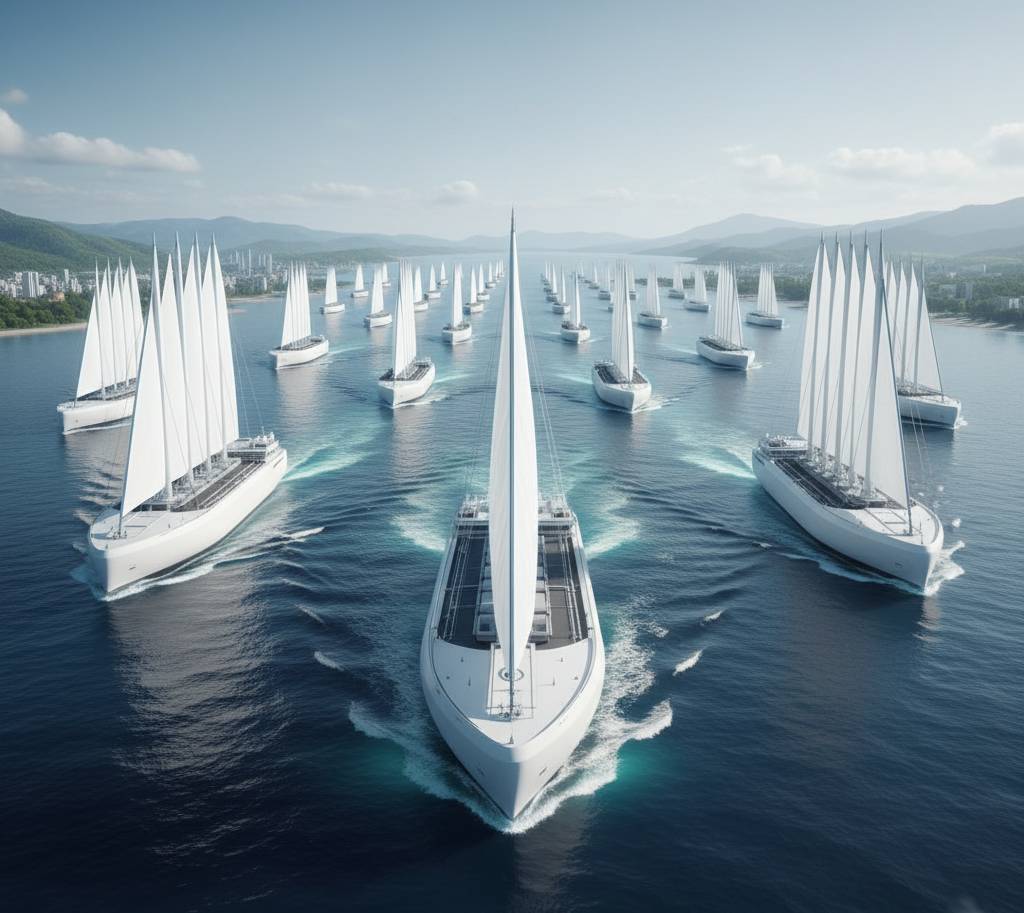
The Thousand Ships vision is ultimately a mission about restoring systems that humanity has neglected—our oceans, our lands, our relationship with the planet.
Plastic waste is not a technical issue. It is a leadership issue. A systems design issue. A moral issue.
Just as Zhang Xueliang sacrificed his own life for the future of China, just as Goh Keng Swee built structures that would outlast him, just as Tunku Abdul Rahman prioritised peace over politics…
…our generation must now confront the environmental collapse caused by decades of human negligence.
The ocean doesn’t care about contracts or KPIs. The earth doesn’t recognise consumer or enterprise divisions. Nature does not give rebates for downtime.
Mother Earth has always been forgiving. But her patience is finite.
Just as failing connectivity exposes the fragility of man-made systems, plastic pollution exposes the fragility of our entire planetary ecosystem.
The Thousand Ships is not just about cleaning oceans. It is about rebuilding trust between humanity and the natural world. It is about restoring balance. It is about learning from the forgotten changemakers who carried nations through crisis.
They sacrificed for a larger mission. Now, we are called to do the same.
EPILOGUE — THE NEWSLETTER CLOSE
In a world where systems fail and leaders often look away, we must ask:
- What kind of leadership do we want?
- What kind of future are we building?
- What burdens are we willing to carry for the next generation?
History has shown us what true responsibility looks like.
Nature is reminding us what happens when we ignore it.
And the digital frustrations of today — even something as mundane as a 2,000ms ping — are small signals of a larger truth:
Systems must evolve. Leaders must rise. And missions like The Thousand Ships must begin now.
This newsletter is also published on LinkedIn.
《支撑国家的系统──以及当它们开始崩塌时》
MAR VINFoo 通讯专刊
(张学良、吴庆瑞、东姑阿都拉曼、宽带系统失灵、社会工程与「千船计划」的系统思维)
第一部分:被遗忘的风云人物
张学良、吴庆瑞、东姑阿都拉曼——那些肩扛国家命运的人
历史往往记住战争、政策与结果,却常常忽略那些默默承担巨大代价的个人。
这三位人物,值得我们重新致敬:
张学良——“少帅”
作为张作霖之子,他出生时便肩负东北的重担。 在国家危亡、军阀割据、日本侵略的年代,他做出了改变中国命运的决定——逼迫蒋介石停止内战、共同抗日。
这一步救了国家,却毁了自己的未来。 他被软禁、失去自由数十年,最终旅居美国。
晚年,这位曾经叱咤风云的军阀,悄然成为一名虔诚的基督徒,以信仰和反思陪伴余生——这是权力之外的另一种伟大。
吴庆瑞博士(Dr. Goh Keng Swee)
新加坡军事、经济、金融制度、教育基础、国家体系背后的「建筑师」。 他不追求掌声,只追求结构的稳定与系统的长久。
东姑阿都拉曼(Tunku Abdul Rahman)
带领马来亚独立,面对政局风暴时始终坚持温和、克制与和平。 即使马新分家让他心痛,他也从未让个人情绪凌驾国家稳定。
这些领导者共同告诉我们:
真正的领导,不是权力,而是愿意承担多少属于人民与未来的重量。
而今天,当我们面对现代系统的裂缝——无论是数码基础设施,或地球生态──他们的精神显得愈加重要。
第二部分:当现代基础设施开始失灵
宽带合约比服务更长久──当青少年都察觉「有些不对劲」时
关于新加坡宽带问题,最深刻的洞察,不来自工程师或IT老鸟。
而是来自一位青少年。
在经历数周的高延迟、无法连接伺服器、Ping 动辄 2,000ms 的情况后——即使已经升级路由器、升级网速、购买mesh系统、换成高端台湾电竟路由器——他给出了一个令人惊讶的结论:
“叔叔,现在要玩得稳定,只能开VPN。 政府不是只管信息,现在连游戏都在限制了。”
不论这是真是假, 年轻人会这样想,本身就是一个国家系统信任度下滑的警讯。
为什么年轻人会得出这样的判断?
1. 升级网速,却没有任何改善
父母不断被建议:
- 升级 1Gbps → 2Gbps
- 升级 1Gbps → 5Gbps
- 买 mesh 系统
- 买更好的路由器
结果却是:
- 延迟依旧
- 游戏依旧卡
- Roblox 倒数计时器还会延迟
- 伺服器只剩高延迟选项
- 即使换了台湾高端电竞路由器,也一样卡
于是,自然产生一个关键问题:
如果瓶颈根本不是速度,为什么电信商一直要求消费者升级?
花了钱却没有改善, 怀疑,就会出现。
2. 青少年发现真正的瓶颈可能不在「家里」
他们观察到:
- 高端设备仍然卡
- 升级网速仍然卡
- 路由器距离近也卡
- 唯一解决方式是 VPN
- VPN 的海外路由竟然比本地更稳定
于是出现另一个推论:
“电信商故意不改善国际线路,让你以为自己需要更高阶的宽带。”
这不一定是真相, 但—— 当信任破裂时,任何解释都变得合理。
3. 更敏感的问题:这是社会工程吗?
这一代年轻人非常懂科技。
他们懂:
- 伺服器路由
- 延迟原理
- VPN如何绕过限制
- 国际带宽瓶颈
所以当他们看到:
- 海外伺服器越来越难连
- 开VPN反而更顺
- 学校假期期间特别卡
他们自然会怀疑:
“是不是政府想限制我们玩游戏,让我们多读书?”
再次强调: 这不是事实陈述, 这是「社会心理」现象。
当人民相信系统在操控他们时,信任已经滑落。
4. 讽刺:如果这真是社会工程,它降低的不是游戏,而是生产力
假如目的是让孩子少玩游戏, 结果却适得其反。
青少年花更多时间:
- 重启路由器
- 换网络
- 研究VPN节点
- 排查网络瓶颈
- 测试延迟
他们花在 Troubleshoot 的时间 远比花在功课上的还多。
结果?
新加坡若真想“引导”青少年,反而降低了他们的生产力。
父母更压力, 年轻人更挫败, 国家的「数码竞争力」反而被稀释。
5. 当未来的一代相信 VPN 能“修好国家网络”时
最后的讽刺:
VPN——原本用来保护隐私的工具—— 变成了新加坡人玩游戏必备的「救命绳」。
年轻人开始说:
“VPN 比本地网络快。” “VPN 才能玩。” “本地线路才是瓶颈。”
这不仅是技术失败, 更是象征性的失败:
当下一代相信外国路由比本地系统更可靠时, 问题不是游戏,而是国家信任体系出现裂缝。
第三部分:昔日的领导者,为今天的系统示范什么叫责任
张学良懂得: 系统若分裂,国家必亡。
吴庆瑞懂得: 制度必须强韧,因为它是弱者的保护伞。
东姑阿都拉曼懂得: 领导者必须服务国家,而不是操控国家。
对照当下:
- 网络失败时,责任推给消费者
- 升级无效,却继续被鼓励花更多钱
- 年轻人对基础设施失去信任
- 系统责任不清、透明度下滑
这说明:
系统崩塌的开始,不是功能失效,而是领导者不再回应人民的需要。
第四部分:为什么「千船计划」与上述问题息息相关
「千船计划」不仅是一个技术愿景。
它是一场系统修复。
海洋被塑胶淤塞,是因为:
- 政府忽视早期警讯
- 工业界把便利放在永续之前
- 社会以为别人会解决
- 责任长期被推卸
这与数字基础设施的问题相似:
- 都是看不见的系统
- 都会突然全面失效
- 都影响年轻一代
- 都需要真正的领导站出来修复
就像历史中的那些无名英雄, 我们也必须修复地球脆弱的系统。
因为:
- 没有 VPN 可以绕过环境崩坏
- 没有「升级方案」可以替代健康的海洋
- 没有第二个地球可供切换
「千船计划」提醒我们:
系统需要疗愈; 领导必须觉醒; 人类必须行动。
这是我们这一代 必须承担的「国家级重量」。