
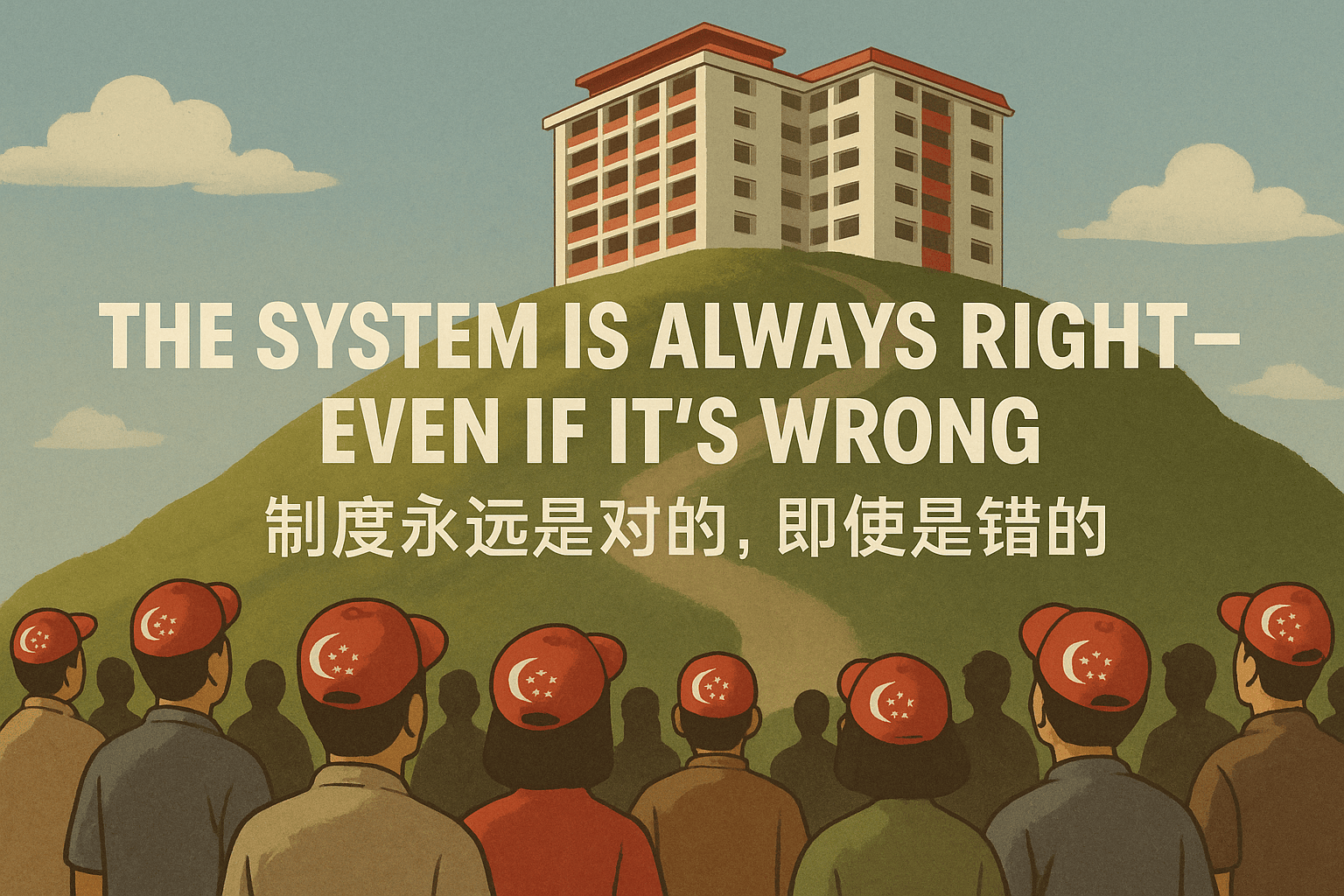
#95 Singapore’s Quiet Squeeze: When Misclassification, Housing Policies, and Bureaucratic Delays Reveal a Deeper Pattern 制度永远是对的——即使是错的
It began with a simple administrative mistake — at least, that’s what the authorities would call it.
A reader close to my heart and family discovered that she had been wrongly classified as self-employed by the tax authorities since YA2022. Despite having no employment income, this error triggered a cascade:
- Wrong Medisave demands,
- Incorrect income status,
- And reduced eligibility for government payouts meant for the unemployed.
But as we dug deeper, the financial impact wasn’t the biggest story. The bigger picture — the one most Singaporeans quietly whisper about — is how these “small errors” reveal a much larger ecosystem of policies, priorities, and pressures that increasingly fall on ordinary citizens while the system marches steadily on, unquestioned and unchallenged.
1. When Property Value Determines Need — A Condemning Logic
The reader’s reduced government assistance wasn’t actually about the misclassification. It was because she lived in a condominium — meaning the Annual Value (AV) of the home exceeded the eligibility threshold.
In Singapore’s social support logic, if you live in a condo:
- you are not considered “in need,”
- you get minimal or no unemployment support,
- and your struggles are automatically discounted.
Because if you own a condominium — whether you inherited it, bought it during better times, or share it with family — the system assumes you are financially secure.
This is where the quiet irony lies: The poor can be recognized. The wealthy can take care of themselves. But the sandwiched middle — they simply don’t qualify.
2. A Real Estate Market Frozen in Place
As this personal case unfolded, another story surfaced — from a real estate agent who shared a sobering truth:
“The property market is dead quiet. Agents are struggling to survive.”
He spoke about how the government is now competing directly with private developers, but with one unique advantage: they own the land.
This allows public housing to be launched:
- in central districts,
- on premium sites,
- with controlled supply numbers,
- and at price points that ripple through the entire property market.
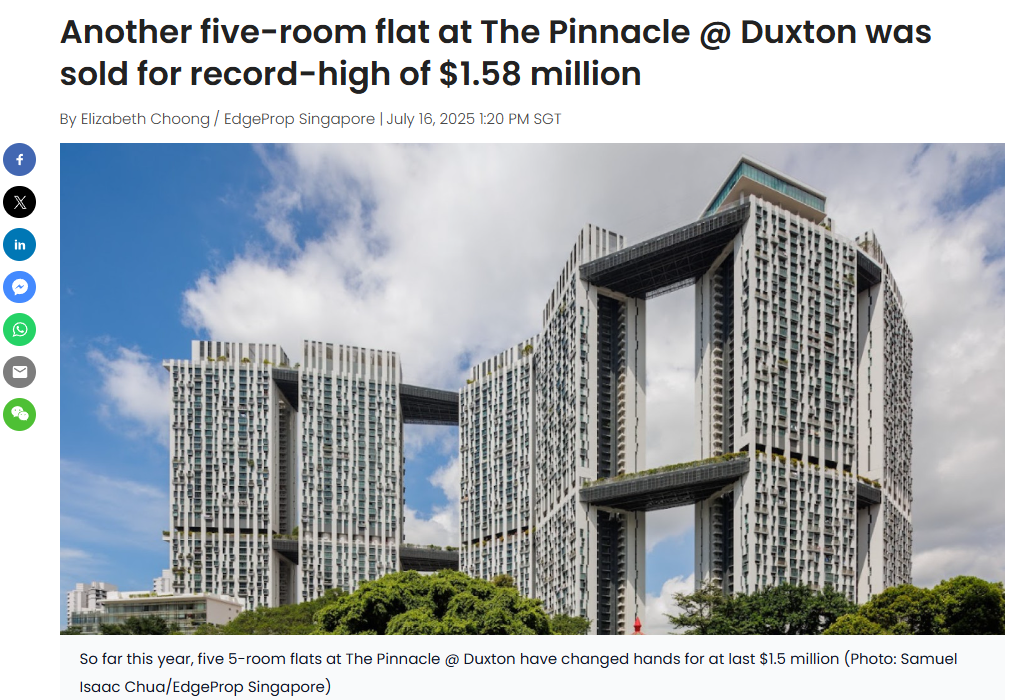
It began with The Pinnacle@Duxton, Singapore’s architectural trophy. Since then, prime-area public housing has pushed prices upwards — ironically through the very subsidies that were meant to make housing accessible.
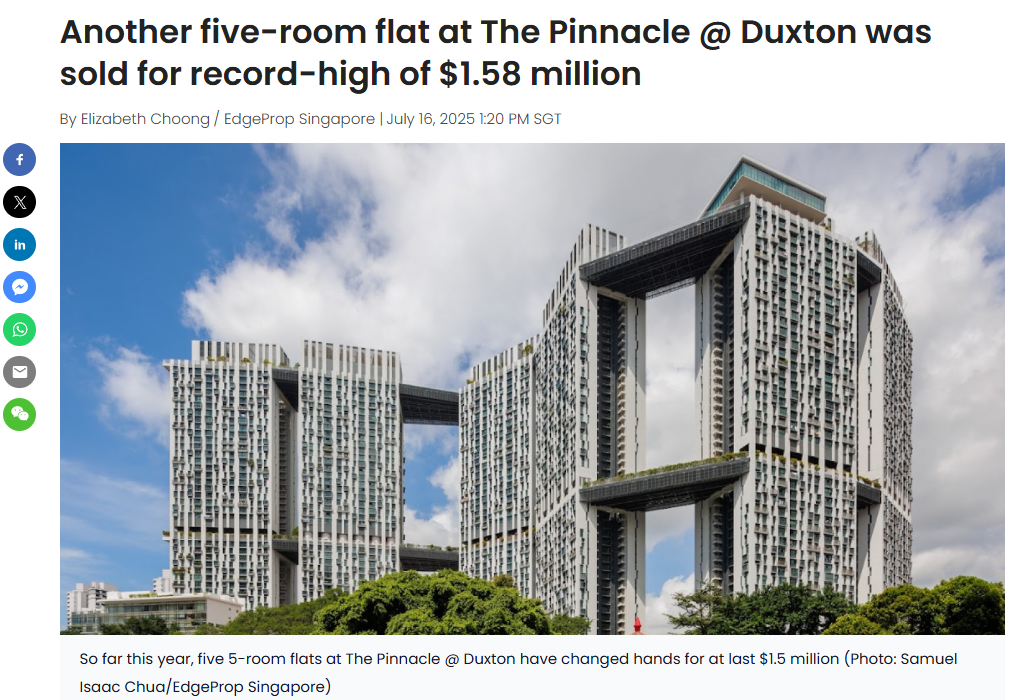
Here’s the uncomfortable truth: The construction cost of a unit is similar whether it’s HDB or private. What differs drastically is the land cost and policy intention.
This leads to a distortion where:
- Private developers cannot build competitively,
- Public housing appears “affordable” only through subsidies,
- And market prices are elevated across the board.
The agent added another worrying trend:
“Young Singaporeans are renting by the thousands. Many have given up on ever owning a home.”
The golden era for Singaporeans is over. What remains is a generation priced out, worn down, and increasingly resigned.
We are no longer participants in a national dream. We are simply… expendables.
3. A Divorcee Left in Limbo — Punishment or Policy?
Another reader shared her own ordeal:
After a divorce, she and her ex-partner needed separate homes. But:
- They couldn’t buy new HDB flats because of the 15-month wait-out rule.
- Private property was unaffordable.
- Renting burned through savings.
A sarcastic thought inevitably arises:
Perhaps the policy’s real aim is not stability — but punishment. Divorcees must be taught a lesson, or at least discouraged.
After all, this aligns neatly with winning the votes of the older generation, where marriage is sacred — and divorce is a moral failure.
With Singapore’s current systems, one wonders: Is this compassion, or control disguised as policy?
4. “There is no way you can compete with us.” — When Entrepreneurship Meets Gatekeeping
A budding entrepreneur, eager to rebuild his life, was chided by a competitor:
“There is no way you can compete with us.”
Not because his idea was weak. Not because the market was saturated.
But because certain industries are quietly protected by entities funded or endorsed by government agencies — SkillsFuture providers, consulting bodies, and various training monopolies. Click the link to read more about business favoritism in Singapore.
Singapore encourages entrepreneurship… but only within boundaries that do not disrupt the established beneficiaries.
So the question arises:
Is this the Singapore we grew up being proud of — or the Singapore that quietly evolved while we weren’t looking?

5. The SME Owner Who Tried to Help — And Was Punished for It
A small business owner tried to hire mid-career Singaporeans through the SBF Mid-Career Placement Programme, which promised a 70% salary subsidy.
It sounded noble. It sounded like national support. It sounded like what Singapore was designed to be — a system where the government partners SMEs to uplift fellow citizens.
But reality was different:
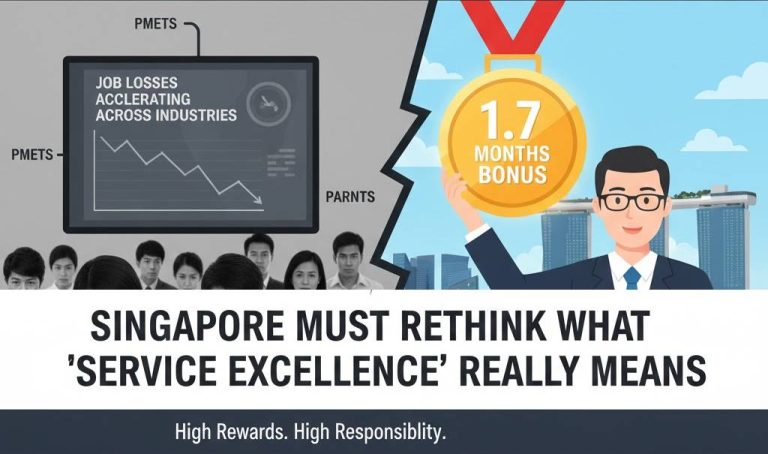
- Approvals that used to take 2 weeks dragged into 4 weeks.
- Grant disbursements that should arrive within 14 days stretched to over a month.
- Christmas is near, but the promised funds still haven’t arrived.
And when salaries or bonuses cannot be paid?
It is the SME owner who gets shamed: “Irresponsible employer.” “Bad boss.” “Exploitative company.”
Never mind that he was trying to help fellow Singaporeans. Never mind that the system delayed the funds. Never mind that the entire scheme was designed on the back of men like Lim Siong Guan, who built Singapore’s safety nets with genuine intent.
Today? The intent remains in the brochures. But the execution… is something else altogether.
6. Lessons from Steven Yeo — When Systems Forget Their Purpose
Former EDB scholar Steven Yeo, ex-CEO of the Singapore Flyer, raised concerns about financial irregularities during his tenure.
He approached the authorities — only to be dismissed because:
The Flyer was built using German pension funds, not Singaporean money — therefore not our problem.
The funds were pillaged, the truth buried, and accountability quietly sidestepped.
Steven later remarked:
“Most entities — government or mafia — started with noble intentions, like protecting the vulnerable. But along the way, power, greed, and self-interest crept in.”
Singapore is now seeking its 5th-generation leadership.
But are we still close to our founding values? Or have we drifted far beyond the ideals of Lee Kuan Yew’s early Singapore?
For those who want to read Steven Yeo’s full reflection, the detailed case is documented here: https://marvinfoo.com/2025/09/10/74-when-silence-speaks-louder-the-flyer-hyflux-and-the-pattern-of-blocking-accountability-%e5%bd%93%e6%b2%89%e9%bb%98%e6%af%94%e8%a8%80%e8%af%ad%e6%9b%b4%e5%93%8d%e4%ba%ae%ef%bc%9a%e6%96%b0/
7. A Different Kind of Sacrifice
At the end of all these stories — misclassification, housing distortion, entrepreneurship under suspicion, delayed grants, and systemic drift — one pattern emerges:
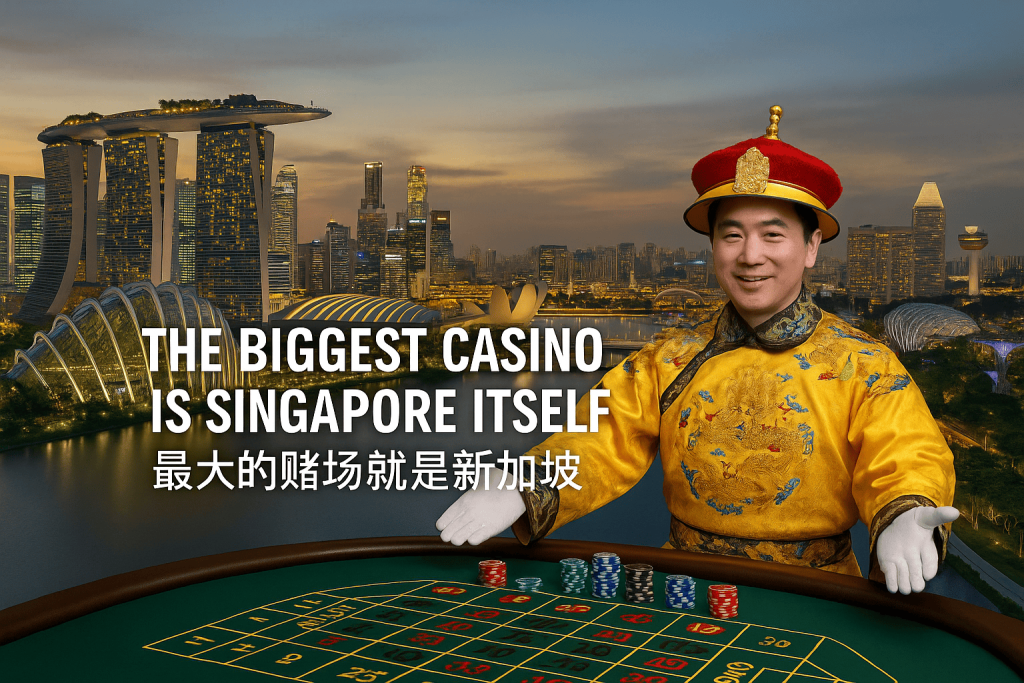
Singapore always chooses the logic of the majority. And the minority must sacrifice.
As the saying goes:
牺牲小我,完成大我。 “Sacrifice the small self, fulfil the greater collective.”
If only we were born in the Pioneer or Merdeka generations. If only we hadn’t become the sandwiched generation — forever missing Singapore’s golden era of the 1990s, yet carrying the burden of the Singapore we live in today.
This article is also published on LinkedIn.
制度永远是对的——即使是错的
(牺牲小我,完成大我)
在我身边,有一位与我和家人关系非常密切的读者,最近经历了一连串荒谬却又极具代表性的事件。她明明多年失业,只依靠房屋租金维持生活,却因为系统错误,被政府分类为“受雇人士”,导致所有与失业人士相关的政府补助、现金援助及生活津贴一律被排除在外。
她并不奢求政府给予多少,只求一个公平——但在今天的制度里,公平似乎已成为一种奢侈。
📍一、制度错误带来的蝴蝶效应
当系统把她错误归类为“就业人士”,政府自动认为她有稳定收入,因此:
- 多年未能获得失业人士的现金援助
- 可能错失多个年度的 GSTV(消费税回扣)
- 无法获得某些与失业状态挂钩的计划
- 中央公积金反而发来通知,说她“欠付自雇者的保健储蓄”
讽刺的是,她根本没有所谓的“就业收入”。真正的原因,就是 IRAS 的错误分类。
我们本以为这会是一件可以处理的小行政错误,最后却发现——系统里没有人真正负责,也没有人会为你的损失买单。
📍二、房价过热、地产代理苦不堪言——黄金时代已结束
另一位房地产经纪朋友告诉我:
“市场现在非常冷清,买家几乎消失,租房反而越来越多。年轻人已经放弃买房了,因为价格完全不合理。”
当政府以远低于市场的地价、掌控规划权、并在市中心黄金地段大量建造公共住房时,私人发展商根本没有公平竞争的空间。
结果是什么?
- 私宅开发受限
- 土地供应紧缩
- 公共房屋价格被抬高
- 政府又以“补贴”为名,塑造“我们很帮你”的叙事
- 房价却从鼎鼎大名的 Pinnacle @ Duxton 开始一路飞涨到天际
更令人无奈的是:
HDB 与私人发展商盖同样面积的屋子,建造成本其实差不多。 差别在哪里?土地成本与制度设计。
年轻家庭被迫租房,地产代理无生意,而房价却不断飙升。
这就是新加坡的现实。
📍三、离异家庭的困境:规则像是一种惩罚
另一位读者正在经历离婚,本想各自重新开始、买一间属于自己的家,却因 “15 个月不能买 HDB” 的规则卡在半空。
讽刺在哪里?
- 离婚已经是人生重大打击
- 却因为政策被当成一种“潜在投机者”
- 无家可归也得等满 15 个月
- 政府说这是为了“维护秩序”与“防止投机”
说得文雅点:社会稳定。 说得直接点:制度在惩罚当事人,同时换来年长选民的一张“好孩子”选票。
这是 PAP 的政治逻辑: 牺牲少数,安抚多数。
📍四、中小企业的迷惘——当好心变成坏事
有一个 SME 老板,本想通过新加坡商业联合会(SBF)的 “中年职场转型计划” 帮助新加坡人找工作,补贴高达 70%。
结果呢?
- 原本 2 周批准 → 变成 4 周
- 原本 2 周拨款 → 变成延后、再延后
- 现在靠近圣诞节,钱还是没来
工资要发、奖金要给,现金流捉襟见肘。最终是谁背锅?
不是制度。 不是机构。 不是官员。 而是 SME 老板。
这是否与前经济发展局(EDB)学者、前摩天轮 CEO Steven Yeo 的故事如出一辙? 他揭露德国养老基金在摩天轮项目中的财务问题,却被 CPIB 告知: “这不是新加坡的钱,不归我们调查。”
系统的初衷是良善的,但当组织老化、政治巩固、利益交织,制度会慢慢远离创始人的愿景。
新加坡现在正处于第 4 代、迈向第 5 代领导。 我们是否还记得最初的那份初心? 还是已经偏离了航道?
📍五、创业者的心声:为什么政府项目偏心某些人?
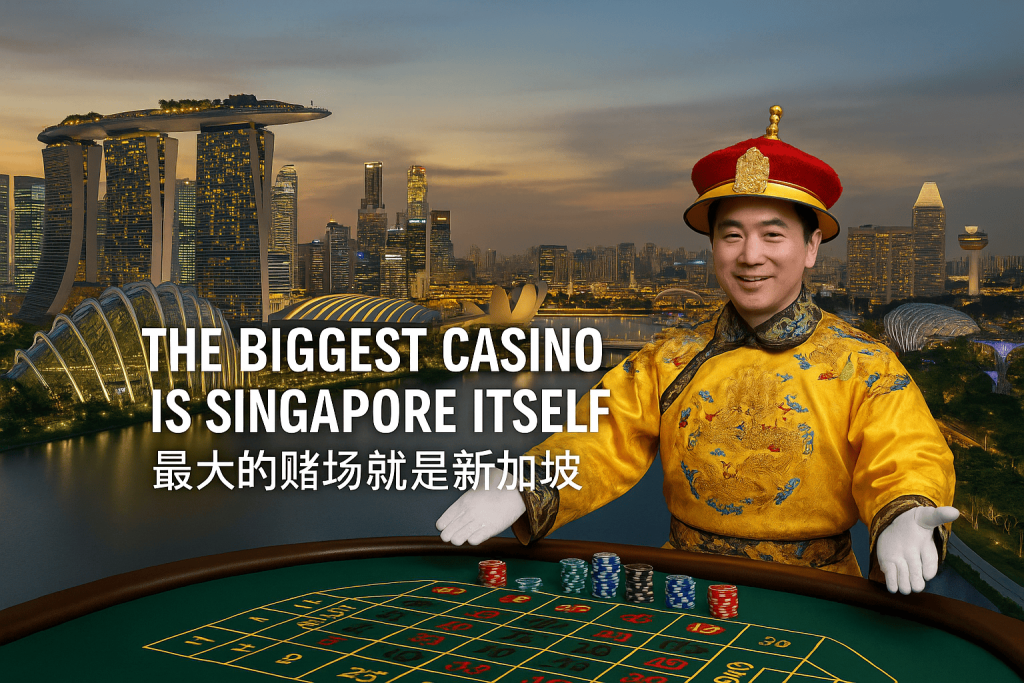
一位年轻创业者因为涉足教育、培训领域,被官员冷冷说道:
“你怎么可能跟我们竞争?我们背后是 SkillsFuture。”
表面上是生态扶持,实际上却造成:
- 某些企业被“特别保护”
- 某些领域被人为把关
- 新创业者永远被排斥在外
创业环境表面开放,实则现实封闭。 点击阅读更多Skillsfuture 的内容。
这是我们熟悉的新加坡吗?

📍六、时代真的变了吗?
地产代理朋友说:
“现在的年轻人越来越多选择租房,他们根本看不到拥有房子的希望。”
这不是他们不努力。 这是时代变了。
过去的“黄金时代”,属于:
- 先锋一代
- 建国一代
- 千禧年之前的幸运者
我们呢? 我们只是被时代夹在中间的“夹心一代”,价格高、房难买、补贴少、规则多。
我们只是—— 可被牺牲的小我。
📍结语:制度永远是对的——即使它是错的
新加坡的铁律是:
“牺牲小我,完成大我。” Win the votes of the majority, sacrifice the minority.
如果我们生在 1960s、1970s,今天也许会轻松许多。 可惜——我们不属于那个黄金年代。
我们只能继续走下去,继续适应,继续忍耐。
制度永远是对的。 即使它是错的。

![🙋♂️💕🌿 [MENTORSHIP | GROWTH | WELLNESS]](https://marvinfoo.com/wp-content/uploads/2025/03/IMG_20250328_061315-768x406.jpg)