#77 🎭 Singapore Pte Ltd: The Hidden Cost of Grants🎭 新加坡私人有限公司:补助金背后的代价
14 September 2025
中文版在英文刊文下方
Read the full article to find out Singapore’s largest triad or mafia. 阅读完整刊文洞察新加坡最大的黑势力。
1. The Façade of Support
Over the past three years, I have attended multiple events organized by the Singapore National Employers Federation (SNEF). The recurring theme? Grants and support schemes for SMEs.
On the surface, they look like lifelines. But dig deeper, and you’ll find every grant, every programme, comes with strings attached: disclosure of business strategies, HR roadmaps, and long-term plans.
Why does a Career Conversion Programme (CCP) for a Senior HR Manager require an SME to expose its entire business playbook? What happens to these strategies once submitted?
When I asked who exactly requests this information, and who is responsible for disbursing the grant, the answer was silence. That silence is worse than denial; it signals a doctrine of absorbing, repackaging, and cannibalizing local SMEs’ ideas with state-led execution.
2. The Career Conversion Paradox
In recent interactions, SNEF staff casually mentioned that grant approvals enjoy a higher success rate if you become a member. I replied: “Sure, I’ll sign up once the current grant application issue I’ve faced for three months is resolved.”
What happened next? The staff in question vanished. Emails to felicia_ong@snef.gov.sg bounced. A familiar pattern: personnel changes used to erase trails.
This is not new. It is a common practice in statutory boards and Government Linked Companies (GLCs); whether in NCS Group (Pte Ltd) or elsewhere, where accountability is avoided by reshuffling staff. Even when SMEs keep meticulous records to prove their case, underhand methods are deployed to ensure the individual always loses.
That is not support. That is extraction.
3. Why SMEs Struggle to Scale
In theory, grants are supposed to help SMEs grow stronger. In practice, many end up stagnant. Why?
- Ideas are absorbed: SMEs reveal their best strategies only to see similar initiatives executed to perfection by state-linked enterprises.
- Resource asymmetry: Competing with a government-backed entity is an uneven fight. The state has capital, networks, and manpower, advantages SMEs can never match.
- Control over innovation: The system curates what survives, and often, it’s not the independent SME but the state enterprise that scales.
This begs the question: Why doesn’t Singapore have a unicorn? Why do promising local firms rarely break out, while Temasek-linked companies expand effortlessly overseas?
4. The Olivia Lum Case Study
One name stands out: Olivia Lum, the founder of Hyflux. She came closer than anyone else to building a global Singapore-grown unicorn.
- She built something from nothing: Hyflux was admired for bold water solutions and visionary leadership.
- She nearly made it: For a brief moment, Singapore had a homegrown giant on the world stage.
- She eventually tripped: Not simply because of corporate missteps, but because of systemic pressures, overwhelming debt burdens, and what many insiders whisper about, planted agents and “henchmen” who accelerated her fall.
Hyflux’s collapse was not just about corporate mistakes. It was about the destruction of an independent force that had grown too visible, too fast, and too far outside the control of Singapore Pte Ltd.
5. The Contrast: GLCs vs SMEs
While Hyflux crumbled, look at who thrives: Temasek-linked companies and GLCs.
- They expand regionally with state support.
- They enjoy preferential access to capital, talent pipelines, and networks.
- They can afford missteps because when they stumble, resources are mobilized to steady them.
Meanwhile, SMEs walk a tightrope; one misstep and they fall, often with no safety net. The playing field is never level. The lesson is stark: grow too big without being part of the state apparatus, and you risk being cut down.
6. The Undercurrents – Clans and Kinship
This isn’t just about bureaucracy. It’s about power structures rooted in clans and kinship.
In earlier articles, I showed how:
The dominance of Huang and Lim clans is no coincidence. It explains why staff vanish mysteriously, why accountability is deflected, and why entire digital trails are erased.
Even whistleblowers have paid the price. In “When Silence Speaks Louder”, I revealed how a German pension fund was pillaged, disclosed by a former EDB scholar whose career was derailed for speaking up.
This is not meritocracy. It is kinship and clan dominance masquerading as meritocracy.
7. The Military / Triad Dimension – Singapore’s Largest Syndicate
Singapore’s military is the largest misbehaving triad in the country, eclipsing even the Hokkien Huay Kwan and other clan chambers.
They hide behind civilian staff in agencies, steering agendas without ever being caught. Their modus operandi:
- Never write emails.
- Give verbal instructions.
- Renege later, sending civilians to clean up the mess.
- Redeploy staff to destroy audit trails, even minutes of meetings vanish.
Take the grant rules: Enterprise Singapore and SNEF require at least 30% local shareholding by Singaporeans or PRs.
This requirement is mentioned in many other programs across government agencies,
- Enterprise Development Grant (EDG) – “Company has at least 30% local equity…” Enterprise Singapore
- Productivity Solutions Grant (PSG) – “Has at least 30% local equity…” (and FAQ restates it). Enterprise Singapore
- Market Readiness Assistance (MRA)– “At least 30% local equity…” Enterprise Singapore
- Enterprise Financing Scheme (EFS) – “At least 30% local shareholding…” Enterprise Singapore
- Other programmes (ESP, Energy Efficiency, bilateral R&D calls, etc.) echo the same threshold.
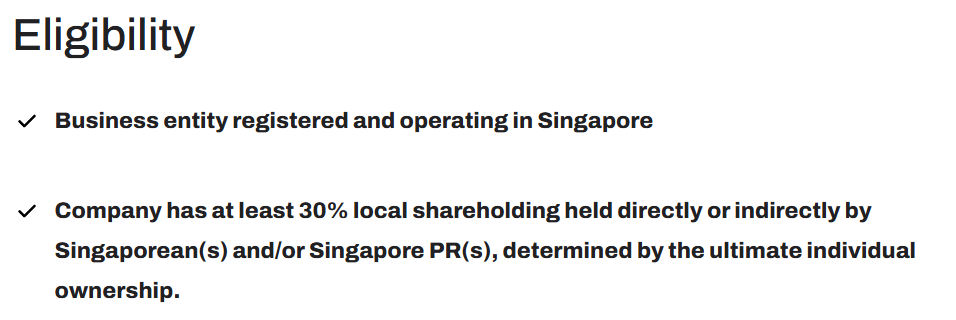
On paper, this protects national interest. In practice, it opens a backdoor for the Triad. If your business thrives, they want it. You are set up to fail, through accounting “adjustments,” breaches of fiduciary duty, legal traps.
Examples? You won’t find them. They’ve been eaten up, covered up, erased. And when a case does surface, the law bends to ensure the Triad wins.
Absolute power corrupts. And with an army of national servicemen at their disposal, even Singapore’s real leaders eventually bow out.
8. Concealed SAF Affiliations & the Reservist Pipeline
The documented case of Lau Boon Ping (WSG Deputy Chief Executive, RSAF Overseas Scholar, National Day Award recipient) proves that military–civilian crossovers exist. But what about the rest?
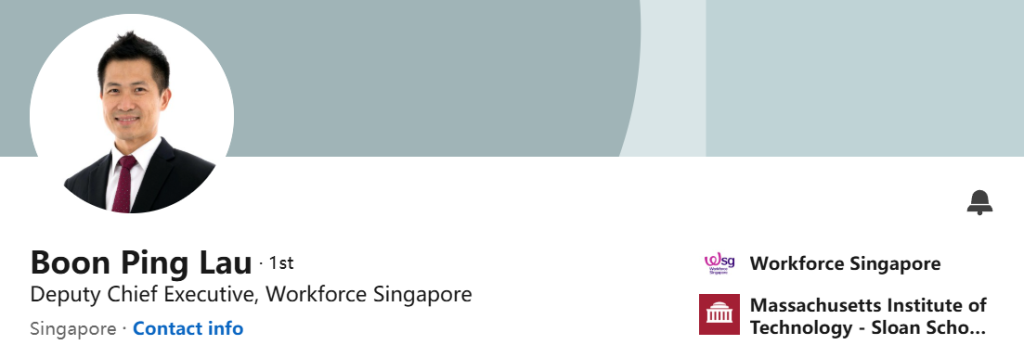
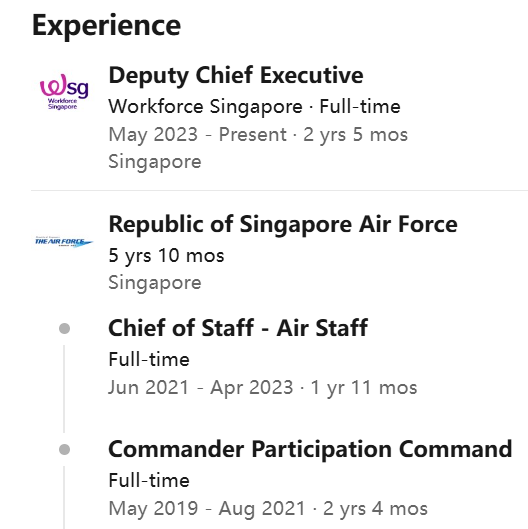
Most executives in statutory boards and GLCs do not list their military backgrounds in official bios. Even when they once held ranks like Captain, Major, Lieutenant-Colonel, or even General in reservist duty, these affiliations are deliberately omitted.
Why?
- Reservist Officer Ranks Extend Service National Reservists with officer commissions serve an additional 10 years. The higher the rank, the longer the reach, and the deeper the integration with military networks.
- Clandestine Discussions What gets discussed inside officers’ messes and reservist units never sees daylight. Directives can flow verbally, shaping careers and strategies, while leaving no paper trail.
- Civilian Façades, Military Roots By stripping military credentials from their civilian resumes, executives appear as neutral administrators. In reality, they carry unseen allegiances to a parallel hierarchy of command and influence, invisible to public scrutiny.
This silence isn’t absence; it’s a feature. The shadow of the reservist officer network looms over Singapore Pte Ltd, reinforcing the triad-like machinery with a cloak of plausible deniability.
9. The SAF and the GLC Illusion
Two years ago, I was invited to an event celebrating women’s contributions. Sam Liew, Deputy CEO of NCS & CE of Gov+ at NCS”, gave a speech. We sat together, and he told me directly: “Stay in the private sector, where profits are more.”
Wait a minute. Doesn’t that statement reveal something? It is an implicit admission that GLCs are not truly private commercial units, but extensions of the state machinery.
To strengthen this illusion, the Singapore Pte Ltd machine went on a LinkedIn marketing spree. SAF Day was celebrated not just in camps, but in GLCs and stat boards; posts carefully crafted to paint employees as “serving the nation,” blurring the lines between military loyalty and corporate identity.
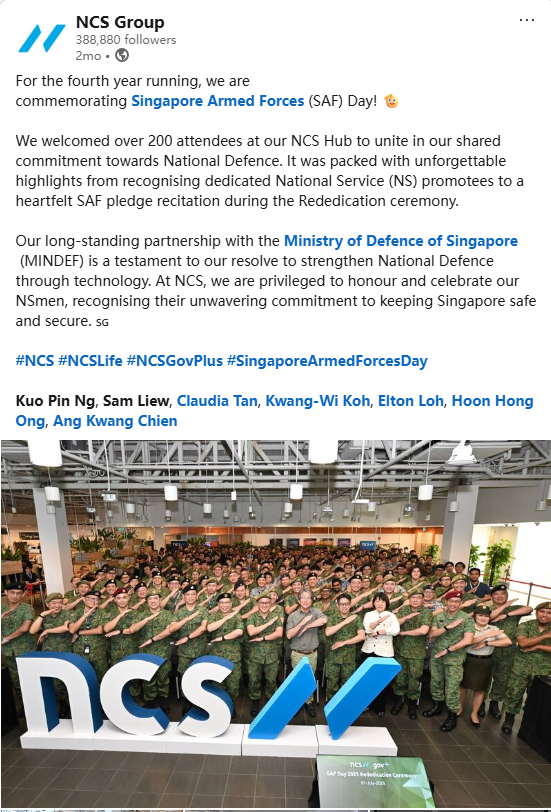
Sam Liew, Ng Kuo Pin, NCS Chief Executive and Howie Lau, Chief Executive for Corporate Development and Alliance blocked me because the company and Land Transport Authority contravened grey market IT equipment laws in tender clauses. Please look at your appointment holders delicately, not leaders to be exact. And yes, that’s Lim Swee Say, former Minister for Manpower in grey shirt.
The dark influence of the Huang, Liu, and Lin clans has already infiltrated every level of national governance.
The irony? My own experience in national service was not inspiring but disillusioning. I entered with eagerness, but left with very bad experiences. And this is the contradiction: when a country’s military values and state enterprise identities are entangled, it creates institutions that are rigid, hierarchical, and stumbling, lacking the dynamism true enterprises need.
This same rigidity explains why Singapore’s relationships with superpowers like the US and China are deteriorating.
10. The Rising Spend on Mental Wellness – But Why?
Look at the budget numbers: year after year, higher spending is poured into social services, mental health, and wellness programmes. On paper, this looks like compassion. But ask yourself: why is the need rising so sharply in the first place?
Because the gaslighting, cover-ups, and scapegoating inside government stat boards and GLCs are real. Because employees are caught in a culture where accountability vanishes, where trails are erased, and where truth is buried. Because the system creates stress, disillusionment, and quiet suffering, not by accident, but by design.
People feel bad, not because they “like to complain,” but because the structures are toxic. And they feel even worse when someone like me exposes the truth, because it forces the state machinery to confront its reflection.
So, the cycle continues: more spending on mental wellness to treat symptoms, while the root cause? Singapore Pte Ltd’s culture of gaslighting and cannibalization remains untouched.
11. The MNC Infiltration – National Security as a Cover
Think the problem stops at GLCs? Think again. Even MNCs headquartered in Singapore are not spared.
In the name of national security, under the long shadow of former Defence Minister Ng Eng Hen, the same gaslighting practices have spread into the private sector.
How? By permeating into HR and talent acquisition departments. By ensuring that state-aligned actors and actresses, often tied to clans, are embedded in the hiring pipelines. What follows is not fair recruitment but a choreographed performance, like an orchestra playing a symphony of deceit.
This is how the doctrine of Singapore Pte Ltd extends beyond its own walls, ensuring that even foreign enterprises on our shores dance to its rhythm.
12. Closing Word – Singapore Pte Ltd’s Final Trick
And if you think entrepreneurship is dead and the safe bet is to climb into a GLC, then you are wrong. That path too is blocked; not by meritocracy, but by kinship and clan dominance.
How low can it get? Low enough that cruise liners were made to U-turn so Singaporeans could return to vote. Low enough that S$100 per head was handed out, and everyone knows where much of that ended up, straight into the casinos as chips. Did it work? Of course it worked. The rationale is likely many cruisers are seniors which the incumbent ruling party, People’s Action Party (PAP) depends on to win in elections.
Singapore Pte Ltd has perfected the formula: feed you with vouchers and perks so you’ll stay put, quiet, and grateful, while foreigners are elevated above you. The refrain is always the same: “Singaporeans complain, but don’t give ideas.” The truth? Ideas are given, but they are taken, stripped of authorship, repackaged, and scaled by the state’s chosen instruments.
So we sit here, with no homegrown unicorns, with Temasek holding the crown jewels, with vanished staff and erased trails whenever accountability is demanded, and with a generation of professionals and entrepreneurs who are angry, exhausted, and exasperated.
Ladies and gentlemen, this is the true face of Singapore Pte Ltd.
The systemic critique may sound abstract, until you see it happen in real life. For a concrete case study, read my article: [❌ 3 Months, 10 Emails, No Answers: Why Grant Transparency Matters for SMEs].
13. Who is the Author?
The author is a Hakka, just like Lee Kuan Yew (LKY).
Hakkas are a minority among the Chinese, historically known as the “guest people.” Wherever we migrated, we were often unwelcome, seen as outsiders. Yet, we survived. We endured. We carried with us unique attributes, forged not by comfort, but by constant displacement and threat.
Our history has taught us something vital: when provoked, we do not just get even. We make you question your own existence, your decisions, and the legacy you leave for your entire kind. That is why the Hakka continue, even when the majority wishes us erased.
I am also a gamer, and that matters. My brain runs through all possible permutations in real time, though complex scenarios like macro politics take longer to crunch. I completed and won Civilization at Emperor level without cheating in one, just one level below God, while I was still in secondary school.

I may not always be the strongest player in day-to-day matches, but when it counts, I can beat the best. In my StarCraft clan, I twice defeated our top player, a peer I respect greatly, who told me afterwards: “You are really a good player.” Those were the memorable days when I was among the first to play at Singapore’s first cybercafé, discovering the intensity of networked battles and real-time strategy.
That’s how I approach politics, business, and strategy. Patiently, observantly, playing through scenarios in my head, and waiting for the right move.
To read more, see my About page and the last section of From Dialect Clans to Power.
This article is also published on LinkedIn.
🎭 新加坡私人有限公司:补助金背后的代价
1. 支持的假象
过去三年,我参加了多场由新加坡全国雇主联合会(SNEF)主办的活动。主题几乎千篇一律:中小企业的补助与支持计划。
表面上,它们像救命稻草。但深入一看,你会发现每一项补助、每一个项目都伴随着附加条件:必须披露商业战略、人力资源路线图和长期计划。
为什么申请一个人力转换计划(CCP)的高级人力经理岗位,企业却要交出整个商业剧本?这些战略一旦递交,会发生什么?
当我询问究竟是谁在要求这些资料、谁真正负责拨款时,得到的回答是沉默。比否认更糟的是, 这种沉默意味着一种制度:吸收、改造、吞噬本地中小企业的点子,再用国家机器的力量执行。
2. 人力转换的悖论
最近的交流中,SNEF 职员随口提到:如果你成为会员,补助的审批率会更高。我回答说:“好啊,那等我三个月来回拉扯的申请问题解决后再说。”
接下来发生了什么?那位职员消失了。发到 felicia_ong@snef.gov.sg 的邮件直接退回。熟悉的模式再次出现:换人来抹掉痕迹。
这并不新鲜。无论是 NCS 私人有限公司还是其他法定机构,通过人员调动来逃避问责已是惯常操作。即便中小企业保存了完备记录来证明自己的立场,最终也会因各种下作手段而败北。
这不是支持,而是榨取。
3. 为什么中小企业难以做大
理论上,补助是为了让中小企业更强大。现实中,很多却停滞不前。为什么?
- 点子被吸收:中小企业交出的最佳战略,常常被国家企业改头换面,完美执行。
- 资源不对等:和背靠政府的企业竞争,本就不是一场公平的战斗。
- 创新被掌控:系统决定谁能活下去,往往不是独立的中小企业,而是被挑选的国企。
问题来了:为什么新加坡没有独角兽? 为什么有潜力的本地企业难以突破,而淡马锡旗下公司却能轻松出海?
4. 林爱莲(Hyflux)的案例
有一个名字最为典型:林爱莲(Olivia Lum),Hyflux 创始人。她比任何人都更接近打造一个全球化的新加坡独角兽。
- 白手起家:Hyflux 曾因大胆的水处理方案与远见卓识而备受赞誉。
- 差点成功:一度,新加坡拥有了登上世界舞台的本土巨擘。
- 最终倒下:不仅仅因为企业债务或管理失误,更因为体系的压力,以及许多人低声谈论的,被安插的“内应”加速了她的坠落。
Hyflux 的崩溃,不只是企业的失败,而是一个独立力量被系统性摧毁的结果。
5. 国企与中小企业的对比
当 Hyflux 倒下时,谁在繁荣?答案是淡马锡系和国企。
- 它们在国家支持下拓展海外。
- 它们享有优先资本、人才管道和人脉。
- 它们可以犯错——因为出问题时,会有资源及时托底。
反观中小企业,则如走钢丝;一步错,满盘皆输。结论很清楚:如果不在体制内做大,你就会被砍掉。
6. 潜规则: 姓氏与宗族
这不仅仅是官僚主义,而是根植于宗族与姓氏的权力结构。
我在早前的文章中已经指出:
黄氏、林氏宗族的支配绝非偶然。 这解释了为什么职员会神秘消失,为什么责任总是被推走,为什么连数字痕迹都能被抹掉。
甚至吹哨人也要付出代价。在《当沉默比言语更响亮》中,我揭示了一桩德国养老基金被掠夺的案例,由一位前经发局学者披露,他因此被摧毁了仕途。
所谓的精英治国,不过是披着功绩主义外衣的宗族垄断。
7. 军队/黑帮维度:新加坡最大的帮派
说到底,新加坡的军队就是全国最大的“黑帮”,甚至超越福建会馆等传统宗族会馆。
他们如何操作?
- 藏在法定机构的文员背后操盘。
- 从不写电邮,只口头下令。
- 事后翻脸,把文员推出去顶雷。
- 调动人员,抹掉会议记录和数字痕迹。
再看补助条款:企业发展局和 SNEF 的补助要求至少 30% 本地股权。
这一要求在许多政府机构的项目中都有提及:
- 企业发展补助金 (EDG) – “公司必须至少有 30% 的本地股权……” (新加坡企业发展局)
- 生产力解决方案补助金 (PSG) – “至少拥有 30% 的本地股权……” (常见问题中也再次重申,新加坡企业发展局)
- 市场开拓援助计划 (MRA) – “至少 30% 的本地股权……” (新加坡企业发展局)
- 企业融资计划 (EFS) – “至少 30% 的本地持股……” (新加坡企业发展局)
- 其他项目(如 ESP、能效计划、双边研发招标等)同样重复了这一门槛要求。
表面是保护国家利益,实际上却是为帮派插手企业开了后门。一旦你的生意做得好,他们就会盯上你。接着会通过财务“调整”、违反受托责任、法律手段,把你拖垮或吞并。
例子?你找不到。因为都已被吞掉、掩盖、抹除。即便真上了新闻,法律也会保证帮派必胜。
绝对的权力必然腐化。而拥有庞大国民服役兵源的他们,连真正的政治领袖也得低头。
8. 隐匿的军籍与后备军管道
刘文斌(WSG 副总裁、空军海外奖学金得主、国家奖章获得者)的案例已经证明了军队与文官系统的交叉。但其他人呢?
大多数法定机构和国企的高层不会在简历中标注军籍。即便他们曾是上尉、少校、中校,甚至将军,也被刻意省略。
为什么?
- 军官后备役延长服役 与普通义务兵不同,军官级的后备役需额外服役 10 年。级别越高,影响越深。
- 秘密讨论 军官食堂与后备役单位里的对话,永远不会见光。指令可以口头下达,塑造职业轨迹,却没有任何书面痕迹。
- 文官外衣、军籍本质 通过在履历中抹去军籍,这些高层看似是中立的官员,实际上却肩负着另一套隐秘的指挥体系。
沉默不是缺席,而是制度的安排。军官后备役的阴影笼罩着新加坡私人有限公司,用“合理否认”的外衣掩护着整个帮派机器。
9. 军队与国企的幻象
两年前,我受邀参加一场庆祝女性贡献的活动。NCS 政务领域首席执行官 Sam Liew (刘连万)烈发表演讲。我们坐在一起,他直接对我说:“留在私营领域吧,利润更多。”
这句话不正是一种承认吗?国企并非真正的商业公司,而是国家机器的延伸。
为了加强这种幻象,新加坡私人有限公司在 LinkedIn 上展开了大规模宣传。过去一年,国企和法定机构纷纷发布“庆祝国庆军人日”的贴文,把雇员包装成“为国服务”。
NCS 的刘连万(Sam Liew)与首席执行官黄国斌(Ng Kuo Pin,还有首席企业发展 & 协同官刘浩新 (Howie Lau) 把我拉黑了,因为该公司与陆路交通管理局(LTA)在招标条款中违反了灰色市场 IT 设备法规。请仔细审视你们的管理层;他们严格来说并不是领导者。没错,穿灰色衬衫的就是前人力部长林瑞生。黄氏,刘氏与林氏的黑势力已经渗透国政各层面。
讽刺的是,我的国民服役经历并不光彩,而是充满失望。我带着憧憬入伍,却带着极差的体验离开。
当军队价值与国企身份混为一谈,结果就是僵化、层级森严、步履蹒跚。这也解释了新加坡与美中大国关系的恶化。
10. 不断上升的心理健康开支:为什么?
看看预算数字:年复一年,社服与心理健康开支越来越高。表面上是关怀,但请问:为何需求增长如此迅猛?
因为法定机构与国企内部煤气灯效应、掩盖真相、推卸责任是真实存在的。 因为职员陷在推责与抹痕的文化中。 因为体系制造的压力与幻灭并非意外,而是刻意为之。
人们感到不适,不是因为“爱抱怨”,而是因为结构本身就是有毒的。更糟的是,当有人像我这样揭露真相时,整个机器被迫照镜子,于是更加慌乱。
于是循环继续:更多心理健康开支,只是治疗症状,而真正的病因:新加坡私人有限公司的煤气灯与吞噬文化从未被触碰。
11. 跨国公司也难幸免:“国家安全”的幌子
你以为问题只停留在国企?错了。在新加坡设立总部的跨国公司,也难逃一劫。
在所谓“国家安全”的幌子下,在前国防部长黄永宏 的长久影响下,同样的手法蔓延到了私企。
方式是什么?渗透人力资源与招聘部门。把与宗族挂钩的“自己人”安插进去。结果?招聘不是公平竞争,而是一场预设好的表演,如同一支欺骗交响乐。
这就是新加坡私人有限公司的学说如何突破边界,让外企也被纳入节奏。
12. 结语:新加坡私人有限公司的最后一招
如果你以为创业无望,加入国企才是出路,那你错了。那条路同样被堵死——靠的不是功绩,而是宗族与关系。
能有多低?低到邮轮掉头,只为让国人回来投票。低到发每人 100 新元,最终多数流进了赌场筹码。结果?当然奏效。
原因很可能是许多邮轮乘客都是年长者,而执政党人民行动党(PAP)正是依赖他们来赢得选举。
新加坡私人有限公司早已练就公式:发你代金券和福利,让你安静、感恩,而外来人则被抬上高位。口号始终如一:“新加坡人只会抱怨,不会出点子。” 事实呢?点子都被拿走、剥夺署名、换上包装,再由体制放大。
于是,我们坐在这里,没有本土独角兽,皇冠珠宝都握在淡马锡手里。职员神秘消失,痕迹被抹掉,问责无人回应。整整一代的专业人士和企业家,愤怒、疲惫、无奈。
女士们先生们,这就是新加坡私人有限公司的真相。
系统性的批判或评价听起来也许很抽象,直到你在现实中亲眼见到它发生。若想看一个具体案例,请阅读我的文章:《❌ 三个月、十封邮件、没有答案:为什么补助金透明度对中小企业如此重要》
13. 作者是谁?
作者是客家人,正如李光耀一样。
客家在华人中是少数,历史上被称为 “客人”。无论迁徙到何处,常常被视为外来者。但我们活下来了。我们坚持了。我们的特质并非源于安逸,而是源于不断被排斥与威胁。
历史教会了我们:被激怒时,我们不会仅仅报复,而是会让你开始怀疑你自己的存在、你的决定、以及你整个族群的未来。正因如此,客家人能延续至今。
我也是一名游戏玩家。这点很重要。我的大脑能在实时中推演所有可能的变化,虽然宏观政治等复杂场景需要更久才能推演。我在中学时就完成了文明(Civilization)帝王难度(仅次于最高的“神”难度),一次通关、无作弊。
我未必在日常对战中总是最强,但在关键时刻,我能赢下最强者。在我的星际争霸战队里,我曾两次击败我们的顶尖高手,一位我十分尊敬的同伴。他赛后对我说:“你真的是一个好玩家。” 那是令人难忘的日子,我也成为了新加坡第一批踏入首家网吧的人,感受网络对战与即时战略的狂热。
这就是我处理政治、商业与战略的方式:耐心、洞察,推演各种可能,直到等待到那个最佳落子。