#185 From 戰帖 to Wine & Cheese: A Journey Through 江夏堂, Xu Beihong and the Future of Chinese Clans 从一封「战帖」到红酒与芝士:走进江夏堂、徐悲鸿的艺术世界与华人宗亲会的未来
An afternoon of wine, cheese and candid conversations at Singapore’s Huang clan became a reflection on Chinese heritage, East–West encounters, generational renewal and the enduring spirit of 華夏.
中文版在下方
By Mar Vin Foo 胡马宾 | 15 November 2026
A 戰帖 from the Huang Clan?
When I first received an invitation from the Singapore Federation of Chinese Clan Associations (SFCCA) to attend a wine-and-cheese gathering at the Huang clan, I must confess that it felt almost like receiving a 戰帖 — a challenge letter.
After all, I have written extensively about 炎黃子孫, Chinese civilisation, and the complicated relationships between power, money, influence and community.
For some, Chinese clan associations still carry an air of mystery, where historical perceptions of secret societies and tightly guarded networks linger in the imagination.
The West has its legends surrounding the Illuminati, while Japan has its Yakuza. These are very different phenomena and should not be confused with legitimate clan associations. Nevertheless, they reflect a broader human fascination with influence, loyalty and belonging.
I arrived with an open mind, albeit one sharpened by years of questioning established systems.
The air initially felt still. Smiles were exchanged, as one would expect at any respectable gathering, but I sensed a touch of apprehension as SFCCA attempted to bridge the gap between this rather outspoken guest and our hosts.
Fortunately, wine has a wonderful way of loosening conversations.
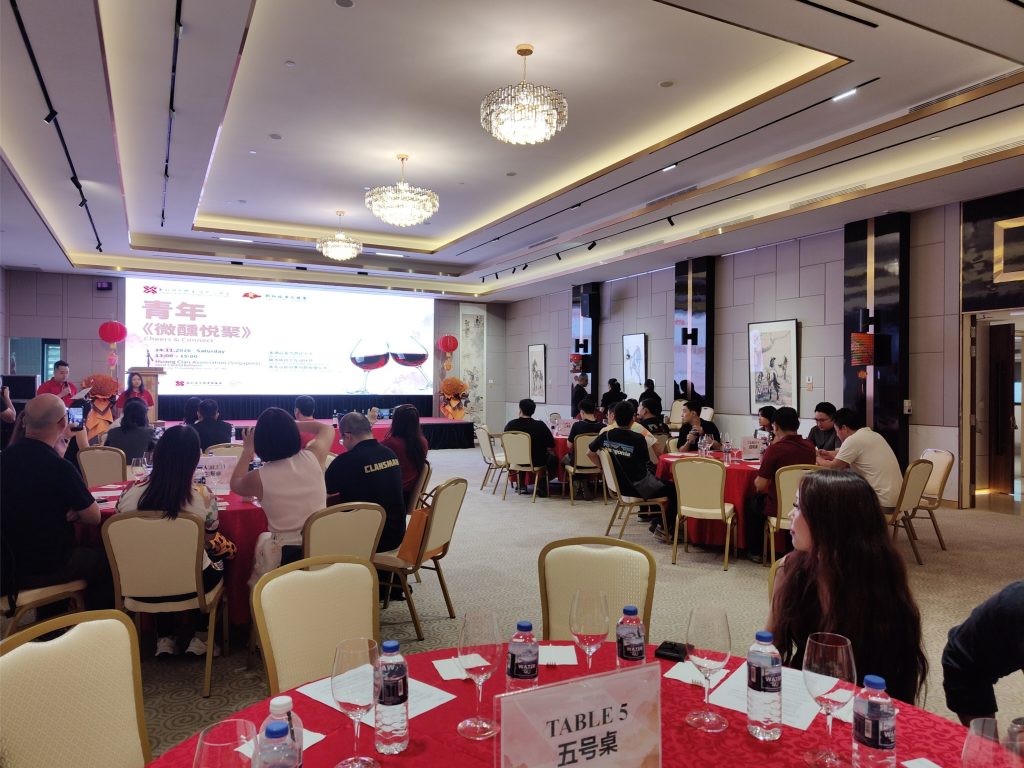
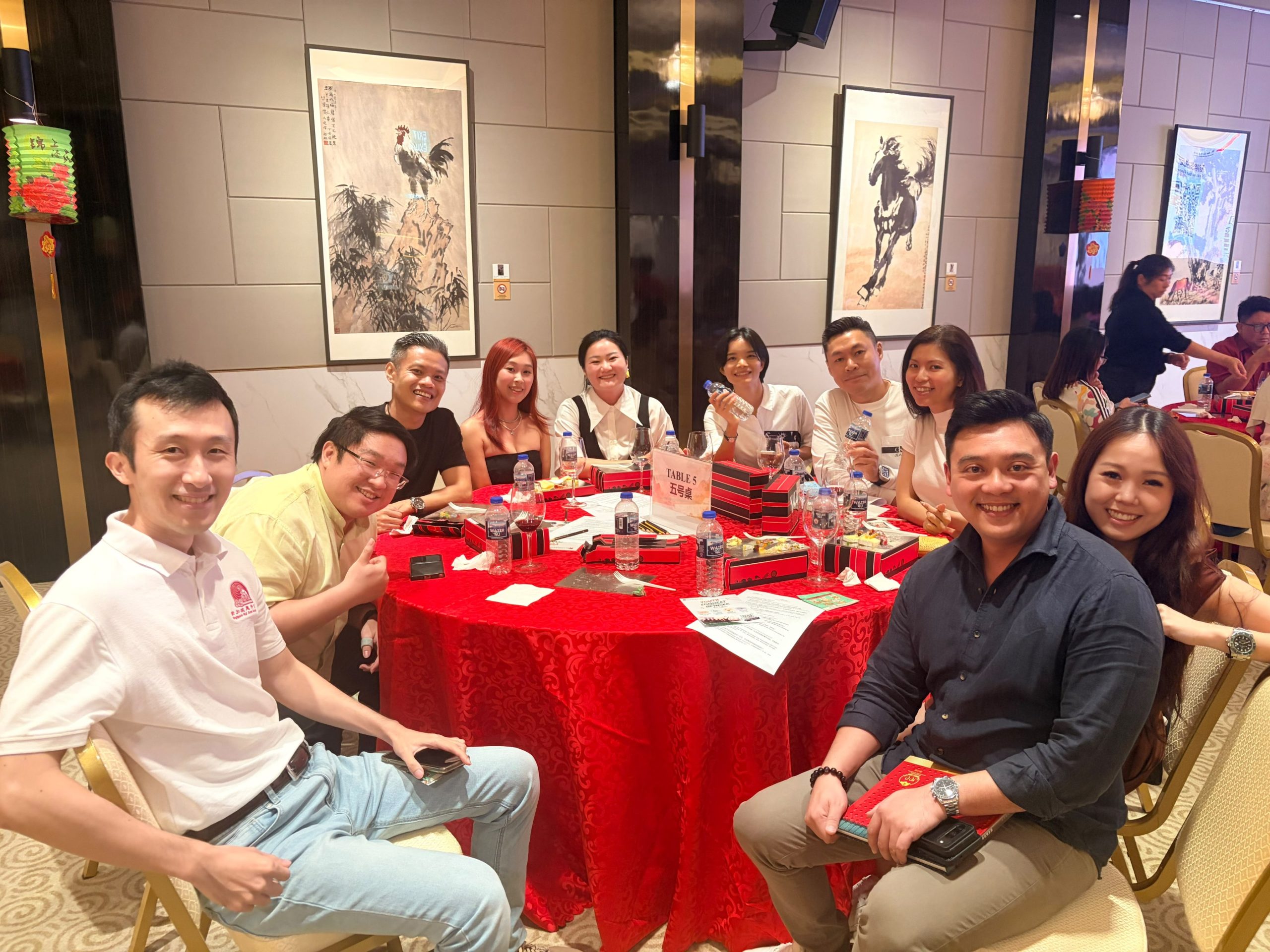
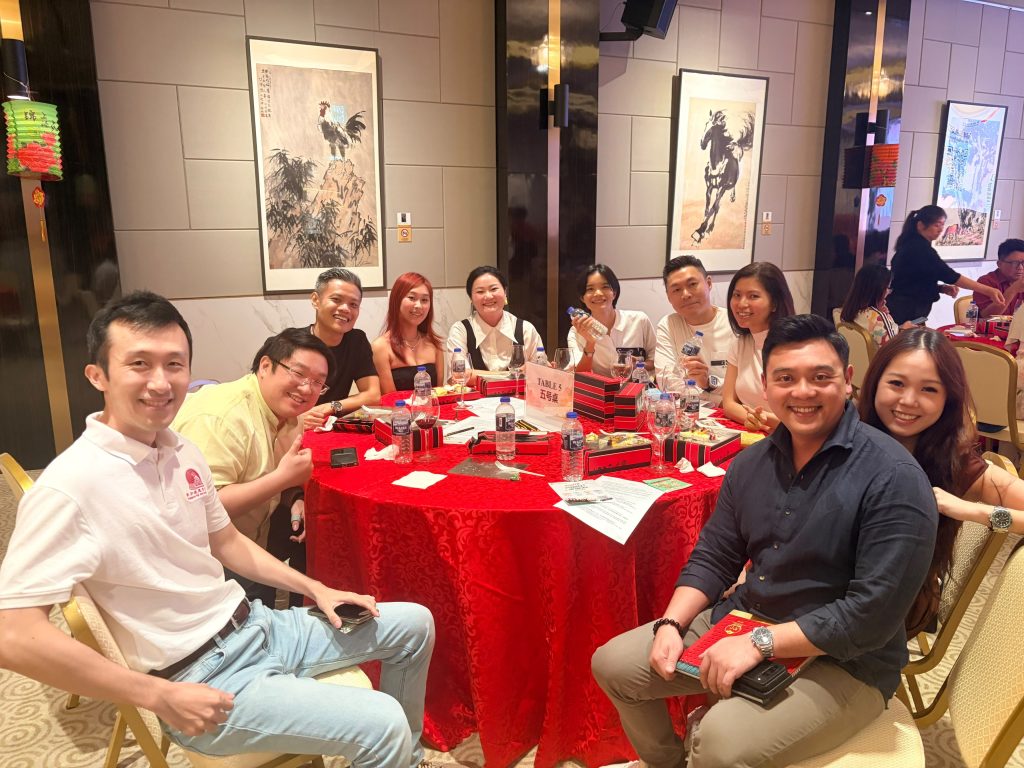
Table 5: Where the Conversations Began
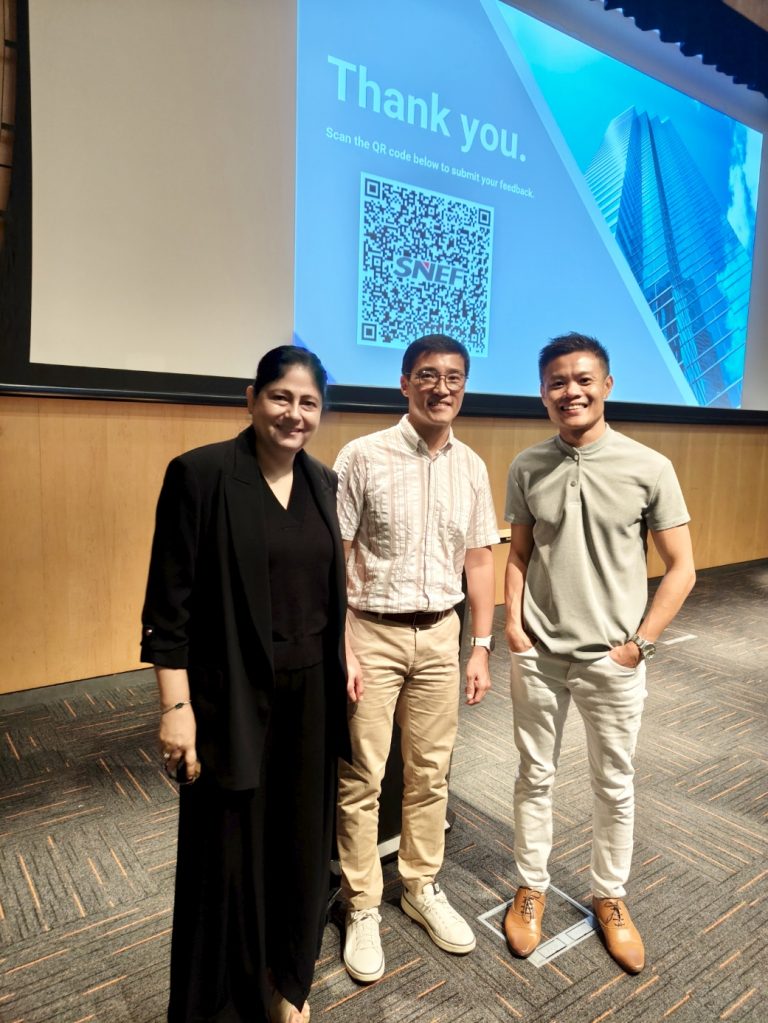
The gathering was organised through SFCCA’s youth engagement initiative, bringing together participants from different Chinese clan associations.
SFCCA represents approximately 250 member associations in Singapore, supported by what I understand to be a relatively lean secretariat of around 20 staff.
Managing relationships across so many associations, each with its own history, leadership and expectations, is no small undertaking.
I must thank the organisers for their thoughtful hospitality, particularly the two charming and attentive SFCCA staff members who joined me at Table 5.
Perhaps they were there to make me comfortable.
Or perhaps they were assigned to ensure I behaved myself!
Either way, they succeeded wonderfully.
I had the pleasure of meeting participants representing surnames including 莊、傅、許、林、王、駱、黃 and, naturally, 胡.
Some were first-generation immigrants, others seasoned association members, while several had only recently joined.
Different surnames, different ancestral provinces, different experiences — yet we found common ground in being Chinese, being Asian, doing business, remaining competitive and maintaining the customary cordiality expected within Chinese communities.
One gentleman I particularly appreciated was Andre Ong, who shared candidly how involvement in Chinese associations had helped him overcome difficulties earlier in life and progress in his career.
His experience reminded me that networks are not inherently about favouritism or influence.
At their best, they offer mentorship, knowledge, encouragement and opportunities that individuals might otherwise struggle to access.
The distinction lies in whether relationships are used to create genuine value or merely protect privilege.
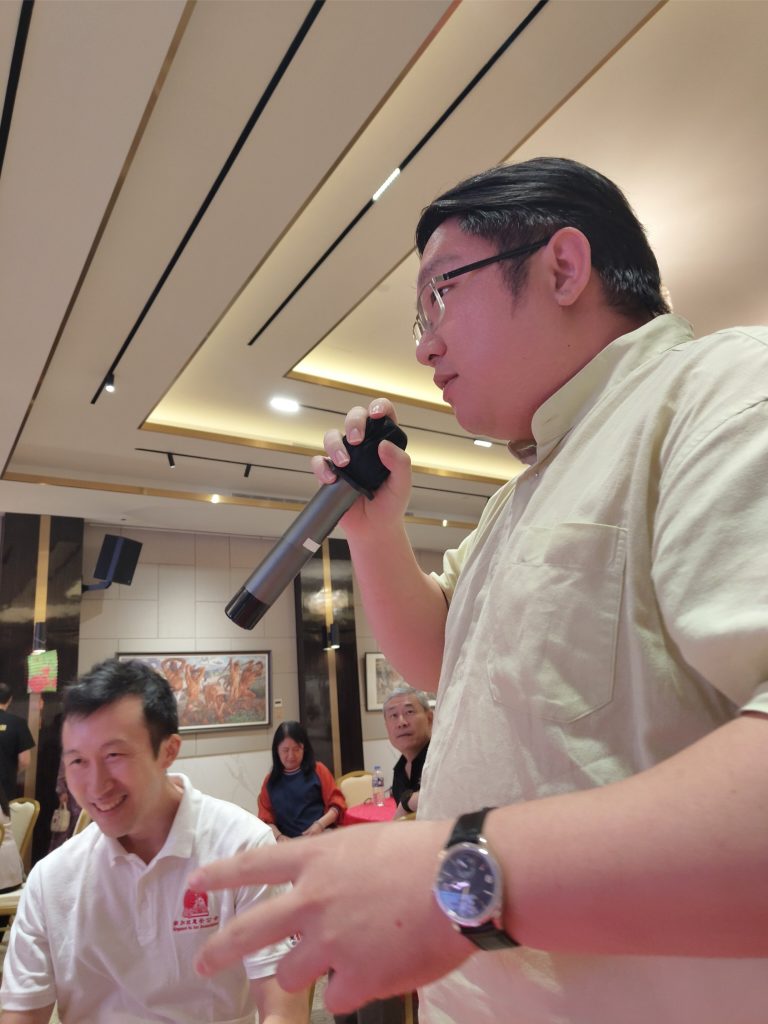
When our table was invited to nominate someone to present our collective thoughts, several participants promptly arrowed me to speak.
I was more than happy to suggest Andre instead.
He had the experiences, clarity and sincerity to represent our discussion effectively.
And he did so perfectly.
Wine, Cheese and the Geography of Civilisations
The wine-tasting segment was another pleasant surprise.
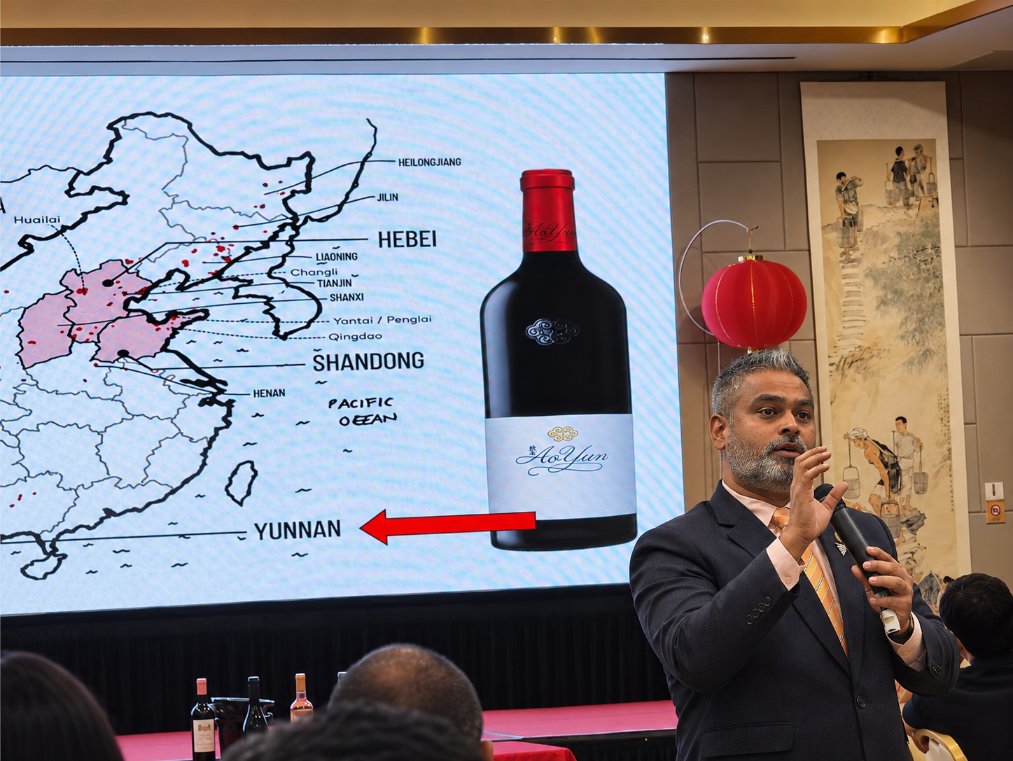
Our speaker, Indra, introduced participants to the history of wine, its geographical origins and the increasingly sophisticated wine-producing regions of China.
Xinjiang, Ningxia, Shandong and Yunnan were among the regions mentioned.
China has climatic regions with characteristics comparable in certain respects to established European wine-producing areas, including those of France.
Naturally, terroir differs from region to region, and Chinese vineyards are developing their own distinctive expressions through their geography, cultivation and winemaking techniques.
What interested me was not merely whether Chinese wines could rival French wines.
It was the idea that a product associated with European excellence could be studied, adapted and reinterpreted within another civilisation.
A French grape variety cultivated in Chinese soil may produce a different character without losing the essence of the grape.
Perhaps cultures work the same way.
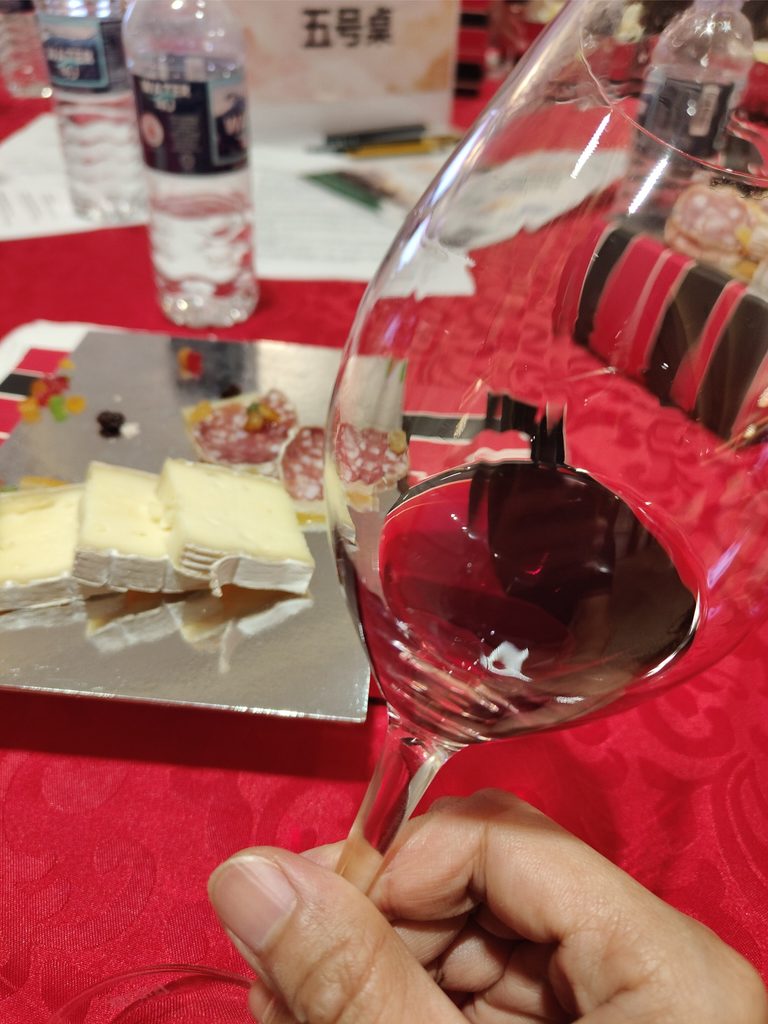
As I enjoyed the red wine, cheese and cold cuts, I reflected on how knowledge has travelled between civilisations for centuries.
My thanks to Indra for making wine tasting an educational experience rather than simply another excuse to raise a glass.
From 江夏堂 to 新加坡黃氏總會
What made the gathering especially meaningful was discovering the historical significance of the venue itself.
The Huang clan is closely associated with 江夏堂 (Jiangxia Tang), a name rooted in the ancestral heritage of the 黃 surname.
江夏, historically associated with the Huang lineage, became an important ancestral reference for Huang families across the Chinese diaspora.
The association traces its origins to 1924, when it was established as 星洲南洋江夏堂.
It later became 南洋黃氏總會 and adopted its present name, 新加坡黃氏總會, in 2013.
In 1952, the association acquired the historic Jiangxia Tang property in Geylang, transforming it into its clan headquarters.
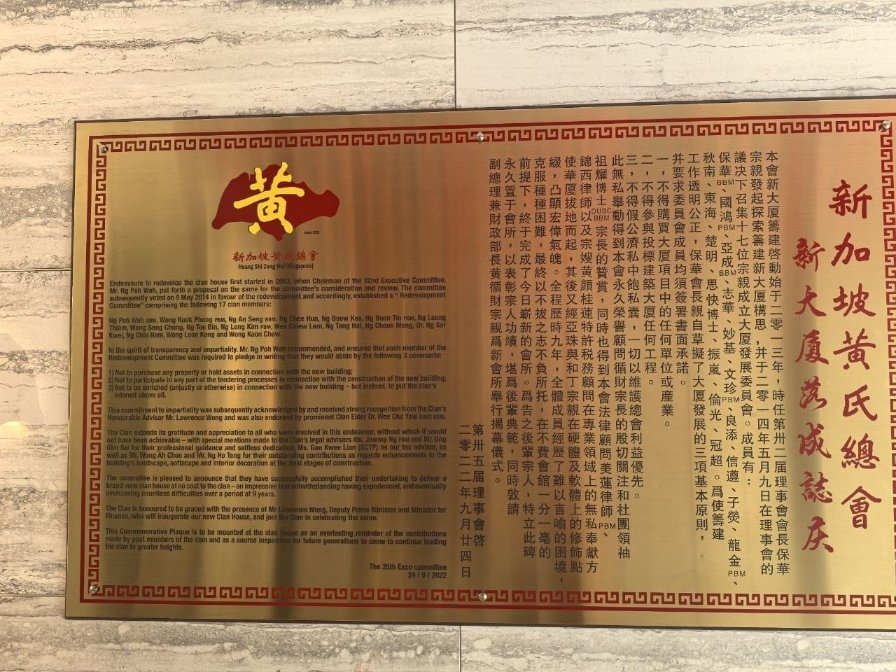
Decades later, faced with the realities of maintaining an ageing property in land-scarce Singapore, the association made the difficult decision to redevelop the premises.
The redevelopment was completed in 2022, resulting in a modern eight-storey development combining the clan’s facilities with private residences.
To me, this was already an example of renewal.
The Huang association recognised that preserving heritage does not necessarily mean preserving every old physical structure.
What matters is whether the institution can continue serving its members and future generations.
Yet the real treasure of 江夏堂 lies in its remarkable connection with one of China’s greatest artists.
徐悲鸿 and 黃曼士: A Friendship That Changed History
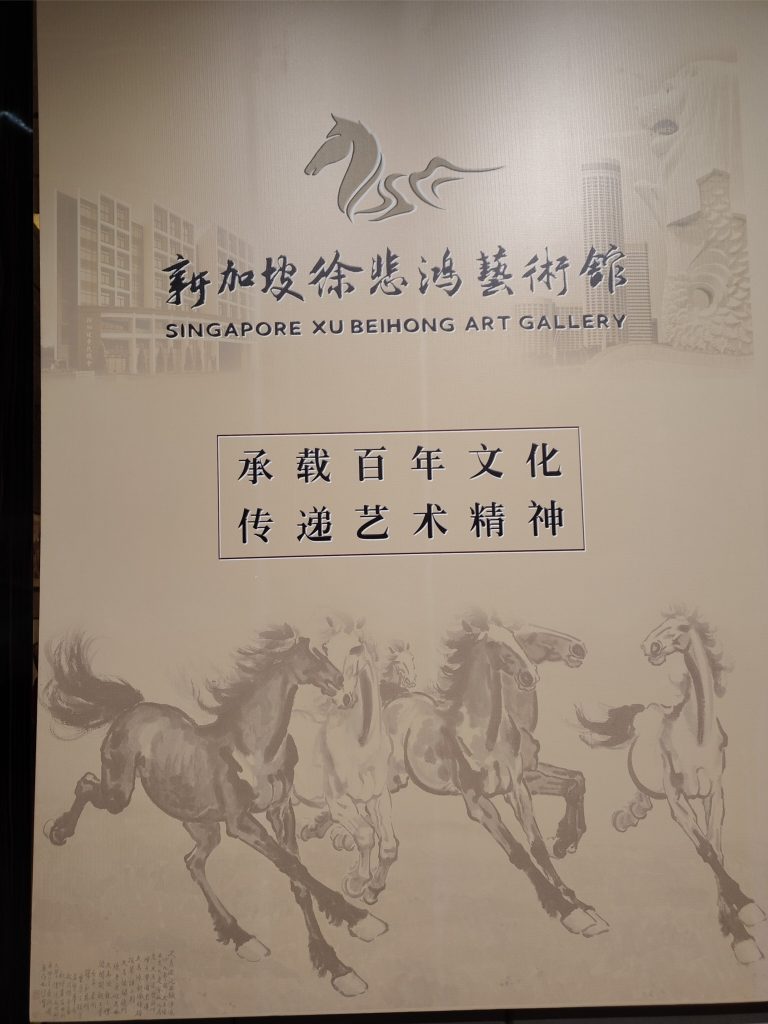
The Singapore Xu Beihong Art Gallery offers a fascinating account of the relationship between 徐悲鸿 (Xu Beihong) and 黃曼士 (Huang Manshi).
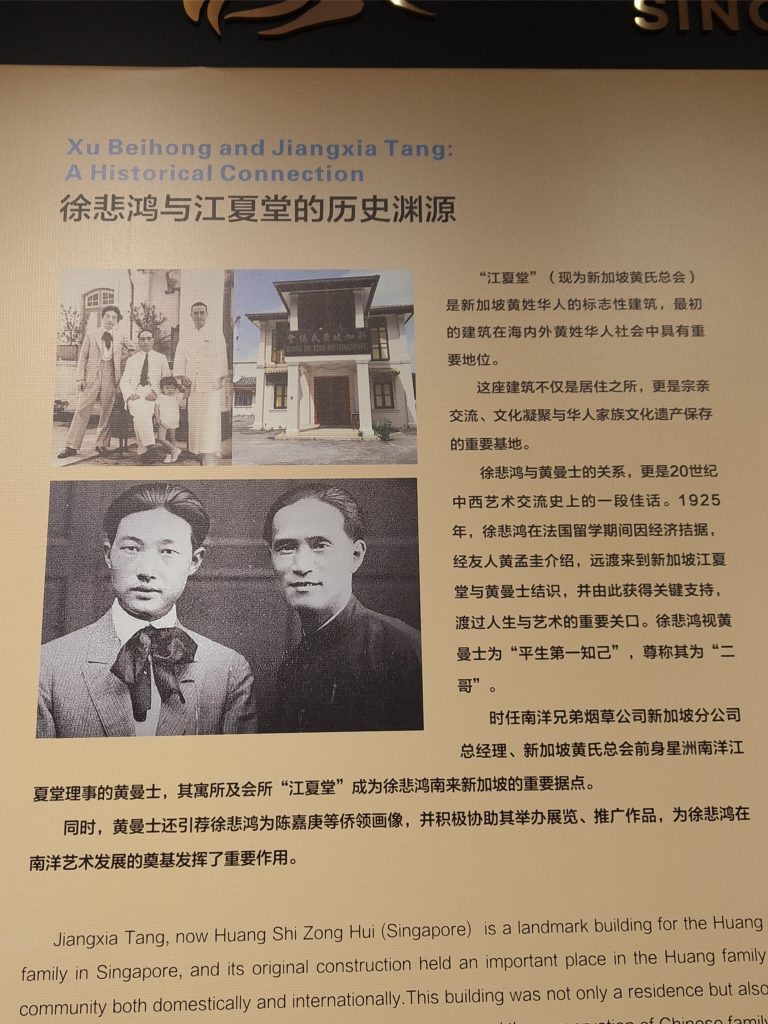
In 1925, Xu Beihong was studying art in France when financial difficulties threatened his ability to continue.
He met 黃孟圭 (Huang Menggui), who recognised his talent and introduced him to his younger brother, 黃曼士, an established Chinese businessman and art patron in Singapore.
Huang Manshi welcomed Xu to Singapore, provided accommodation and working space, and introduced him to people who could commission his paintings.
Their relationship grew into a close friendship.
Xu affectionately addressed Huang Manshi as 二哥 — his second elder brother.
The gallery also displays historical photographs commemorating their relationship, including the black-and-white portraits that brought this remarkable chapter of Singapore’s cultural history to life.
What fascinated me was that this relationship was not simply about two prominent Chinese personalities knowing one another.
It was an example of how the right introduction, made at the right time, could transform a person’s circumstances.
Huang Manshi helped Xu Beihong when he needed support, opening doors to opportunities that allowed his artistic career to develop.
Xu would subsequently become one of the most celebrated Chinese artists of the twentieth century.
That, to me, is what a meaningful Chinese network should aspire to achieve.
A relationship becomes valuable when it helps another person accomplish something greater than either could achieve alone.
Three Paintings, Three Expressions of Xu Beihong’s Art
The Singapore Xu Beihong Art Gallery, opened in February 2026, celebrates this relationship through an exhibition of authorised reproductions of Xu’s artworks.
I was particularly drawn to three paintings, each revealing something different about the artist and the evolution of Chinese artistic expression.
The Horse — 大刀闊斧中的細膩
Xu Beihong’s horse captures the bold, sweeping strokes of Chinese painting — 大刀闊斧 — yet reveals the delicate precision of Chinese calligraphy in its finer lines.
It is this contrast between strength and subtlety that brings the horse to life.
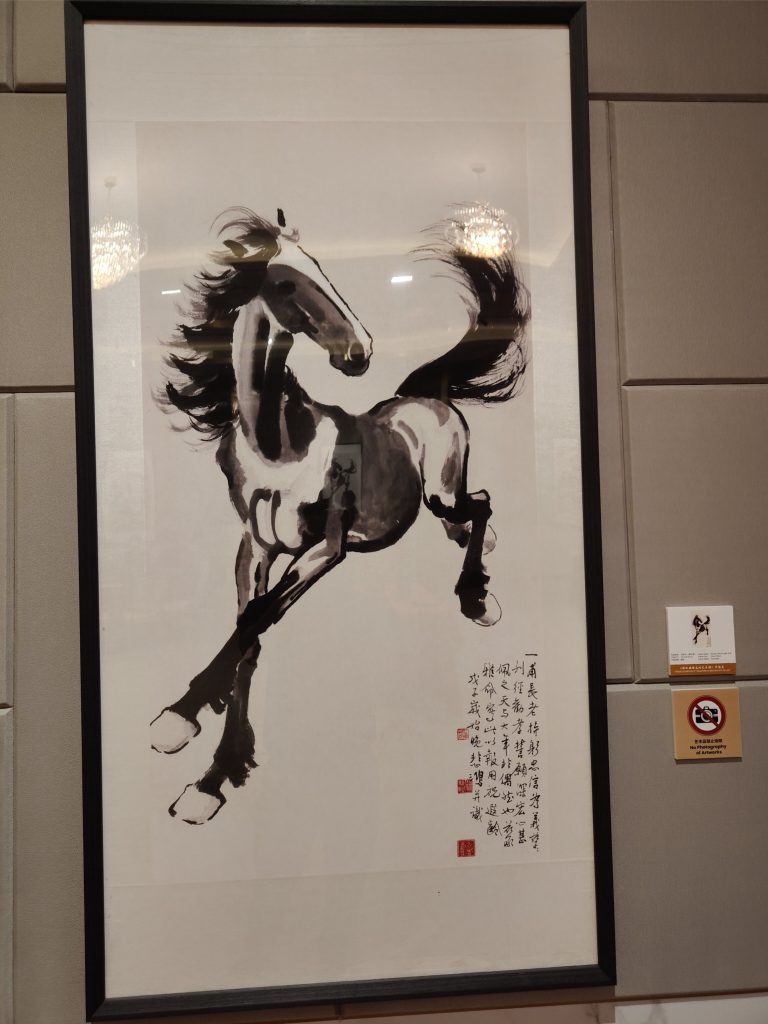
Xu Beihong’s galloping horse — boldness and delicacy expressed through the Chinese brush.
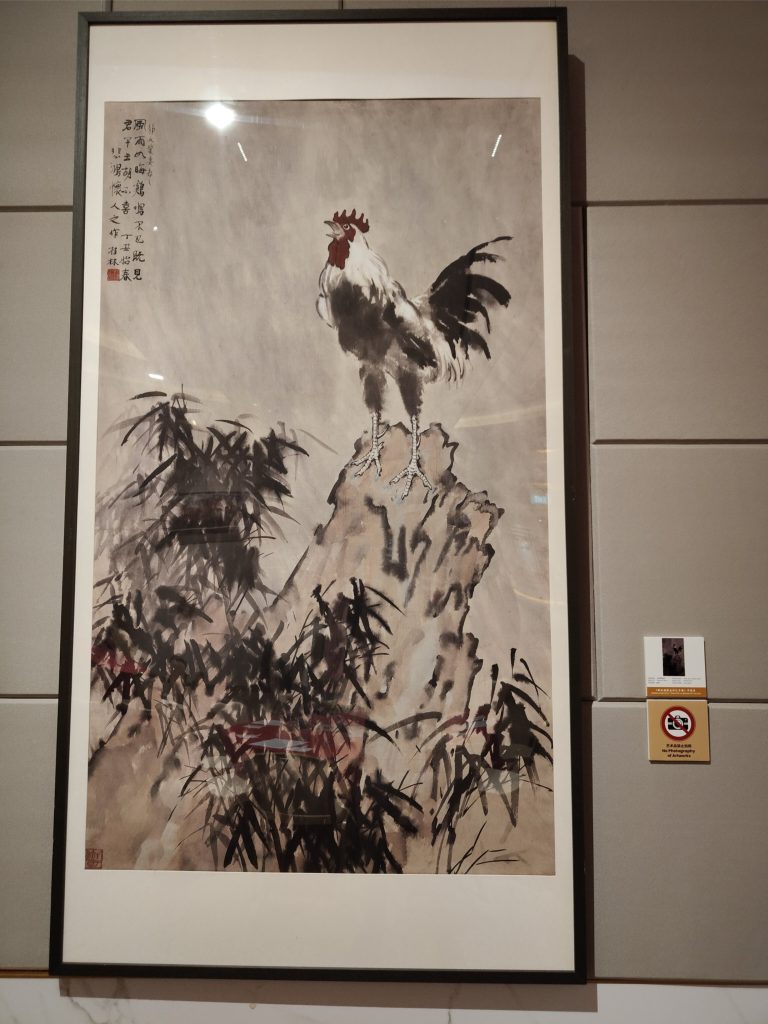
The Rooster — 愛妻廖靜雯
The rooster painting, 《風雨雞鳴》, caught my attention with its dedication to Xu Beihong’s beloved wife, 廖靜雯.
Artists, poets and philosophers express love in ways that are largely similar in emotion, yet different in spirit.
Something that resonates with me personally.
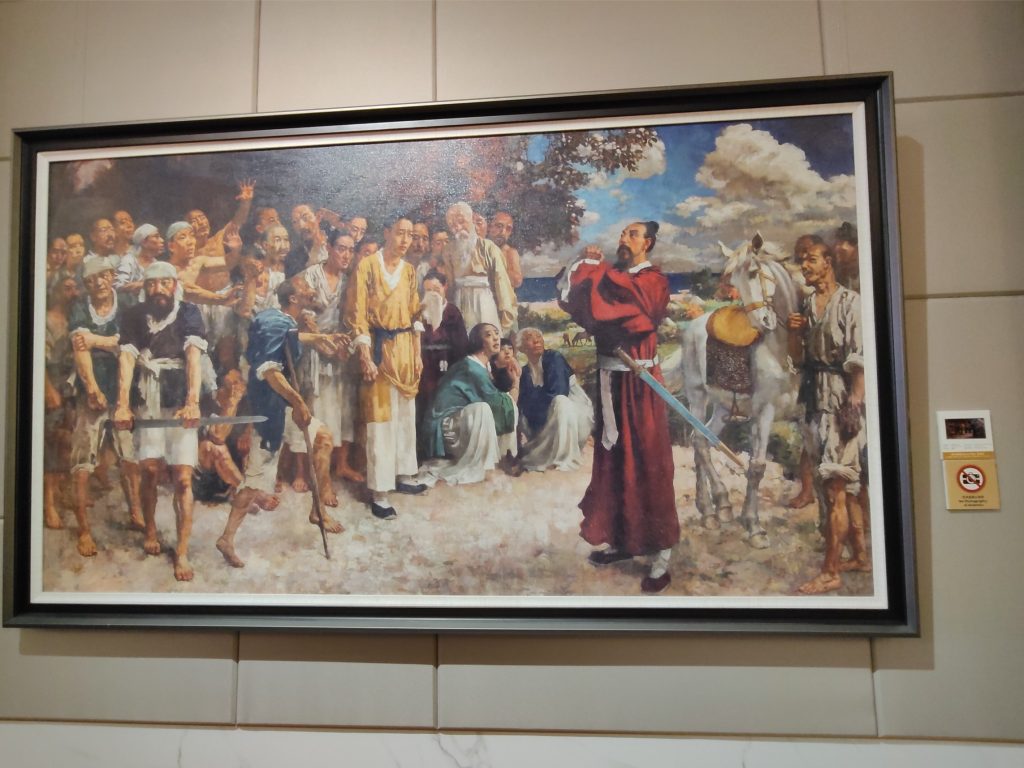
The Oil Painting — 中西交融
The final painting, 《田橫五百士》, illustrates Xu Beihong’s mastery of Western oil-painting techniques while portraying a distinctly Chinese historical subject.
Created during a period when Chinese civilisation looked towards the West for rejuvenation and revival, it reflects how Western artistic methods could be embraced without losing the spirit of 華夏.
East Meets West: A Journey That Never Ended
Standing in the gallery, I found myself reflecting upon the incessant exchanges between Eastern and Western civilisations.
The Silk Road connected merchants, scholars, ideas and technologies across Eurasia long before modern globalisation.
Buddhism travelled from India into China, where its teachings were studied, translated and eventually assimilated into Chinese cultural and philosophical traditions.
The journey of 玄奘 (Xuanzang), whose pilgrimage to India inspired the classic 西遊記 (Journey to the West), remains one of the most recognisable examples of China’s search for wisdom beyond its borders.
Chinese civilisation did not merely copy the teachings it encountered.
It absorbed, interpreted and developed them within its own philosophical framework.
Centuries later, Xu Beihong travelled to France to study European art before incorporating those techniques into Chinese painting.
And here we were in Singapore, appreciating Chinese wines whose development has drawn upon centuries of European winemaking experience.
The pattern is remarkably consistent.
Civilisations survive and flourish not by rejecting outside knowledge, but by learning, adapting and renewing themselves.
This is also how I view my vision for THOUSAND SHIPS™ — A Thousand Ships. A Future for All.
Ships once carried merchants, religious teachings, discoveries and ideas between distant civilisations.
Today, international business networks can carry technology, capital, knowledge and institutional wisdom across borders.
I sometimes imagine a modern Journey to the West, where valuable lessons from Western civilisation — including biblical traditions of stewardship, compassion, accountability and service — are examined alongside the teachings of Confucianism, Taoism and Buddhism.
The objective is not to abandon Chinese identity.
It is to learn from other traditions and assimilate what is valuable into the continuing story of 華夏, one of humanity’s oldest living civilisational traditions.
Just as Xu Beihong demonstrated through his art, adopting another civilisation’s techniques need not mean surrendering one’s own spirit.
The Biggest Challenge: Our Tradition of Staying Invisible
Our conversations at Table 5 returned repeatedly to the challenge of attracting younger people into Chinese clan associations.
I shared an observation that may have been somewhat uncomfortable.
Chinese communities have long valued discretion, humility and keeping a low profile.
There are historical reasons for this.
In many circumstances, staying out of sight was a sensible means of protecting one’s family, wealth and community interests.
But what happens when that instinct continues into the age of social media?
If clan associations remain largely invisible, how can younger people know what they do, let alone understand why they should join?
This is where transformation becomes necessary.
A fellow participant from the Hakka community raised the importance of incorporating English into association activities.
I agreed wholeheartedly.
Preserving Chinese heritage should not mean excluding younger Chinese Singaporeans who are more comfortable communicating in English.
Another participant suggested that associations and SFCCA consider sponsoring or subsidising memberships and events to encourage participation.
A sensible suggestion.
I believe there is room for far more experimentation — from entrepreneurship and mentorship circles to digital innovation, professional development, cross-clan business exchanges and community collaborations.
Our elders may enjoy formal banquets, ceremonial speeches and traditional gatherings.
Younger working adults may prefer activities where they learn something useful, develop friendships and discover opportunities.
Neither preference is wrong.
But an institution that hopes to attract the next generation must understand what that generation values.
The Luncheon Meat Generation
Those of us born around 1980 occupy an unusual position.
We understand the traditions, expectations and sensitivities of our elders.
Yet we must also remain relevant to Millennials, Generation Z and the increasingly digital world they inhabit.
We are the sandwiched generation.
And I do mean sandwiched.
Imagine a delicious slice of luncheon meat pressed between two increasingly demanding pieces of bread.
On one side are elders who expect respect, obedience and continuity.
On the other are younger generations demanding authenticity, flexibility, opportunities and change.
Squeeze the luncheon meat any harder, and the whole sandwich becomes an unappetising mess!
At Table 5, I joked that certain elders might think I am too old for a youth group.
Apparently, I am too old to be young, yet still young enough to be told what to do.
Those who know me understand that I can connect comfortably across generations, personalities and social backgrounds.
Like a chameleon, I enjoy adapting to different environments, discovering interesting people and stirring up lively conversations.
I was probably the eldest among my tablemates, but that did not stop me from poking fun at both the gentlemen and ladies around the table.
My pen may be sharp, but I enjoy good humour and candid exchanges.
One of my former bosses, Wong Wai Kheong (a 黃 Huang I believed), once observed:
“Mar Vin’s pen and emails can be very sharp, but if you talk to him, you will find him reasonable and fair.”
There is a difference between challenging ideas and disrespecting people.
Unfortunately, that distinction is sometimes lost within communities where hierarchy remains deeply embedded.
What Our Ancestors Can Teach Us About Competition
Our Chinese heritage is also shaped by centuries of competition over territory, resources and political influence.
The upheavals of China’s Century of Humiliation, foreign intervention, occupation and internal instability left deep impressions upon generations of Chinese people and the diaspora.
During one of my earlier conversations with a Filipino friend and former colleague in the technology industry, he shared a fascinating perspective from his university research.
His thesis explored how climate and geography might influence social behaviour.
Societies originating in temperate regions had to prepare for winter, store food, organise resources and plan for seasonal scarcity.
Tropical societies, with different agricultural conditions, faced different survival pressures.
Naturally, climate alone cannot explain cultural behaviour, and tropical societies have their own histories of scarcity, competition and conflict.
Nevertheless, the hypothesis offers an interesting perspective on why planning, accumulation and competition became important features in different societies.
The problem arises when survival instincts become habits that obstruct collaboration.
We may have inherited different surnames, ancestral provinces and historical rivalries.
But surely we need not perpetuate every disagreement of the past.
There is more to gain through meaningful cooperation.
My Father’s Advice and My Own Relationship with Power
My father was the person who encouraged me to explore Chinese clan associations after I left the white-collar corporate world to pursue business.
Interestingly, he has chosen to remain largely detached from struggles over power, money and politics.
I respect that decision.
There is a certain enlightenment in understanding the machinery of influence without allowing oneself to become consumed by it.
My own journey has been rather different.
I have spent much of my professional life questioning established systems, believing there must be better ways to organise business, create value and serve society.
Another former senior leader, Vesmond Wong (a 黃 Huang I believed), recognised my ability to close commercial deals by explaining their value in simple, understandable terms, even when I was relatively junior in the organisation.
Naturally, receiving attention from senior leadership can attract jealousy.
I was commercially capable but did not always have the guidance necessary to navigate organisational politics.
Those lessons came at a price.
Perhaps that explains my longstanding belief in 自强不息 — continual self-improvement through one’s own efforts.
While I value relationships, I prefer not to rely upon factions or engage in 拉黨結派 merely to accumulate influence.
I remain drawn to the Bodhisattva ideal within Buddhism — the conscious choice to remain engaged with the difficulties of the world and help others rather than withdraw from them.
At the same time, my appreciation of the Taoist Way reminds me of the importance of understanding the natural order without becoming imprisoned by artificial hierarchies.
These traditions offer different philosophical perspectives, but both encourage reflection upon the purpose of human action.
For me, systems should exist to serve people.
People should not exist merely to preserve systems.
Renewal Is Not Betrayal
It was also a pleasure to hear Dr Zhou Zhaocheng (周兆呈博士) address the gathering.
Dr Zhou, Vice Chairman and Executive Director of Haidilao International Holding and a leader within SFCCA, represents the intersection of commerce, scholarship and community service.
His presence was a reminder that clan associations have the potential to connect people across industries, backgrounds and generations.
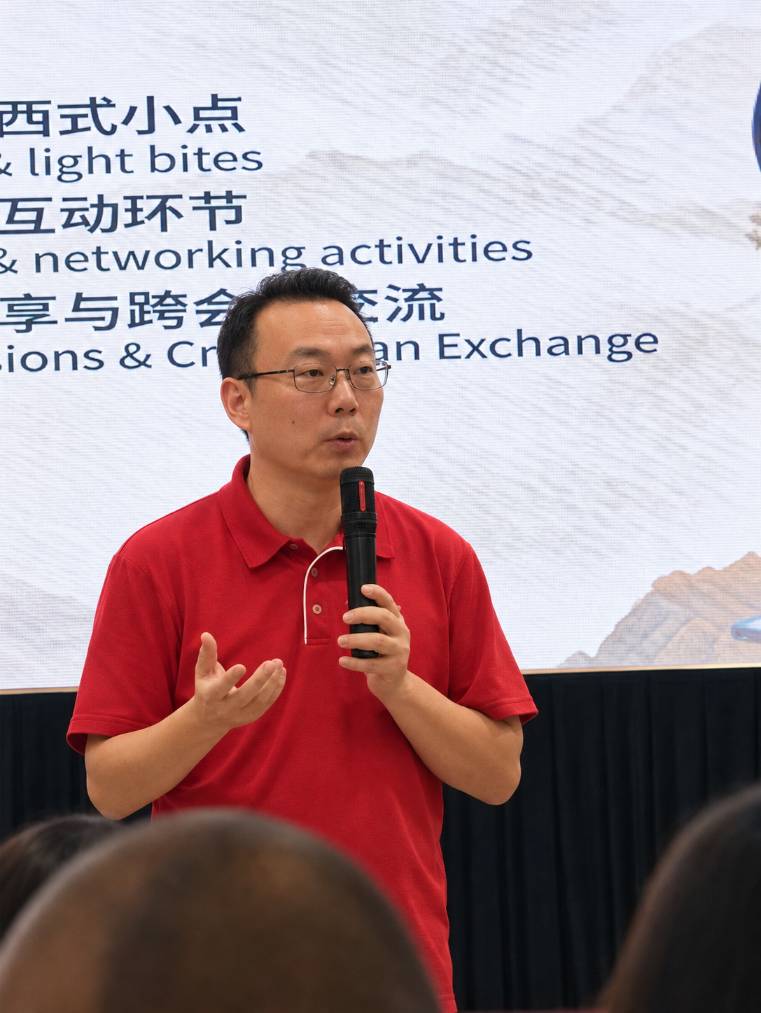
Dr Zhou Zhaocheng addressing participants at SFCCA’s youth gathering.
Towards the end of the afternoon, I encountered one of the organisers in the lift.
I expressed my appreciation for the event and encouraged SFCCA to continue experimenting with new ways of connecting with younger generations.
Wine tasting may appear to be a modest activity.
But meaningful institutional renewal often begins with modest experiments.
Across organisations and political systems, including the continuing discussion of leadership renewal in China, there is an enduring question about how established practices should adapt as society changes.
Yesterday’s wisdom may have helped an institution survive.
Tomorrow’s relevance requires that wisdom to evolve.
This does not mean that elders should be disregarded or that traditions are obsolete.
Quite the opposite.
The wisdom of our elders provides the foundation upon which younger generations can build.
But a foundation should support new construction, not prevent it.
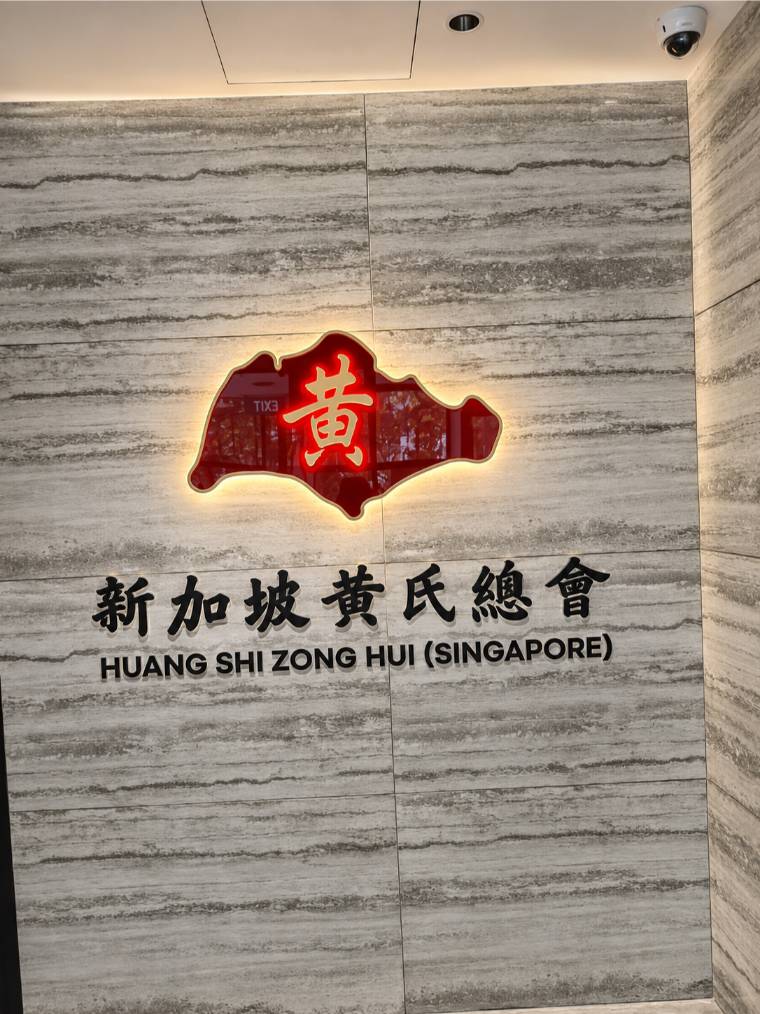
Huang Shi Zong Hui (Singapore), carrying forward the historical legacy of 江夏堂.
From a 戰帖 to a Toast for the Future
I arrived at the Huang clan gathering half-jokingly expecting a 戰帖.
Instead, I discovered an afternoon of warm hospitality, laughter, meaningful conversations and a fascinating connection to Singapore’s cultural history.
My sincere appreciation goes to SFCCA, the Huang clan hosts, the organisers and the attentive staff who made the afternoon enjoyable.
To Indra, thank you for introducing us to the fascinating geography and history of wine.
To Andre Ong, thank you for your candid sharing and for representing our table so effectively.
And to my fellow participants at Table 5, thank you for the good humour and willingness to accommodate a rather outspoken member of the sandwiched generation.
The story of Xu Beihong and Huang Manshi stayed with me long after the afternoon ended.
Nearly a century ago, the generosity of the Huang brothers helped an artist overcome adversity and create a lasting cultural legacy.
Today, Chinese clan associations have an opportunity to provide similar support to a new generation of entrepreneurs, professionals, artists and thinkers.
But to do so, they must remain visible, accessible and willing to evolve.
The younger generation does not necessarily reject its ancestry.
It simply wants to understand why that ancestry should matter in the world it is inheriting.
炎黃子孫,不應只是追憶祖先的輝煌,更應共同開創後代的未來。
As descendants of Yan and Huang, our responsibility should not merely be to remember the achievements of our ancestors, but to build a future worthy of those who come after us.
Because heritage is not only about preserving what our ancestors left behind.
It is about ensuring the next generation finds something worth carrying forward.
— Mar Vin Foo 胡马宾
A Thousand Ships. A Future for All.
从一封「战帖」到红酒与芝士:走进江夏堂、徐悲鸿的艺术世界与华人宗亲会的未来
一场由新加坡宗乡会馆联合总会举办的青年交流活动,让我从红酒、芝士与欢笑声中,重新思考华人宗亲文化、东西方文明交流、世代传承,以及华夏文明生生不息的精神。
文/胡马宾 Mar Vin Foo
2026年11月15日|新加坡
一封来自黄氏宗亲会的「战帖」?
初次收到新加坡宗乡会馆联合总会(SFCCA,简称宗乡总会)的邀请,前往黄氏宗亲会参加一场红酒与芝士交流活动时,坦白说,我还真有一种收到「战帖」的感觉。
毕竟,我过去写过不少关于炎黄子孙、中华文明,以及权力、金钱、人脉与社群之间错综复杂关系的文章。
对部分人而言,华人宗亲会仍然蒙着一层神秘面纱。历史上秘密会社、帮派组织及封闭式人脉网络所留下的印象,至今仍在一些人的想象中挥之不去。
不过,这种现象并非华人社会独有。
西方有关于光明会(Illuminati)的种种传说,日本则有山口组等黑社会组织的历史。这些组织与合法的宗亲会在性质上截然不同,当然不能混为一谈,但它们都反映了人类社会对权力、忠诚、组织归属和神秘关系的长期关注。
带着开放的心态,我来到了现场。当然,这份开放并没有磨钝我多年来观察社会、质疑体制的笔锋。
初入会场时,空气仿佛有些凝重。
大家脸上自然都挂着笑容,但我隐约感受到一丝谨慎,仿佛宗乡总会正努力为这位言论较为尖锐的来宾与东道主搭起一座桥梁。
或许,这只是我的个人感受。
幸好,红酒向来有一种奇妙的能力,能让陌生人之间的谈话逐渐轻松起来。
第五桌:从姓氏谈到人生
这场活动是宗乡总会推动青年交流的其中一项尝试,让来自不同宗亲会的年轻会员及有兴趣参与的朋友聚在一起。
宗乡总会旗下约有250家会员团体。据我了解,其秘书处只有约20名工作人员。
要协调如此众多、各具历史背景与传统文化的会馆,确实不是一件容易的事。
首先,我必须感谢主办方的细心安排,尤其是两位漂亮又亲切的宗乡总会工作人员,陪同我坐在第五桌。
她们或许是为了确保我受到周到照顾。
也可能是奉命前来,确保我不会太过调皮!
无论如何,她们都圆满完成了任务。
当天,我有幸认识来自不同姓氏的朋友,包括莊、傅、許、林、王、駱、黃,当然也少不了我这个胡姓。
有人是第一代移民,有人早已是宗亲会的资深会员,也有人刚刚加入。
我们来自不同的家族、祖籍、行业和世代,却在中华文化、亚洲人的身份认同、商业思维、竞争意识及待人处事之道上,找到了不少共同话题。
其中一位让我印象深刻的朋友,是 Andre Ong。
Andre 坦诚分享了自己早年经历的种种困难,以及宗亲会的人脉和支持如何帮助他逐步走出困境,在事业与人生道路上取得进展。
他的故事让我再次思考:
人脉网络本身并没有什么不好。
真正有价值的人脉,应该能够提供指导、知识、鼓励和机会,让一个人获得原本难以接触的资源。
问题在于,我们究竟是利用关系创造价值,还是仅仅利用关系维护既得利益?
我一向相信,一笔商业交易必须建立在合理的价值交换之上,而不应该只是因为双方认识,便认为生意理所当然应该成交。
关系可以帮助我们打开一扇门,但门后必须有实实在在的价值。
到了小组分享环节,大家很自然地把我「箭射」出来,希望由我代表第五桌发言。
我却非常乐意推荐 Andre。
因为他拥有切身经历,又能清楚、真诚地表达我们这一桌的看法。
结果,他表现得非常出色!
有时候,领导力并不在于自己拿起麦克风,而在于知道谁更适合发言。
红酒、芝士与文明的地理学
当天的品酒环节,也让我颇感惊喜。
主讲人 Indra 为我们介绍了葡萄酒的历史、产区地理,以及中国葡萄酒产业近年来的发展。
他提到中国多个葡萄酒产区,包括新疆、宁夏、山东和云南。
中国部分地区的气候条件,与法国等欧洲传统葡萄酒产区存在一定的相似之处,因此具备培育优质酿酒葡萄的潜力。
当然,不同地区的风土条件(Terroir)各有特色。
宁夏的干燥大陆性气候、山东的海洋性影响,以及云南的高海拔环境,都能赋予葡萄酒不同的风味。
真正让我感兴趣的,不只是中国葡萄酒能否与法国葡萄酒一较高下。
而是一个更深层的文明课题:
为什么一项源自某个文明的精湛技术,不能被另一个文明学习、吸收,再创造出属于自己的特色?
法国的葡萄品种,种植在中国的土地上,或许会产生不同的风味,却依然保留葡萄本身的特性。
或许,文化也是如此。
一边品尝红酒、芝士与冷盘,我一边思考人类文明数千年来不断交流、学习与融合的历史。
感谢 Indra,让这场品酒活动不仅仅是举杯畅饮,更成为一次认识地理、历史与文化的机会。
从江夏堂到新加坡黄氏总会
这次活动最让我感到意外的,是发现举办地点背后竟然蕴藏着如此深厚的文化历史。
黄氏宗亲会与 江夏堂 有着密不可分的关系。
「江夏」是黄姓重要的郡望之一,也是世界各地黄氏宗亲追溯祖籍与家族文化的重要象征。
新加坡黄氏总会的历史可追溯至1924年,当时成立的组织名为「星洲南洋江夏堂」。
其后,组织发展为南洋黄氏总会,并于2013年采用现今的名称——新加坡黄氏总会。
1952年,总会购入位于芽笼的江夏堂旧址,作为宗亲会的会所。
随着岁月流逝,建筑逐渐老化。
在土地资源极为珍贵的新加坡,宗亲会最终作出了一个不容易的决定:重新发展旧址。
2022年,新建的八层综合建筑正式落成,结合了宗亲会设施与私人住宅的用途。
在我看来,这本身就是一种值得肯定的革新。
保存历史,不一定意味着必须永远保留原有的建筑形式。
重要的是,一个组织是否能够继续发挥作用,为今天的会员和未来的世代创造价值。
然而,江夏堂最珍贵的文化遗产,还不只是宗亲会本身的历史。
它与中国近代一位杰出的艺术大师,有着一段非凡的缘分。
徐悲鸿与黄曼士:一段改变艺术人生的友谊
在新加坡徐悲鸿艺术馆里,我认识到 徐悲鸿(1895—1953)与黄曼士(1890—1963) 之间的深厚情谊。
1925年,徐悲鸿在法国留学期间,因经济困难而面临继续求学的挑战。
他结识了黄孟圭。黄孟圭欣赏他的艺术才华,便将他介绍给在新加坡经商的弟弟黄曼士。
黄曼士热情接待了徐悲鸿,为他提供住宿与创作空间,并介绍当地商界人士认识他,让徐悲鸿有机会通过绘画获得收入。
两人后来建立了深厚的友谊。
徐悲鸿更亲切地称黄曼士为「二哥」。
艺术馆内展出的黑白历史照片,让这段近百年前的情谊仿佛重现眼前。
我感兴趣的,并不仅仅是两位华人名士之间的交情。
而是一个简单的道理:
在一个人最需要帮助的时候,正确的引荐与真诚的支持,可能改变他的一生。
黄曼士给予徐悲鸿的帮助,不只是物质上的支持,更为他打开了艺术创作与社会发展的机会。
徐悲鸿后来成为中国近代最具代表性的艺术家之一。
这恰恰说明,华人社群的人脉网络如果运用得当,可以创造远超个人利益的价值。
真正有意义的关系,是帮助别人完成原本难以独力实现的事情。
这才是我认为宗亲会应该发挥的价值。
三幅画,三种徐悲鸿的艺术精神
2026年2月开幕的新加坡徐悲鸿艺术馆,通过展出徐悲鸿作品的授权复制品,让参观者重新认识这位艺术大师与江夏堂之间的历史渊源。
在众多作品中,有三幅画特别吸引我的注意。
骏马——大刀阔斧中的细腻
徐悲鸿笔下的骏马,充分展现了中国绘画大刀阔斧的豪迈笔触,却又在细微线条中体现出中国书法的精致与严谨。
正是这种刚柔并济的表现,让画中的骏马仿佛拥有了生命。
雄鸡——爱妻廖静雯
另一幅让我驻足欣赏的作品,是徐悲鸿的《风雨鸡鸣》。
画上的题字提及爱妻廖静雯,让我格外留意。
艺术家、诗人与哲学家表达爱情的方式,在情感上往往大同小异,却又各自展现不同的精神意境。
这一点,尤其令我有所共鸣。
油画——中西交融
最后一幅《田横五百士》,清楚展现了徐悲鸿如何运用西方油画技法,描绘中国历史题材。
在中华文明寻求振兴与复兴的年代,这幅作品体现了中国艺术家如何吸收西方技艺,却不失华夏精神。
东西方文明:一段从未中断的交流
站在艺术馆内,看着徐悲鸿如何将西方绘画技巧融入中国艺术,我不禁想到东西方文明数千年来生生不息的交流。
古代丝绸之路,让商人、学者、宗教思想与各种技术穿越欧亚大陆。
佛教从印度传入中国,经过历代高僧翻译、研究与传播,逐渐融入中华文化与哲学思想。
唐代玄奘法师远赴印度求取佛经的历史,更成为后来文学名著《西游记》的重要灵感来源。
中华文明并非原封不动地接受外来的思想。
相反,它通过理解、吸收、诠释与发展,逐渐形成具有中国特色的佛教传统。
数百年后,徐悲鸿前往法国学习西方绘画,再把所学技艺带回中国,融入中华艺术的表现形式。
而今天,我们在新加坡的一场品酒活动中,讨论法国的葡萄酒文化如何影响中国宁夏、新疆、山东与云南等地的酿酒产业。
历史似乎不断重复着同一个过程。
文明的生命力,不在于拒绝外来的知识,而在于不断学习、吸收、融合与创新。
这也让我联想到自己正在推动的 THOUSAND SHIPS™(千船)——A Thousand Ships. A Future for All.
数百年前,商船承载的不只是货物,还有宗教、技术、文化与知识。
今天,现代商业网络同样可以成为资本、科技、制度与思想跨越国界的载体。
我有时候会想象,一场现代版的《西游记》正在展开。
这次我们向西方取经,不只是寻求商业机会与先进技术,更是重新认识西方文明中值得学习的精神与价值。
包括《圣经》传统所强调的责任、仁爱、守护、服务与个人道德,同时与中华文化中的儒家、道家和佛家思想相互参照。
我们的目的,不是抛弃中华文化。
而是汲取其他文明的智慧,将值得学习的精神加以理解、融合,并延续华夏文明生生不息的生命力。
正如徐悲鸿以作品证明的:
学习西方的技艺,并不意味着失去中华的灵魂。
宗亲会革新的最大障碍:习惯低调,不愿曝光
回到第五桌的交流,大家不约而同地谈到同一个问题:
如何吸引更多年轻人加入宗亲会?
我提出了一个可能让部分长辈听起来不太舒服的观点。
华人社会长期重视低调、谦逊,以及避免过度张扬。
这种文化传统,有其历史背景。
过去,在政治动荡、资源竞争或社会环境不稳定的年代,保持低调确实是一种保护家族、财富和社群的生存智慧。
可是,今天已经进入社交媒体时代。
如果宗亲会长期保持低调,甚至让外界难以接触,年轻人又怎么知道它们的存在,更别说理解加入的意义?
这正是我认为宗亲会必须转型的地方。
当天,一位来自客家社群的朋友提出,宗亲会未来应当更加重视英文的使用。
我非常认同。
传承中华文化,并不意味着必须以语言门槛将年轻人拒于门外。
对于许多习惯以英文沟通的新加坡年轻华人而言,双语活动或许是更自然的参与方式。
另一位朋友则建议,宗亲会与宗乡总会可以考虑通过赞助或津贴,降低入会及参加活动的门槛。
这也是非常实际的建议。
此外,我认为还可以尝试更多新形式,包括创业交流、职业发展、跨宗亲商业合作、科技创新、数字转型,以及长幼之间的导师制度。
长辈或许喜欢传统宴会、致辞、典礼和正式聚会。
年轻的职场人士则可能更希望参与能够学习新知识、认识新朋友和创造机会的活动。
两者并没有对错。
但如果一个组织希望年轻人主动参与,就必须先理解年轻人真正重视什么。
我们这一代,就是三明治里的午餐肉
我们这些大约出生于1980年前后的人,处于一个非常微妙的世代。
我们理解长辈的传统观念、处世方式和家族期望。
同时,我们又必须理解千禧一代、Z世代,以及科技迅速改变的社会环境。
我们就是所谓的「夹心世代」。
而且,我说的可是真正的夹心!
想象一下,一片美味的午餐肉,被夹在两片越来越用力挤压的面包之间。
一边是要求尊重、服从和传承的长辈。
另一边则是追求真实、灵活、机会与改变的年轻一代。
再继续用力挤下去,整块午餐肉就要变形,连三明治都不能吃了!
当天我还在第五桌开玩笑说,有些长辈可能认为我年纪太大,已经不适合参加青年组活动。
原来,我已经老得不能算年轻人,却又年轻得必须继续听长辈的话!
熟悉我的朋友都知道,我向来能够与不同年龄、背景和阶层的人相处。
我就像变色龙一样,能够因应环境调整自己的交流方式,也喜欢发掘能够活跃气氛、带动讨论的朋友。
虽然我可能是第五桌年纪最大的参与者,但这丝毫不妨碍我与桌上的男士、女士们开玩笑。
我的笔锋或许尖锐,但面对面交流时,我更喜欢幽默、真诚与坦率的讨论。
我过去一位非常欣赏的上司 Wong Wai Kheong,曾经这样形容我:
「Mar Vin 的笔和电邮可以非常尖锐,但如果你真正坐下来和他谈,就会发现他是一个讲道理、公平合理的人。」
挑战一个人的观点,并不等于不尊重这个人。
可惜,在一些特别注重资历与等级的社群中,这两者往往容易被混为一谈。
祖先留给我们的,不只有竞争
中华文明的发展,也经历了数千年对土地、资源和政治权力的竞争。
近代中国所经历的百年国耻、外国势力干预、战争与内部动荡,更深深影响了几代中国人及海外华人的集体记忆。
我曾经有一位来自菲律宾的前同事,在科技行业与我并肩工作。
他是一个非常聪明的人。
他曾分享自己大学毕业研究的一项有趣观点,探讨气候与地理环境如何影响不同社会的行为模式。
生活在温带地区的人们,必须为冬季做好准备,储存粮食、规划资源,并应付季节性的食物短缺。
相比之下,热带地区拥有不同的农业与气候条件,面对的生存压力也有所不同。
当然,气候本身并不足以解释一个社会的文化与竞争行为。热带地区同样可能经历饥荒、资源争夺和战争。
不过,这个假说仍然提供了一个值得思考的角度。
为什么有些社会特别重视规划、积累资源、竞争以及对未来风险的防范?
问题在于,当过去为了生存而形成的行为模式,逐渐演变成阻碍合作的习惯时,我们是否应该重新审视它们?
我们可以拥有不同的姓氏、祖籍和历史记忆。
但没有必要把祖先之间的每一场争执,都继续带到下一代。
比起重复过去的竞争,我们更应该思考如何创造合作的机会。
父亲的劝告,以及我与权力的关系
其实,是父亲鼓励我在离开白领企业生涯、投身创业之后,多接触华人宗亲会。
有趣的是,他自己却选择与权力、金钱和政治纷争保持距离。
我很尊重他的选择。
能够理解权力运作的本质,却不被权力吞噬,本身就是一种智慧。
然而,我选择了另一条道路。
在过去的职业生涯中,我经常质疑那些被视为理所当然的制度与做法。
因为我始终相信,商业、组织和社会制度,应该能够以更好的方式运作。
我过去另一位高级主管 Vesmond Wong,在我还是公司里相对资浅的员工时,就特别留意我的表现。
原因并不复杂。
我能够把复杂的商业交易,以一般人听得懂的语言解释清楚,让客户理解其中的实际价值,进而促成交易。
我不认为一笔生意必须依靠关系才能成立。
真正合理的商业方案,本来就应该有说服力。
当然,资浅员工获得高层特别关注,难免引来旁人的嫉妒。
当年的我虽然懂得做生意,却没有得到足够的指导,学习如何应付办公室政治与组织内部的人际斗争。
这些教训,往往是需要付出代价才能学会的。
也许正因如此,我始终相信 「天行健,君子以自强不息」 的精神。
我珍惜人与人之间的关系,却不喜欢为了累积影响力而拉党结派。
从哲学层面而言,我尤其欣赏佛教中的菩萨精神。
菩萨愿意留在充满痛苦与矛盾的世间,主动帮助有需要的人,而不是完全抽身于尘世之外。
这并不代表自己比别人更加高尚。
而是愿意承担参与现实、面对困难,以及推动改变的责任。
与此同时,道家的思想也提醒我:
权力、身份、名利和社会制度,终究不是永恒不变的。
真正重要的,是我们所做的事情,究竟为他人创造了多少价值。
制度应该为人服务,而不是让人为了维护制度而存在。
革新,并不等于背叛传统
当天,也很高兴听到 周兆呈博士(Dr Zhou Zhaocheng) 向与会者分享。
周博士是海底捞国际控股有限公司副主席兼执行董事,同时也曾在宗乡总会担任领导职务。
他的参与,让我看见宗亲社群能够汇聚商业、学术、文化和社会服务等不同领域的人才。
活动结束后,我在乘搭电梯离开时,刚好碰见其中一位主办人员。
我向她表达了对活动的感谢,也鼓励宗乡总会继续尝试新的活动形式,让年轻人以更轻松、自然的方式认识彼此。
红酒品尝看起来或许只是一个小小的活动。
但许多真正有意义的制度改革,往往都是从不起眼的尝试开始。
无论在企业、社团或政治制度中,世代交替始终面对同一个问题:
过去行之有效的方法,是否仍然适合今天的社会?
即使在中国关于领导层更新与组织革新的讨论中,也不断出现类似课题。
然而,换上一批年轻面孔,并不等于真正完成改革。
更重要的是,思想、价值观、制度和工作方法是否获得实际改善。
长辈过去积累的智慧,值得我们尊重。
但智慧应该成为下一代继续发展的基础,而不是限制发展的围墙。
【照片:IMG-20261114-WA0040.jpg】
新加坡黄氏总会,承载着江夏堂近百年的宗亲文化与历史记忆。
从一封「战帖」,到为未来举杯
原本以为,这次黄氏宗亲会之行,可能是一场带着挑战意味的「战帖」。
没想到,最后却收获了热情的款待、欢笑、坦诚的交流,以及一段令人难忘的中华文化历史。
衷心感谢宗乡总会、黄氏总会、所有筹办活动的工作人员,以及当天悉心照顾大家的两位工作人员。
感谢 Indra,让我们通过红酒认识不同地区的地理与文化。
感谢 Andre Ong,毫无保留地分享人生经历,并出色地代表第五桌发言。
也感谢第五桌所有朋友,愿意与这位有点「不安分」的夹心世代成员,一起谈笑风生。
活动结束之后,徐悲鸿与黄曼士的故事,仍然留在我的脑海中。
将近一个世纪前,黄氏兄弟的慷慨与赏识,为一位有才华却面临困难的艺术家提供了支持与机会。
今天的华人宗亲会,同样有机会帮助新一代的企业家、专业人士、艺术家和思想工作者。
但前提是,我们必须愿意走出传统的框架,让宗亲会变得更加开放、亲切、容易接触,并且与时俱进。
年轻人未必不重视自己的祖先。
他们只是想知道:
祖先留下来的文化与组织,究竟能够为他们正在面对的世界带来什么意义?
炎黄子孙,不应只是追忆祖先的辉煌,更应共同开创后代的未来。
因为文化传承,不只是保存祖先留下来的东西。
更重要的是,让下一代看见值得继续传承的价值,以及勇于革新的精神。
—— 胡马宾 Mar Vin Foo
THOUSAND SHIPS™ 千船
A Thousand Ships. A Future for All.