#105 When Systems Forget People 当系统忘记了人
Australia’s Under-16 Social Media Ban, Digital Governance, and the Quiet Failure of Human-Centred Design
Australia’s move to restrict social media access for those under 16 has been publicly framed as a child-protection and mental-health policy. On the surface, that intention is reasonable. Yet when viewed alongside broader developments in digital governance, information control, and public feedback from everyday citizens, the policy raises a deeper and more uncomfortable question:
Are our systems truly empowering society — or are they increasingly disabling it?
This question matters not only for Australia, but for any digitally advanced society navigating a multi-polar world, AI-accelerated information flows, and declining trust in institutions.
Why Now? Why Social Media — After 20 Years?
Social media is not new.
Facebook has existed for nearly two decades. YouTube, Instagram, X (Twitter) — all are deeply embedded in Western societies. If social media itself were the existential threat, the policy response should have arrived years ago.
The difference today is which platforms are shaping young minds.
TikTok, Xiaohongshu (RED), Lemon8, and similar platforms now offer:
- Non-Western perspectives
- Unfiltered depictions of daily life in Asia
- Direct comparisons of development, infrastructure, and social order
For the first time, younger generations can observe realities beyond traditional Western media narratives — without intermediaries.
This is not a cultural issue. It is a narrative control issue.

The Real Anxiety: Losing a Generation Before Its Worldview Sets
Governments understand one thing very well: worldviews stabilise early.
Restricting information exposure before mental frameworks fully form functions as a form of pre-emptive social engineering — whether intentional or not:
- Delay exposure
- Limit comparison
- Preserve inherited assumptions
This raises an uncomfortable but necessary question:
Is the policy about protecting children — or protecting narratives?
When Policy Meets Reality: Voices from the Ground
After publishing on digital governance and social engineering (#103 Systems That Hold Nations Together — And What Happens When They Fail Us 《支撑国家的系统──以及当它们开始崩塌时》), several readers wrote in to share their lived experiences. These are not abstract theories. They are the daily consequences of systems designed without sufficient empathy, accountability, or closure.
1. A Sentence That Lasted Four Years
One reader shared an experience from COVID.
Trying to reduce plastic waste, she packed food for her family using pots instead of disposable packaging. The repeated strain injured her arm. When she visited Khoo Teck Phuat Hospital (KTPH), a doctor told her bluntly:
“I’m going to give you a lot of pain.”
That sentence — unnecessary, poorly phrased, and devoid of empathy — stayed with her for four years.
The issue was not medical competence. It was human communication within a system.
We are training people to operate systems, but not always to speak to humans.
2. A Yes-or-No Question That Never Ends
Another reader, focused on sustainable living, asked a simple question: Is Thai fish sauce available in glass packaging?
- 20 Nov 2025: Email to NTUC FairPrice — “We will look into it.”
- 14 Dec 2025: Follow-up — “We are still checking.”
No yes. No no. Just an endlessly open ticket.
This raises legitimate operational questions:
- Are backend teams aligned with frontend stores?
- Are systems working in silos?
- Are unresolved tickets a sign of inefficiency — or a way to justify growing IT budgets?
When simple answers take forever, trust erodes.

3. When Systems Ask the Wrong Questions
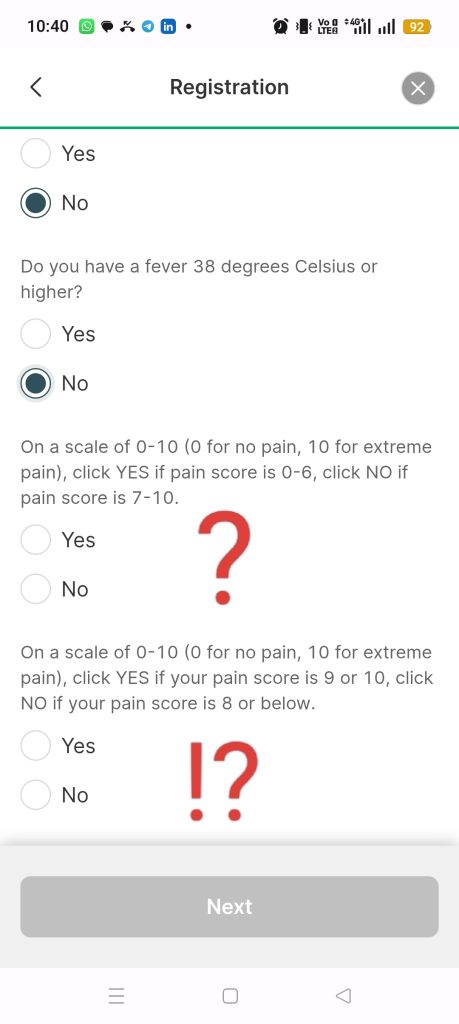
Another reader tried to opt for paperless medical registration via HealthHub to reduce waste. Instead, she was confronted with two oddly worded questions that made no sense for her actual condition (tooth pain).
She froze — not knowing how to answer “correctly.”
Her question was simple:
Are we hiring and training system designers with sufficient language skills, empathy, and real-world understanding?
Technology without clarity creates confusion, not efficiency.
Empowerment or Disablement?
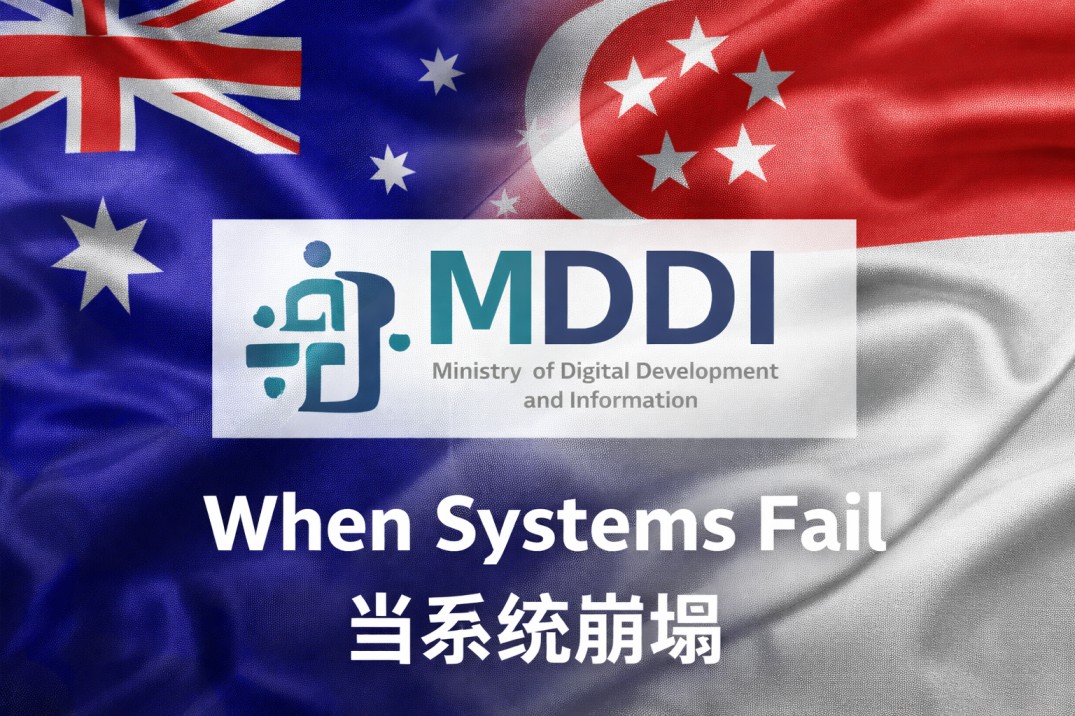
The Ministry of Digital Development and Information (MDDI) in Singapore — like its counterparts elsewhere — sits across ministries to “empower” digital transformation.
Yet readers increasingly ask:
- Why do systems feel harder, not easier?
- Why do tickets remain open indefinitely?
- Why does complexity grow while accountability shrinks?
A troubling pattern emerges:
More friction → more complaints → more IT budget → more systems → more friction.
At some point, digital empowerment quietly becomes digital disablement.

Leadership by Distance, Not Example
Several readers raised concerns beyond systems — about leadership behaviour.
- Dustbins placed far from bus stops, yet wind still blows second-hand smoke back to commuters
- MPs commuting by car, insulated from the daily experience of walking pavements shared with fast e-bikes and bicycles
- Laws mocked on the ground because enforcement feels detached from lived reality
One comment stood out:
“Leaders should sell their cars and walk like ordinary Singaporeans and PRs. When people see leaders walk the talk, they follow.”
Policy credibility is not built in air-conditioned offices. It is built on shared experience.
Dormant Money, Silent Systems, and Power Asymmetry
Another reader asked an uncomfortable but valid question:
- What happens to money in closed PayLah accounts?
- Dormant e-wallet balances?
- Expired EZ-Link or NETS cards?
A senior IT executive once privately boasted about systems controlling tens of millions of dollars in unclaimed balances.
This may be legal. But legality is not the same as legitimacy.
Where transparency ends, distrust begins.

Back to the Core Question
Australia’s under-16 social media ban is not happening in isolation.
It sits within a broader pattern:
- Growing information control
- Expanding digital systems
- Declining human empathy
- Leadership increasingly distant from lived reality
The real risk is not that young people see too much.
The real risk is that systems see too little of the human beings inside them.
Final Thought
A multi-polar world is already here. Information flows cannot be dammed forever.
The future cannot be banned. It can only be understood — or resisted at great cost.
The question every digitally advanced society must now answer is simple:
Are our systems designed to serve people — or to manage them?
This article is also published on LinkedIn.
#105 当系统忘记了人
从澳大利亚未满16岁社交媒体禁令,看数字治理与“以人为本”设计的悄然失灵
澳大利亚限制 16 岁以下青少年使用社交媒体 的举措,在公开表述中被定位为一项儿童保护与心理健康政策。从表面看,这样的出发点并无不妥。
然而,当这项政策与更广泛的数字治理趋势、信息控制逻辑,以及来自普通民众的真实反馈放在一起审视时,一个更深层、也更令人不安的问题浮现出来:
我们的系统,究竟是在赋能社会, 还是正在一步步“失能化”社会?
这不仅是澳大利亚的问题,而是所有数字化程度极高、正在经历多极化世界与 AI 加速冲击的社会所共同面对的挑战。
为什么是现在?为什么是社交媒体——而且是在 20 年后?
社交媒体并不新鲜。
Facebook 已存在近二十年,YouTube、Instagram、X(Twitter)早已深度融入西方社会。如果社交媒体本身是“洪水猛兽”,政策干预理应早就发生。
真正的变化在于: 是哪一类平台,正在影响年轻一代。
TikTok、小红书(RED)、Lemon8 等平台带来的不仅是娱乐内容,而是:
- 非西方视角的日常叙事
- 未经传统西方媒体滤镜的亚洲现实
- 对发展水平、基础设施、社会秩序的直接对比
年轻世代第一次可以绕过传统话语体系,自行观察世界。
这不是文化冲突, 而是叙事主导权的松动。
真正的焦虑:在世界观定型前,失去一整代人
政府比任何人都清楚一点: 人的世界观一旦稳定,就极难被彻底改变。
在认知框架尚未完全形成前,限制信息接触,本身就构成了一种事实上的社会工程:
- 延迟接触
- 减少比较
- 维持既有假设
这引出了一个无法回避的问题:
这项政策,究竟是为了保护孩子, 还是为了保护既有叙事?
当政策落地:来自现实的声音
在我持续撰写关于数字治理与社会工程的文章后 (#103 Systems That Hold Nations Together — And What Happens When They Fail Us 《支撑国家的系统──以及当它们开始崩塌时》),多位读者主动来信,分享他们的真实经历。
这些并非意识形态争论,而是系统设计失灵在日常生活中的具体体现。
一句话,留下了四年的心理阴影
一位读者分享了她在 COVID 期间的经历。
为了减少塑料浪费,她用锅具为家人分装食物,长期劳损导致手臂受伤。就诊于 邱德拔医院(KTPH) 时,一名医生对她说:
“我接下来会让你很痛。”
这句话并非医学解释,而是一种缺乏同理心的表达。 她表示,这句话在心中停留了 整整四年。
问题不在医术,而在于:
我们是否过度训练人“操作系统”, 却忽略了“对人说话”的能力?
一个简单的是或否,为何永远没有答案?
另一位关注可持续生活的读者,提出了一个非常简单的问题:
是否可以买到玻璃瓶装的泰国鱼露?
- 2025 年 11 月 20 日:电邮 NTUC FairPrice 回应:“我们会跟进。”
- 2025 年 12 月 14 日:再次提醒 回应:“我们仍在查看。”
没有是,也没有否。 工单始终处于“开放”状态。
这不禁令人质疑:
- 后台与门店是否脱节?
- 系统是否各自为政?
- 长期未结案,是效率问题,还是预算逻辑?
当最简单的问题都没有答案, 信任便开始流失。
当系统问错问题,人就开始怀疑自己
另一位读者希望通过 HealthHub App 进行无纸化医疗登记,以减少条码纸浪费。
系统却弹出两个语义模糊、与她牙痛情况并不匹配的问题。 她当场愣住,不知该如何作答。
她提出了一个非常关键的问题:
我们是否在聘请与训练缺乏语言能力、现实理解与同理心的系统与编程人员?
技术若缺乏清晰表达,只会制造困惑。
这是“赋能”,还是“失能”?
新加坡数码发展与信息部(MDDI)与其他国家的数字治理机构一样,初衷是“整合与赋能”。
但读者的现实体验却是:
- 系统越来越多
- 流程越来越绕
- 人被迫适应系统,而非系统服务人
于是出现一个危险循环:
更多摩擦 → 更多投诉 → 更多 IT 预算 → 更多系统 → 更多摩擦
当数字转型失去人本核心, 赋能就会悄然变成失能。
脱离现实的领导示范
多位读者也将矛头指向领导与制度设计:
- 垃圾桶被放得远离巴士站,却挡不住风把二手烟吹回候车区
- 国会议员多以私家车代步,难以体会人行道上电动脚踏车横冲直撞的风险
- 法律在现实中被嘲笑,因为执行与生活严重脱节
一位读者直言:
“领导人应卖掉车子,像普通新加坡人和永久居民一样步行与搭公交。”
当领导“走路示范”, 社会才会跟着走。
沉睡资金、无声系统与权力不对称
另一位读者提出了一个极具冲击力的问题:
- 关闭的 PayLah 账户余额去哪了?
- 长期未动用的电子钱包资金归谁?
- 过期 EZ-Link / NETS 卡的余额属于公司,还是国家?
一位资深 IT 高管曾私下炫耀,其系统掌控着 数千万新币的无人认领资金。
这或许合法, 但合法并不等于正当。
当权力、系统与不透明叠加, 信任必然瓦解。
回到核心问题
澳大利亚的社交媒体禁令,并非孤立事件。
它嵌入在一个更大的结构之中:
- 信息控制增强
- 数字系统扩张
- 人性与同理心被压缩
- 决策者与现实渐行渐远
真正的风险,不是年轻人“看到太多”。
而是—— 系统越来越看不见人。
结语
多极世界已经到来。 信息无法被永久封锁。
未来无法被禁止, 只能被理解—— 或被抵抗,代价极高。
每一个高度数字化的社会,都必须回答这个问题:
我们的系统,是为了服务人, 还是为了管理人?