#102 Leadership Lessons from King David: Courage, Contradictions, and the Making of a Modern Leader 大多数领导者的故事始于权力。
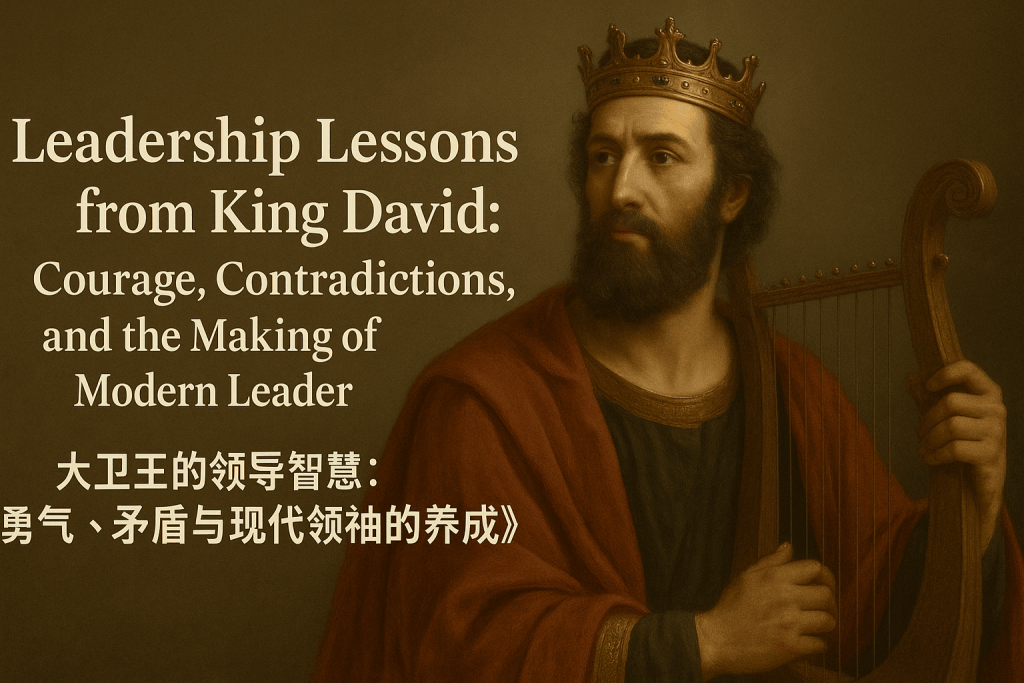
Most leadership stories begin with power. King David’s began with a forgotten shepherd boy — the youngest, the smallest, the one nobody paid attention to.
And perhaps that’s why his leadership still resonates today.
Because true leadership does not start from titles, offices, or armies. It begins in the quiet space where a person decides:
“I will step forward when others step back.”
1. A Leader Is Not the Obvious Choice — But the Right One
When the prophet Samuel visited Jesse’s household, David wasn’t even invited into the room.
He was tending sheep.
Yet Samuel said the timeless words:
“Man looks at the outward appearance, but the Lord looks at the heart.”
In today’s corporate world, leaders are often selected for résumés, networks, and performance metrics.
But the leaders who truly transform industries often come from unexpected places — founders with no pedigree, innovators who were once underestimated, and visionaries who saw potential where others didn’t.
Leadership is not about where you start. It’s about the depth of your conviction.
2. Facing Goliath: The Power of Founder’s Clarity
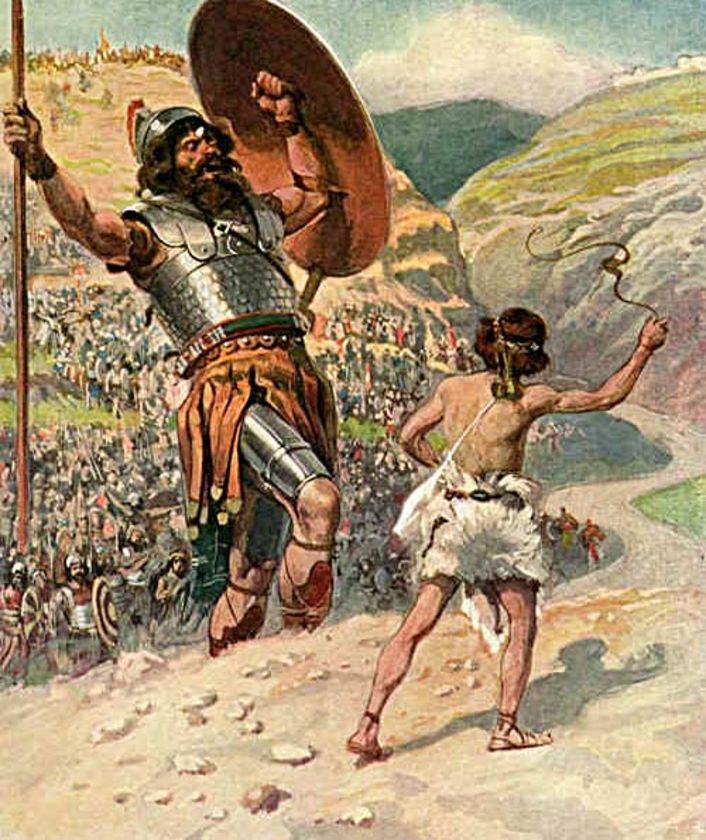
David entered the battlefield with no armor, no sword, no precedent.
Just clarity.
While the entire army saw a giant too big to defeat, David saw:
A giant too big to miss.
This single mindset shift is what separates:
- innovators from followers,
- founders from committees,
- industry shapers from industry passengers.
Every great project — from Tesla to SpaceX to disruptive climate-tech visions — began with someone who refused to see a giant as a threat, but instead as an opportunity to rewrite the script.
3. Leading Without a Crown: Influence Before Authority
Before becoming king, David led people long before he had a title.
He built loyalty. He protected the vulnerable. He inspired trust.
In modern teams, this is the principle of pre-authority leadership:
- You don’t wait for the promotion.
- You don’t wait for the recognition.
- You lead from where you stand.
If people trust you before the title, the title becomes a formality.
4. Accountability: The Rare Mark of a Real Leader
David’s story was not one of perfection. His greatest failure — the Bathsheba incident — was a moral collapse.
But what defined him was his response.
He didn’t justify. He didn’t deflect. He took responsibility.
In a world where many leaders hide behind PR teams, governance structures, and red-tape, accountability is becoming a rare currency.
True leaders face their shadows, acknowledge their missteps, and rebuild from truth — not denial.
5. The Poet-King: Emotional Intelligence as Strategic Strength
David wrote some of the most profound poetry in the Psalms.
He understood courage, but he also understood fear, grief, loneliness, and joy.
This emotional intelligence gave him the ability to:
- unify tribes
- comfort the broken
- guide nations
- inspire generations
Leaders today often undervalue emotional literacy. Yet in the age of AI, automation, and decentralization, the edge is no longer technical — it is human.
6. Legacy: Leadership That Outlives the Leader
David’s reign did not end with his lifetime.
It shaped culture. It shaped identity. It shaped the generations that followed.
The best leaders build systems, institutions, and people who can outlast their tenure.
In business terms: If the organization collapses when you leave, you didn’t build — you only performed.
Final Reflection: What King David Teaches Modern Leaders
King David’s life was a paradox — strength and sensitivity, brilliance and flaws, victories and failures.
And that is why his leadership still matters.
Because leadership is not about perfection. It is about alignment:
✔ Courage in uncertainty ✔ Humility in success ✔ Responsibility in failure ✔ Wisdom in complexity ✔ Vision in chaos
Leadership begins when a person aligns their inner world with their external mission — and moves with purpose, even when no one is watching.
That was David’s secret. And it is the mark of every leader shaping the next era of humanity, sustainability, and innovation.
This article is also published on LinkedIn.
大多数领导者的故事始于权力。
大卫王的故事却始于一个被遗忘的牧羊少年 —— 最年幼、最不起眼、最不被注意的那一个。
也许正因如此,他的领导力量至今仍引人共鸣。
因为真正的领导力从来不是从头衔、位置或军队开始的。 它诞生于一个人静默的内心深处,在他做出那个关键决定的瞬间:
“当别人后退时,我愿意向前一步。”
1. 领导者往往不是最显眼的选择 —— 却是最正确的那一个
当先知撒母耳来到耶西家时,大卫甚至没有被叫进屋。
他正在放羊。
然而撒母耳说出那句跨越千年的话:
“人看外貌,耶和华看内心。”
在当今的企业界,领导者常常依据履历、人脉和绩效指标来选拔。
但真正改变行业格局的领导者往往来自意想不到的地方 —— 没有背景的创业者、曾被低估的创新者、在别人看不到价值时却能看到潜力的远见者。
领导力不在于你从哪里开始,而在于你信念的深度。
2. 面对歌利亚:创业者“清晰之心”的力量
大卫走上战场时,没有盔甲,没有刀剑,更没有前例可循。
他只有一种东西:
清晰。
当整个军队看到的是一个无法战胜的巨人,大卫看到的却是:
一个大到不可能错过的目标。
这一念之间的转变,正是区分:
- 创新者与跟随者,
- 创业者与委员会,
- 行业塑造者与行业旅客
的关键所在。
每一个伟大的项目 —— 从 Tesla、SpaceX 到颠覆性的气候科技 —— 都始于某个拒绝将巨人视为威胁,而是视为改写剧本机会的人。
3. 未戴王冠也能领导:影响力先于权威
在成为国王之前,大卫早已开始领导别人。
他建立忠诚。 他保护弱者。 他激发信任。
这就是现代团队所强调的 “前权威领导力(pre-authority leadership)”:
- 你不必等升职。
- 你不必等认可。
- 你从当下的位置开始领导。
当人们在头衔之前就信任你时,头衔就只是仪式性的补充。
4. 承担责任:真正领导者最稀有的标志
大卫的故事并不完美。他最大的失误 —— 与拔示巴的事件 —— 是一次深刻的道德崩塌。
但真正定义他的不是过错,而是他的反应。
他不辩解。 他不推卸。 他承担责任。
在一个许多领导者躲在公关团队、治理结构与繁琐流程背后的时代, 承担责任已成为稀缺的领导力货币。
真正的领导者直面自己的阴影,承认自己的偏差,并从真理 —— 而非否认 —— 中重新建造自己。
5. 诗人之王:情绪智慧作为战略力量
大卫写下许多《诗篇》中最深刻的诗句。
他理解勇气,也理解恐惧、悲伤、孤独与喜乐。
这种情绪智慧让他能够:
- 团结支派
- 安慰伤者
- 引导国家
- 激励世代
当今许多领导者低估了情绪素养的力量。 然而在 AI、自动化与去中心化时代,真正的优势不再是技术,而是人性。
6. 遗产:超越生命本身的领导力
大卫的统治并未随着他的生命结束。
它塑造了文化,塑造了身份,塑造了之后的世代。
最优秀的领导者建立的是能够在自己离开后仍能运转的:
- 体系
- 机构
- 人才
用商业语言来说:
如果你离开后组织就崩溃,那你并没有建立组织 —— 你只是完成了任务。
最后的反思:大卫王给予现代领导者的启示
大卫的一生是一种悖论 —— 力量与温柔、才华与缺陷、胜利与失败并存。
这正是他的领导力至今仍具有力量的原因。
因为真正的领导力不是完美,而是对齐(alignment):
✔ 不确定中的勇气 ✔ 成功中的谦卑 ✔ 失败中的责任 ✔ 复杂中的智慧 ✔ 混乱中的愿景
领导力开始于一个人将内在世界与外在使命对齐 —— 并在无人注视时依然带着目标前行。
这,就是大卫的秘密。 也是每一位正在塑造人类、永续发展与创新未来的新世代领导者所共有的印记。
此刊文也发布在领英社交媒体。