
#94 Forgotten Histories, Modern Blind Spots: From the Barbary Slave Trade to Today’s “Red-washing” in Healthcare 被遗忘的历史与现代的盲点:从巴巴里奴隶贸易到当今医疗体系中的「红漂(Red-washing)」
🕊 Newsletter #94
Forgotten Histories, Modern Blind Spots: From the Barbary Slave Trade to Today’s “Red-washing” in Healthcare
Between the 16th and 19th centuries, a lesser-known chapter of human history unfolded across the Mediterranean. While Europe was shaping the modern world through exploration and innovation, an estimated 1.2 to 2.5 million Christian men, women, and children were kidnapped by Barbary pirates operating under Islamic states in North Africa.
The Forgotten “White Slave Trade”
From the coasts of Spain and Italy to the islands of Sicily and Corsica, communities lived under constant threat. Moorish raiders launched swift coastal attacks, dragging families away to slave markets in Algiers, Tunis, and Tripoli. The Spanish expression “no hay moros en la costa” — “no Moors on the coast” — was once a literal survival warning, a linguistic scar left by centuries of fear.
Once captured, victims were subjected to horrific fates:
- Men chained to galley oars until death
- Women forced into harems and sexual servitude
- Boys castrated and sold in major slave markets
Historical documentation lists 22 methods of torture used on Christian slaves in the Barbary States in the 1600s.
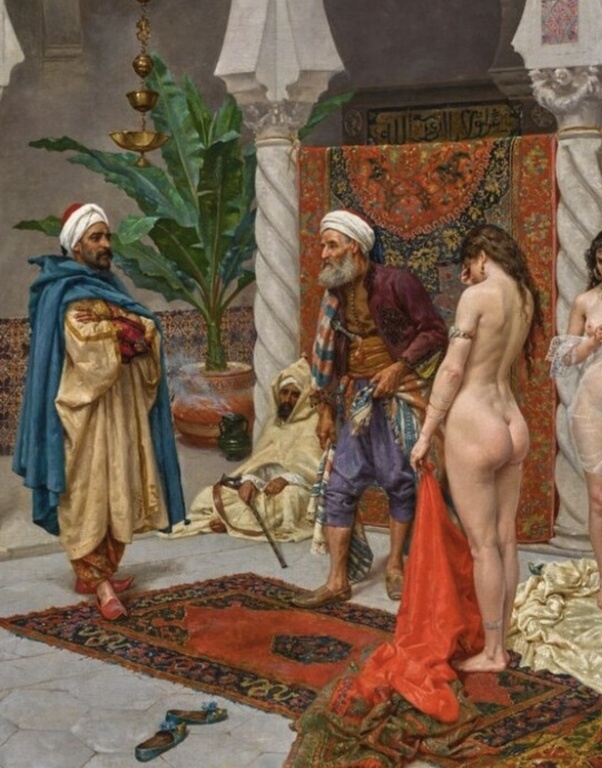
Courage Amid Cruelty: The Redemption Missions
Some captives were rescued through immense effort and sacrifice. Catholic nations negotiated, and entire religious orders — the Trinitarians and Mercedarians — were founded specifically to redeem Christian slaves from Muslim captivity.
Miguel de Cervantes, the author of Don Quixote, himself endured years of torment in an Algerian prison after being captured at the Battle of Lepanto. His eventual ransom shaped his understanding of human dignity and resilience.
Moral Evolution and the Birth of Human Rights
While slavery existed in nearly every ancient and medieval civilization, the Islamic systems of enslavement were among the most extensive and enduring. Yet today’s discussions often artificially narrow the narrative to only one chapter of global slavery.
It was within Christian Europe, through monarchs like Queen Isabella (with her Laws of the Indies) and later abolitionist movements, that the earliest versions of human rights were articulated.
This is not a claim of moral superiority. It is a reminder that civilization advances only when it confronts all of history — not just the convenient parts.
Selective memory leads to selective justice.
🩺 Modern Blind Spots: Why Singapore’s Healthcare System Faces “Red-washing”
History warns us: suffering often persists not because of open cruelty, but because of hidden structures, selective privilege, and misleading narratives.
Recently, I was told something that awakened both joy and frustration in me:
Government ‘A’ ward beds in public hospitals are effectively inaccessible to ordinary Singaporeans — widely understood to be prioritised or reserved for government officials.
If this is true — and many insiders acknowledge it informally — Singapore must confront a difficult truth.

Why I Feel Conflicted
✅ I’m happy that our civil servants and government officers have access to high-quality care. They shoulder national responsibilities and deserve strong healthcare support.
❌ But I’m upset that insurers continue selling A-ward Integrated Shield Plans to the public, knowing full well that:
- A wards are perpetually “full,”
- admissions are realistically not available to non-government individuals,
- and consumers are often downgraded to B1/B2 despite paying for premium coverage.
This practice has a name:
Red-washing
What Is Red-washing?
Red-washing is the practice of making healthcare coverage appear more premium, comprehensive, or accessible than it actually is.
Just like:
- Greenwashing misleads consumers about environmental sustainability
- Whitewashing covers up wrongdoing
✅ Red-washing misrepresents healthcare access, coverage, and real-world entitlement.
Red — because it concerns our blood, our health, our lives. Washing — because the marketing “cleans up” the truth.
When You Pay for A-Ward Privileges You Never Receive
If the public pays for A-ward insurance plans that realistically cannot be utilized, then the system is selling theoretical benefits, not actual ones.
Consumers believe they are paying for:
- quieter environment
- more privacy
- faster doctor attention
- senior consultants
- better recovery conditions
But what they receive is often:
- “A ward is full.”
- “You can choose B1/B2 instead.”
- “This is the only available option.”
This mismatch between promise and experience is not an accident. It is systemic Red-washing.
If Singapore Wants to Lower Healthcare Costs, Then Start Here
We constantly hear about reducing hospital costs, streamlining subsidies, and improving system efficiency.
But there is little discussion about the mismatch in product offerings, where consumers are encouraged to pay premiums for a service class that does not truly exist for them.
If A-wards are not realistically accessible, then insurers should not be allowed to market A-ward coverage to the general public.
My View: Consumers Must Act Wisely
Until the system is transparent and honest about realistic access:
✅ It makes more financial sense for ordinary Singaporeans to buy only B-ward Shield plans. ✅ It is better to pay for real access than for imaginary privileges.
This is not an attack on insurers. This is a call for honesty.
🔍 Why Connect Barbary Slavery to Modern Red-washing?
Because the lesson of history is consistent:
- People suffer when truth is distorted.
- People lose agency when systems are opaque.
- People lose dignity when privileges are selectively distributed.
Whether in 17th-century captivity or 21st-century healthcare, the common thread is the danger of hidden hierarchies.
A society advances only when truth is accessible to all — not when it is reserved for a few.
✅ Final Reflection
Civilizations rise when they confront injustice directly — whether old or new.
We honour the past by learning from its cruelty. We honour the present by exposing its blind spots. We honour the future by demanding systems that serve everyone fairly.
From the Barbary slave trade to modern Red-washing in healthcare, the message remains unchanged:
Always confront the truth. Always fight for dignity. Always choose transparency over illusion.
This article is also published on LinkedIn.
🕊 第94期通讯
被遗忘的历史与现代的盲点:从巴巴里奴隶贸易到当今医疗体系中的「红漂(Red-washing)」
在16至19世纪之间,地中海地区曾经历过一段鲜为人知的历史。当欧洲在探索、贸易与文明发展中不断前进时,北非伊斯兰政权统治下的巴巴里海盗,却在这几百年间绑架了 约120万至250万名基督徒男女老幼。
被遗忘的“白奴贸易”
从西班牙海岸到意大利沿岸,再到西西里与科西嘉,人们长期生活在恐惧中。摩尔海盗发动快速袭击,将村民掳走,送往阿尔及尔、突尼斯、的黎波里等地的奴隶市场。 西班牙语 「no hay moros en la costa」(“海岸上没有摩尔人”)原本是一句 真正的警告语,提醒沿岸居民危险正在逼近。
被掳走的受害者命运极其凄惨:
- 男人 被锁在桨船上划桨至死
- 女人 被迫进入后宫沦为性奴与生育工具
- 男童 被阉割后在奴隶市场出售
17世纪档案甚至记载了 22种针对基督徒奴隶的酷刑手法。
残酷中的勇气:赎回任务
部分受害者最终获救。天主教国家会谈判赎人,甚至成立了以赎回奴隶为使命的宗教组织,如 三一救赎会(Trinitarians) 与 圣母怜悯会(Mercedarians)。
《堂吉诃德》作者塞万提斯,在勒班陀海战后遭掳至阿尔及尔监禁多年,最终被赎回。他的经历塑造了其作品中关于尊严与坚韧的主题。
文明如何进化,人与权利如何诞生
虽然奴隶制度存在于几乎所有古文明,但伊斯兰世界的奴隶体系规模大、持续久,却常被当代叙事忽略。
而在 基督教欧洲,从伊莎贝拉女王制订《印度法》到后来的废奴运动,最早的「人权」概念逐渐成形。
这不是宣扬文明优越,而是要提醒:
文明的进步,建立在面对全部历史,而非选择性回忆之上。
选择性记忆,会导致选择性正义。
🩺 当代的盲点:新加坡医疗体系中的「红漂」(Red-washing)
历史提醒我们:真正造成苦难的,往往不是赤裸裸的暴力,而是 隐性的结构、被包装的特权、以及被美化的叙述。
最近,我听到一件令我既感欣慰又愤怒的事情:
公立医院的A级病房对一般新加坡人几乎不可及——据说主要优先保留给政府官员。
若情况属实——而不少业内人士也间接承认这点——新加坡必须面对一个现实。
为什么我感到矛盾?
✅ 我高兴 公务员与政府官员得到高水准医疗照顾,他们肩负国家重任,值得被保护。
❌ 但我愤怒 的是,保险公司仍不断向公众推销“可住A级病房”的综合健保计划,明知:
- A级病房长期“满床”,
- 一般民众几乎无法入住,
- 最后被通知只能住 B1 或 B2 病房。
消费者购买的并不是现实中的权益, 而是一个 理论上存在、实践中无法享有的特权。
这现象,我称之为:
红漂(Red-washing)
什么是红漂(Red-washing)?
红漂 指的是以包装、宣传与语言,将医疗保障描述得更高级、更全面、但实际上难以兑现的行为。
就像:
- 绿色漂绿(Greenwashing) 假装环保
- 白色漂白(Whitewashing) 掩盖过错
✅ 红漂,就是医疗领域中的虚假包装,是在掩盖关于血、健康、生命的真实状况。
红 —— 因为它关乎 鲜血、健康、生存 漂 —— 因为宣传把真相「洗」掉了
当你付钱,却永远享不到A级病房
公众被诱导购买A级住院保障,以为自己能享有:
- 更安静环境
- 更好私隐
- 更快的医生诊治
- 更高资历的顾问医生
- 更好的康复条件
但现实却是:
- “A级病房已满。”
- “只能选择B1/B2。”
- “目前只有这类病房可用。”
这不是偶然,是结构性的。 是 系统性的红漂。
若政府真要降低医疗成本,那就必须从这里开始
我们常听到政府强调降低医疗费用、提高效率、加强补贴。
但几乎没人讨论一个核心问题:
消费者正在为根本无法享受的服务等级付费。
若 A级病房对一般人不可及,那保险公司就不该继续向公众销售「A级病房覆盖」。
我的观点:消费者必须用智慧投票
在制度缺乏透明、营销与现实不符之前:
✅ 一般新加坡人买B级病房的健保计划更实际 ✅ 为真正可享有的权益付费,而不是空洞的承诺
这不是反保险。 这是支持真相。
🔍 为什么要把巴巴里奴隶贸易与“红漂”放在同一篇文章?
因为历史告诉我们:
- 真相被掩盖时,人们就会受苦
- 权力结构不透明时,人们就会失去选择
- 特权只向少数人开放时,社会就会分裂
无论是17世纪的奴役制度,还是21世纪的医疗体系, 本质都是 隐藏的等级制度。
一个文明若无法面对真相,就会停滞甚至倒退。
✅ 最后的反思
文明不是自动前进的。 是靠一代代人不断揭露不公、提醒盲点、坚持真相。
我们纪念过去的残酷,是为了避免在今天重演隐藏的不平等。 我们看见当代的红漂,是为了建立更公平的未来。
从巴巴里奴隶贸易到新加坡医疗体系中的红漂现象, 信息不同,时代不同, 但信息完全一致:
永远面对真相。 永远捍卫人的尊严。 永远选择透明,而不是幻象。

![#60 [🎓 Reconnecting with Roots: A Special Visit to NUS] 【🎓 重返母校:一场意义非凡的NUS之行】](https://marvinfoo.com/wp-content/uploads/2025/08/IMG20250806122646-768x576.jpg)
![#47 📊 [Consumer Intelligence | Market Strategy] Rethinking Consumer Priorities & Brand Agility in a Fragmenting FMCG Landscape](https://marvinfoo.com/wp-content/uploads/2025/07/IMG-20250708-WA0056-768x576.jpg)
![[Navigating the Future of Digital Defense with AI: A Call to Vigilance, Integrity & Heart] 🪪Newsletter #25](https://marvinfoo.com/wp-content/uploads/2025/05/20250509_0928_Digital-Security-Shield_simple_compose_01jtsaggwpe1hvs2nqe66fdagt-1-768x512.png)