#84 When Xi Jinping Echoes Hu Jintao: A Subtle Signal in an Uncertain Era
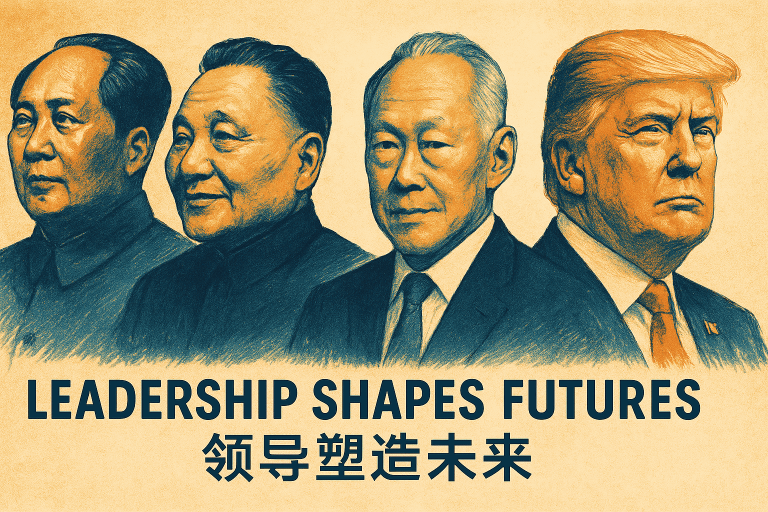
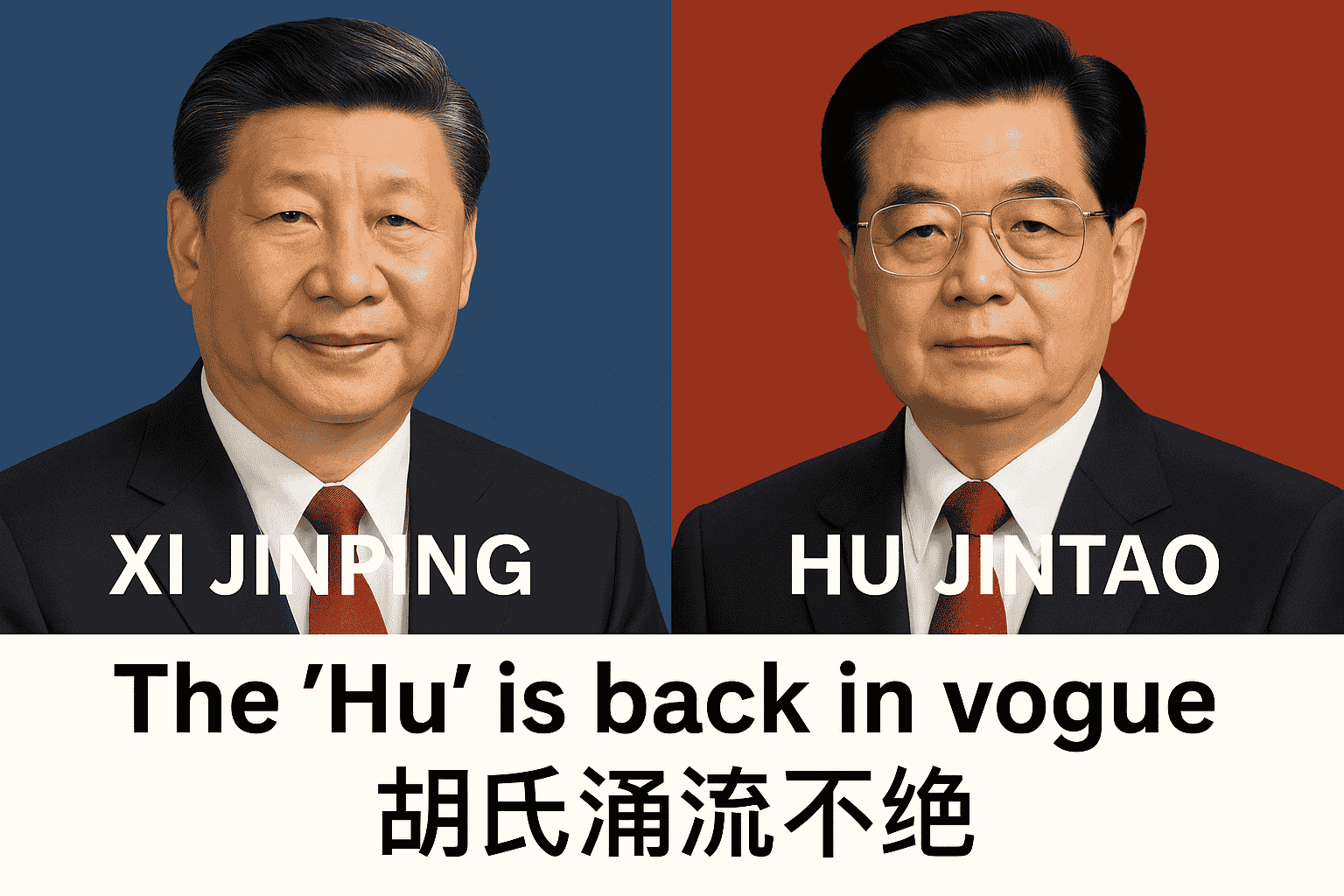
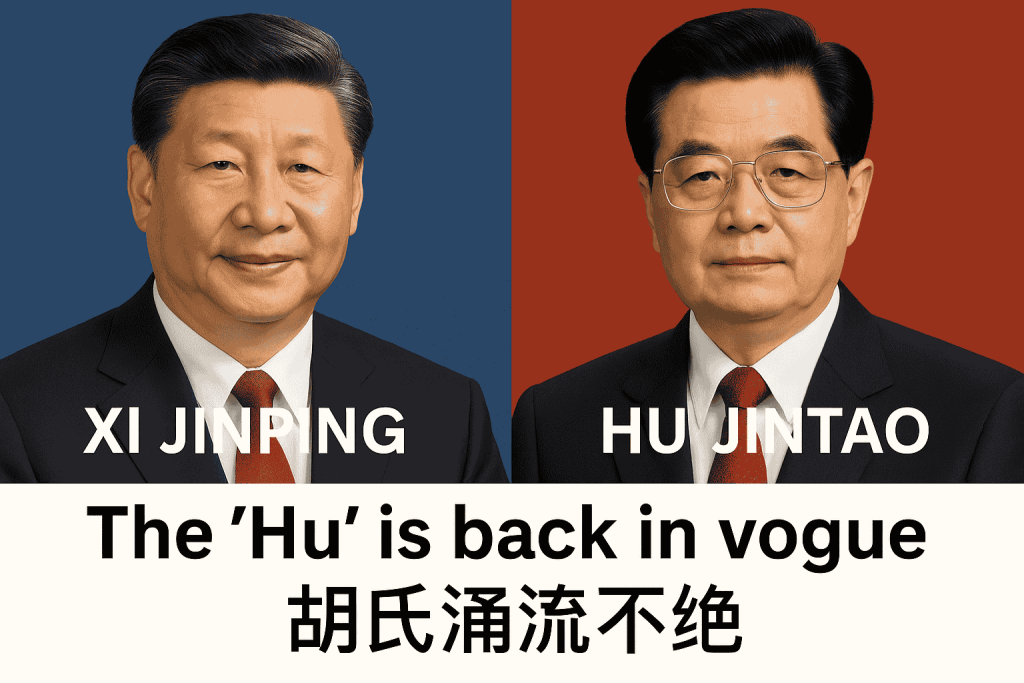
China watchers noticed a quiet but significant rhetorical move: Xi Jinping has begun to revive the language of his predecessor Hu Jintao with phrases such as “scientific development” (科学发展) and “democratic decision-making” (民主决策). On the surface, it seems like a minor semantic choice. In reality, it may signal a recalibration of leadership style during a period of slowing growth, rising geopolitical tension, and domestic uncertainty.
Hu Jintao’s Decade: Stability Through Collective Leadership
Hu Jintao (2002–2012) governed during China’s high-growth years with a low-key, consensus-driven approach.
- His era championed the Scientific Outlook on Development : balanced, sustainable progress rather than unchecked GDP pursuit.
- The ideal of a Harmonious Society (和谐社会) sought to reduce inequality and maintain stability without grand ideological campaigns.
- Decision-making was shared across a 9-member Politburo Standing Committee, earning the nickname “nine dragons governing the sea” (九龙治水).
- Foreign policy followed taoguang yanghui (韬光养晦) — “hide capabilities, bide time”; a prudent, non-confrontational stance.
It was not an era of dazzling reform, but it was predictable, pragmatic, and technocratic. China became wealthier, integrated deeper into global trade, and built the foundation for today’s power, but without the personality-driven centralization we now see.
Xi Jinping’s New Era: Centralization and Grand Narratives
Xi Jinping’s decade (2012–present) has been the opposite in tone:
- Power centralized around the “core leader”; collective checks diminished.
- Ideology elevated: China Dream (中国梦), Xi Jinping Thought.
- Strong campaigns: anti-corruption, tech regulation, “common prosperity.”
- Foreign policy assertive: Belt & Road, South China Sea, “wolf warrior” diplomacy.
This has allowed swift mobilization but also introduced policy swings and heightened global friction.
Why Xi Is Reaching Back to Hu’s Words
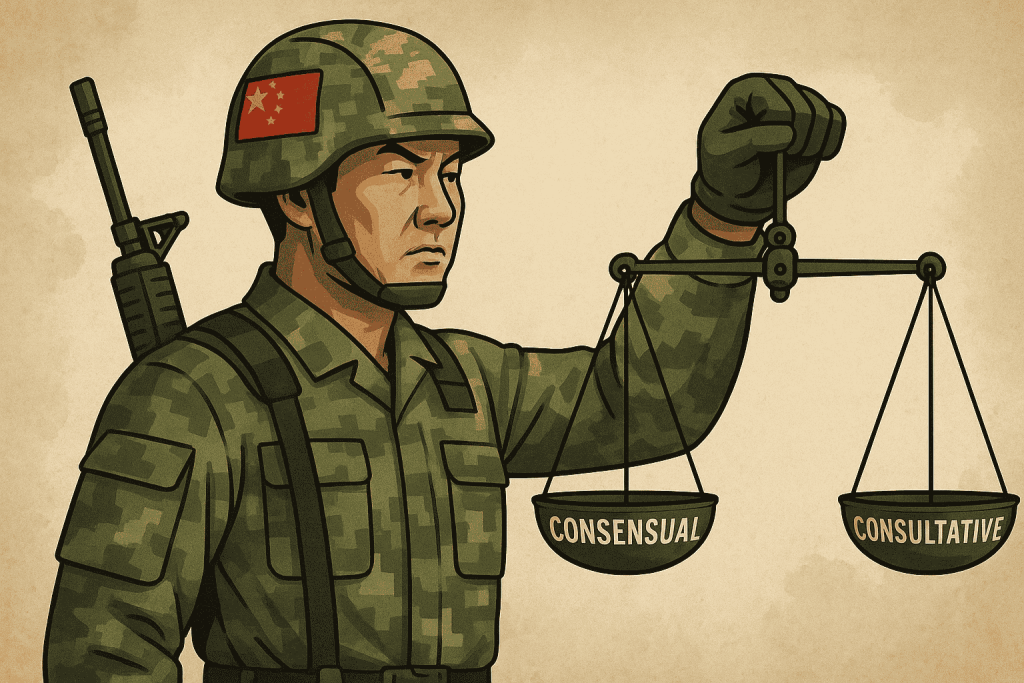
By reusing Hu-era language, “scientific,” “democratic,” technocratic; Xi may be:
- Reassuring the technocrats who feel uneasy about unpredictable campaigns.
- Signaling to Party elders and business elites that pragmatic policy is returning in tough economic times.
- Tempering international perceptions of an overly ideological China.
It’s a subtle move, but one that seasoned China watchers will note: when a strongman borrows the calm language of a technocrat, it may mean the pendulum is shifting; or at least wobbling.
Reconciling Xi’s Move With His Past Purges
Some may ask: How can Xi borrow Hu’s methods when many of Hu’s deputies were removed for corruption?
The answer lies in separating policy style from political networks:
- Xi’s early anti-corruption drive broke Hu’s Communist Youth League faction and neutralized rival power bases.
- Now that power is consolidated, Xi can adopt technocratic governance without reviving Hu’s people.
- It’s similar to a CEO who ousts a dysfunctional management team but later revives the best practices they left behind; on his own terms.
This move reassures technocrats and global markets that pragmatism can coexist with Xi’s firm control.
A Possible Shift: From Wolf Warriors to Pragmatists
For nearly a decade, China’s diplomacy was marked by the “wolf warrior” approach; sharp rhetoric and muscular signaling. But as economic and geopolitical headwinds rise, a quieter recalibration is visible:
- Diplomats in 2023–24 have softened tone in Europe and Southeast Asia.
- Trade negotiators and policy experts appear re-empowered to stabilize relationships.
- The return of phrases like scientific development and democratic decision-making suggests policy pragmatism may take precedence over campaign-style governance.
If this trend endures, progress will rely more on effective, stable governance and less on combative showmanship; a shift businesses and regional leaders should watch closely.
A Reflection From Singapore’s 胡 (Hu) Clan
As someone rooted in Singapore’s 胡氏 heritage, I find this moment symbolic. Since I registered with the clan in January 2025, weekly membership has usually been quiet; often zero or one new member. Yet just last week, eighteen new members joined at once; an unusually lively uptick. It reminded me that in times of global volatility, people often seek the comfort of heritage and steady values.
The Hu surname historically carries a quiet steadiness, preferring measured wisdom over reckless aggression. In a world where geopolitical voices grow louder, that calm force of good still matters.
For Businesses & Leaders
- Watch for subtle shifts: Xi’s language can preface policy recalibration — less abruptness, more technocratic focus.
- Balance ambition with prudence: Rapid change can destabilize; sustained influence often comes from quiet strength.
- Value heritage and networks: Just as the 胡 clan quietly grows, businesses and nations thrive when anchored to enduring values.
💡 Closing Thought
Power that endures is not always loud. In boardrooms, in diplomacy, and in family heritage, a steady hand often outlasts the clenched fist.
P.S. The Hu clan has never been the flamboyant type that parades for attention. We’ve long chosen to stay understated and focused on quiet contribution. But perhaps it is time to remind others: being low-profile does not mean being invisible. Though a small segment of society, we have often punched above our weight when the moment calls for it. And looking at the way Singapore and the region are evolving, one cannot help but feel: a calm, principled force; the kind the 胡 have long embodied; may be exactly what’s needed now.
This article is also published on LinkedIn.
当习近平重拾胡锦涛的语言:在不确定时代中的微妙信号
最近,中国观察者注意到一个耐人寻味的细节:习近平开始重新引用前任胡锦涛时期的用语——例如“科学发展”与“民主决策”。 表面上看只是措辞上的变化,但实际上可能意味着:在经济增长放缓、地缘政治紧张、内部不确定性加剧的背景下,执政风格或正在微调。
胡锦涛十年:集体领导下的稳定
2002–2012 年的胡锦涛时代,以低调、共识驱动著称。
- 提出“科学发展观”,强调平衡、可持续的发展而非单纯追逐 国内生产总值 GDP。
- 倡导“和谐社会”,希望缓解贫富差距、维持社会稳定,而不是通过强烈的意识形态运动。
- 权力由九人政治局常委集体分担,被称为“九龙治水”。
- 外交遵循“韬光养晦”,谨慎低调,避免直接对抗。
这一时期也许缺少惊艳的改革,但却务实、可预期、技术官僚化,为中国日后崛起奠定了基础,而没有形成个人化的权力集中。
习近平十年:集中权力与宏大叙事
2012 年以来的习近平时代几乎与前任相反:
- 权力集中在“核心”领袖周围,集体制衡大幅削弱。
- 意识形态强化:提出“中国梦”、确立“习近平新时代中国特色社会主义思想”。
- 以运动式治理见长:反腐、高科技整顿、“共同富裕”。
- 外交风格强势:一带一路、南海军事化、所谓“战狼外交”。
这种风格带来了快速动员的能力,也引发了政策摇摆与对外摩擦。
为何习近平重提胡式语言
重新使用“科学”“民主”“技术官僚”等胡时代词汇,可能意味着:
- 安抚技术官僚,缓解对运动式治理的不安。
- 向党内元老与商界精英示意:经济困难时将重回务实理性。
- 调整国际观感,减弱外界对中国过度意识形态化的担忧。
当一位强势领导人开始借用技术官僚的平和语言,往往意味着:摆荡的钟摆或许正在缓缓回调。
如何理解:既清洗胡系,又借用胡的方法
有人或许会问:既然早年反腐整肃了胡锦涛的团队,如今为何又要借用他的治理思路?
关键在于:区分“政策方法”与“政治派系”。
- 习近平上任初期的反腐,既是反腐也是打破共青团派等旧有势力、重塑权力格局。
- 如今权力稳固,他可以在不复活旧人马的前提下,吸收当年的务实治理经验。
- 就像一位 首席 CEO,先清理失效的管理团队,等掌控局面后,再恢复其中值得保留的管理机制——但归自己所有。
这既能安抚技术官僚和市场,也不削弱个人权威。
可能的转向:战狼式外交渐退,务实稳健或将回归
过去十年,中国外交以“战狼”风格闻名——公开强硬、对外冲突感强。 但随着经济压力与全球格局重组,一个低调的回调迹象正在出现:
- 近年驻欧、东南亚外交话术逐渐趋于柔和。
- 贸易谈判与政策专家再次被赋予空间以稳住关系。
- “科学发展”“民主决策”等用语回归,暗示务实、稳健将取代运动式治理的戏剧化。
如果这一趋势延续,未来的进步将更依赖有效且稳定的治理,而非高调对抗的表演式手段。
来自新加坡胡氏家族的思考
作为一名扎根新加坡的胡氏后人,我觉得这一时刻颇有象征意义。 自 2025 年 1 月加入宗亲会以来,平日每周新入会者多是零星一两人,上周却一下子迎来十八位新成员,极为罕见。 这让我想到:在全球风雨飘摇之际,人们往往会回归传承与稳健的价值。
胡姓一向代表着沉稳与审慎,不以张扬取胜。面对愈加喧嚣的地缘政治,我们仍然相信:温和但坚毅的力量依然重要。
给企业与领导者的启示
- 观察细微的信号:语言变化常预示政策重心调整。
- 在雄心与稳健间求平衡:快速变革易生风险,持久影响往往来自安定与深思。
- 重视传承与网络:就像胡氏 低调中的稳健壮大,企业与国家若根植稳固价值,也能穿越周期。
💡 结语
真正长久的力量,并不喧哗。 无论在董事会、外交舞台,还是家族传承中,稳健的手,往往比紧握的拳头更能穿越风雨。
附言 P.S. 胡氏从不张扬,也不喜欢抛头露面去博眼球。我们选择低调,专注于默默贡献。 但低调并不等于隐形。 在关键时刻,这个社会中并不庞大的群体,常能发挥超越体量的影响力。 而从新加坡当前的走向来看,也许正需要一种——沉稳、坚毅、富有原则的力量;一种胡氏一直秉持的力量。
![[Navigating the Future of Digital Defense with AI: A Call to Vigilance, Integrity & Heart] 🪪Newsletter #25](https://marvinfoo.com/wp-content/uploads/2025/05/20250509_0928_Digital-Security-Shield_simple_compose_01jtsaggwpe1hvs2nqe66fdagt-1-768x512.png)