⏳ #36 True Wealth Is Time, Not Things | #36 真正的财富是时间,而非物质
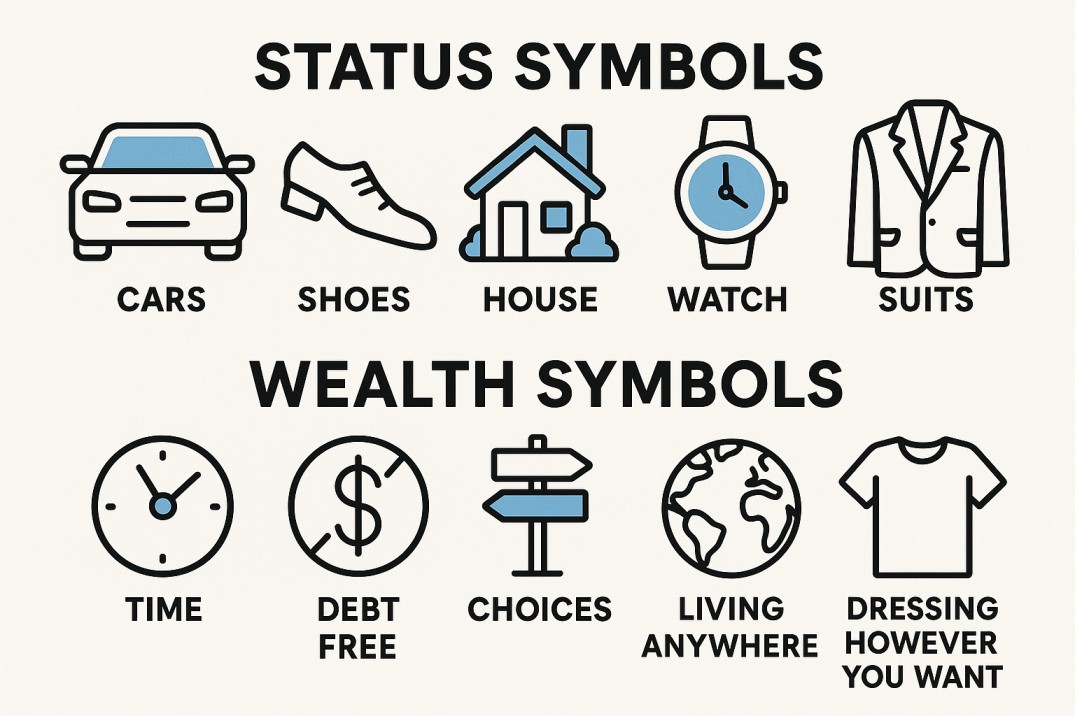
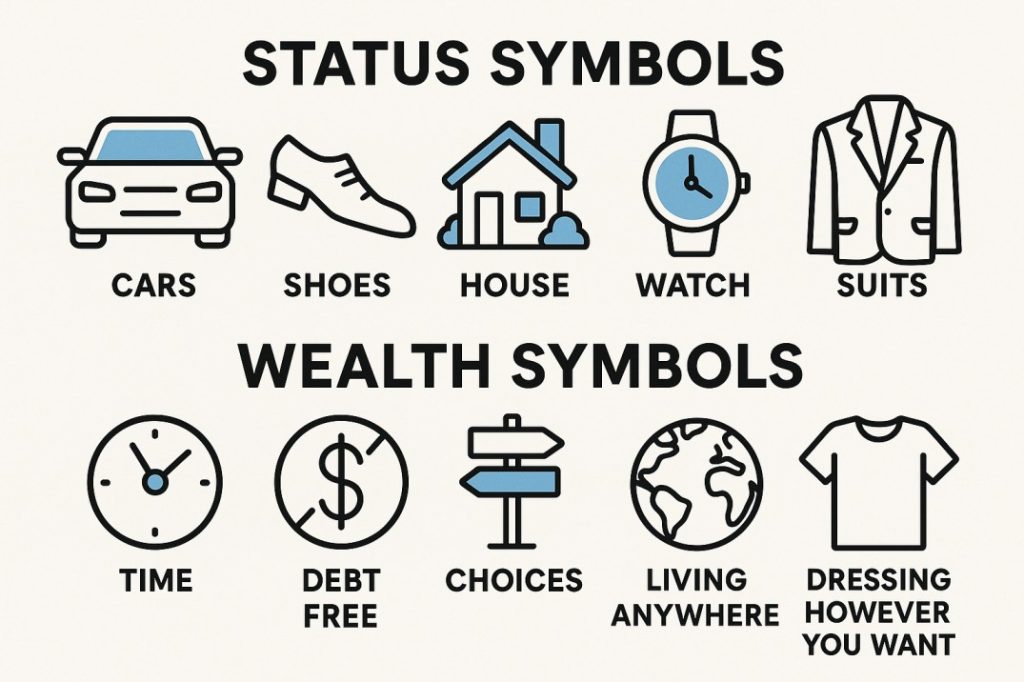
In a world increasingly obsessed with material success, we often confuse wealth with money, and status with fulfillment. As the image illustrates, “Status Symbols”—cars, shoes, houses, watches, and suits—are prized by society for what they represent. Yet what truly brings life satisfaction—time, freedom, choice, and authenticity—falls under “Wealth Symbols”, things that are often invisible to the eye but deeply felt by the soul.
在这个日益痴迷于物质成功的世界里,我们常常将“财富”误解为金钱,将“地位”误解为满足。如图所示,“地位的象征”——汽车、鞋子、房子、手表和西装——被社会所推崇,是因为它们代表了某种外在的成功。但真正带来人生满足感的,却是“富足的象征”——时间、自由、选择与真实——这些往往是眼睛看不见、却能被内心深切感受到的事物。
🏙️ Why Do Young Economies Chase Status?
It’s understandable. In newly developed nations, where generations once lived in scarcity, the sudden access to cars, luxury fashion, and private property is intoxicating. Having never possessed much before, materialism is a natural first expression of freedom and identity.
为什么新兴经济体追逐地位象征?
可以理解。在新近发展的国家中,曾经历过匮乏的几代人,如今突然可以拥有汽车、奢侈品与房产,这种转变是令人陶醉的。在从未拥有过多的背景下,物质主义自然成为自由与身份认同的第一层表达。
But as nations grow mature, material goods lose their shine. A society evolves when it realizes that possessing more is not the same as being more. This marks the transition from survival to self-actualization, from accumulation to introspection.
但随着社会逐渐成熟,物质的光环也开始褪去。当一个国家意识到“拥有得更多”并不等于“活得更好”时,它就进入了从“生存”迈向“自我实现”的阶段,从外在的堆砌转向内在的探索。
🎨 The Rise of Arts, Spirituality, and Inner Peace
In the Tang Dynasty, widely regarded as a golden age of Chinese civilization, we saw a flourishing of liberal thought, poetry, art, and even personal freedoms. Relationships were viewed more humanely—people came together and parted ways for the sake of happiness, not duty.
唐代被誉为中国文明的黄金时期,艺术、诗歌、自由思想盛行。人们对人生和情感有了更宽容的理解——情侣因幸福而聚,也因幸福而散,而不是仅为责任而强行维系。
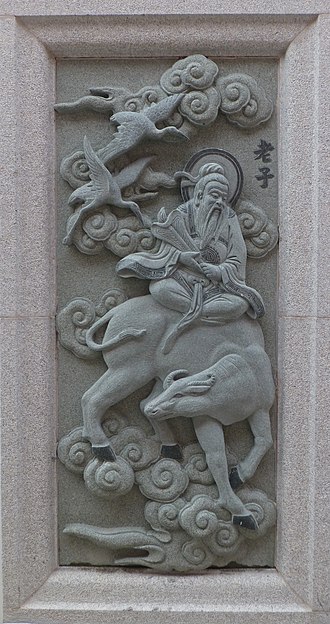
As Laozi once wrote in the Tao Te Ching:
“He who knows he has enough is rich.” ——Laozi, Tao Te Ching
“知足者富。” ——《道德经》,老子
True wealth is not what we flaunt, but what we feel. It’s the freedom to wake up when your body is ready, to create without pressure, to wander where your heart desires, and to dress in ways that bring comfort—not conformity.
真正的财富,不是拿来炫耀的东西,而是内心真正的感受。是自由地醒来,不为生计所迫地创造,跟随内心旅行,以舒适而非迎合他人的方式穿衣。
🧘 Material Ends, Meaning Begins
As societies progress, they inevitably return to the soul. Japan, for instance, after its post-war economic boom, saw a shift toward Zen culture, minimalism, and longevity as virtues. In contrast, Western societies too are witnessing a rise in mindfulness, wellness, and intentional living.
当物质的满足达到极限时,社会就会回归“灵魂”的探索。比如日本,在战后经济奇迹后,社会逐渐转向禅意文化、极简主义与长寿之道。同样,西方社会也逐渐重视正念、身心健康与有意义的生活方式。
Confucius noted:
“The superior man is modest in his speech but exceeds in his actions.” ——Confucius, Analects
“君子欲讷于言而敏于行。” ——《论语》,孔子
In a world of selfies and social currency, perhaps the quietest person in the room—debt-free, present, and unburdened—is the wealthiest.
在一个充斥着自拍与“社交货币”的时代,或许房间里最安静的人——没有债务,活在当下,无所牵挂——才是真正最富有的那位。
💡 Final Thought | 最后的思考
We don’t truly own anything. We merely borrow it for a while. So choose time over things. Freedom over appearances. And never trade your soul for the illusion of wealth.
我们从不真正“拥有”任何东西,我们只是暂时“借来”。 选择时间,而不是物品;选择自由,而不是外表。 永远不要为了虚幻的财富,而出卖了你的灵魂。
“常也无常,道法自然。” —— 胡马宾
“The seeming norm is itself an unwavering sea of changes; Tao is a natural phenomenon for those who observes.” Mar Vin, Foo